
Although Rebecca Jaffe, the owner and founder of Sea to Shore Explorers, the tide-pooling ecotourism company, knew the San Diego shoreline well, she looked forward to each visit.
That day, after she finished a citizen science event, she decided to take a walk and study the rocks around her. She loved observing the small creatures that others didn’t notice.
Little did she know that she would stumble upon a tiny surprise.
A Tiny Discovery Beneath The Seaweed
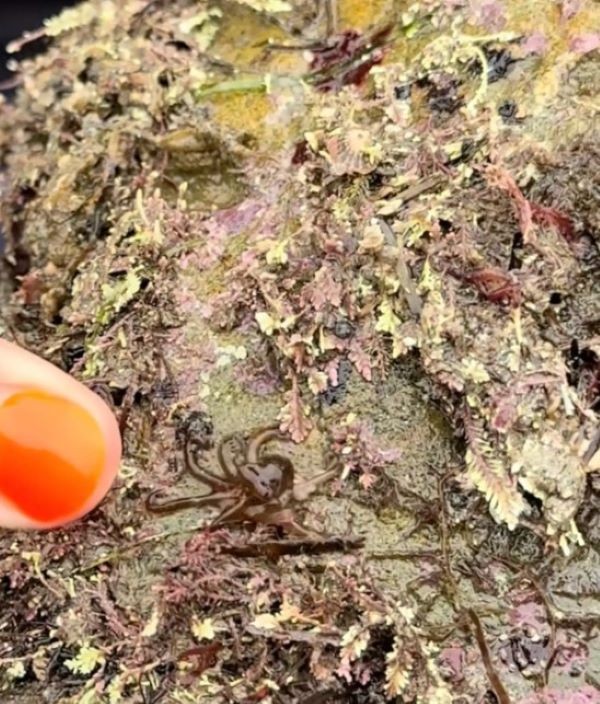
Jaffe picked up a seaweed-covered rock. Suddenly, she noticed something moving on top.
“I noticed a little bit of movement,” Jaffe told The Dodo. “And it just looked like a little brown blob, and then I saw the tentacles.”
She leaned in and realized that a baby octopus was clinging to the rock. She came across many marine animals through her work with Sea to Shore Explorers, but she had never seen an octopus so small.
Jaffe was happy to have found it. She realized how easily she could have missed it. The little octopus had hidden in the rock and seaweed.
“[P]art of their survival is to not be found, to fit into tiny spaces [and] to blend in through both their coloring and their lack of any bones,” she explained.
A Careful Encounter
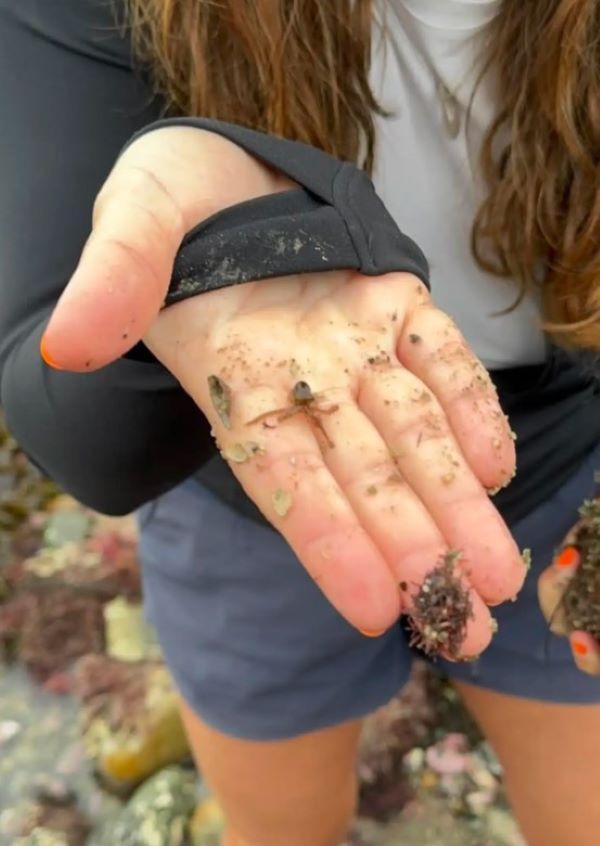
Jaffe could not identify the species because the octopus was so tiny.
She thought, based on the location, that it was either a California two-spot octopus or an East Pacific red octopus. Both species lay eggs in small crevices, and once the babies hatch, they must navigate the world on their own.
This little octopus had found shelter on the underside of the rock she had lifted.
While Jaffe was holding the rock in her hand, the octopus started to move toward her. It crawled onto her thumb and then slowly made its way across her hand. Jaffe stayed calm, letting the octopus explore safely. For her, it was a beautiful moment.
“To have it crawl on my hand was so cute, but I was really just kind of trying to be so careful,” she said.
Shortly afterward, Jaffe carried the baby octopus back into the water and watched it slip into the safety of the tide pool. Although the encounter had lasted only a few seconds, it left a deep impression on her.
Jaffe emphasized the importance of protecting the coast and the wildlife.
“These are the places where these animals live, and it’s their home, and we need to protect it,” she said. “We can’t be taking anything home with us other than pictures.”
Even as the tide rose, she kept thinking about the tiny creature that had trusted her hand for that short moment.
Preventing diseases through vaccinations
From deadly viruses to devastating outbreaks, Network for Animals fights to protect vulnerable animals
When preventable diseases strike, they spread silently and mercilessly, leaving animals to suffer and die, often unnoticed and unaided. With the rapid spread of deadly illnesses, the need for proactive vaccination campaigns has never been greater.
From rabies in rural Africa to distemper outbreaks in crowded shelters and canine parvovirus sweeping through impoverished communities, with the help of our donors, we deliver vaccines to at-risk animals and prevent needless suffering on a massive scale.
Help us continue safeguarding animals by funding vital vaccination drives today because prevention saves lives.




Be the first to comment on this article!