

















All Seemed Peaceful
One sunny day in Kruger National Park, safari-goer Marelize Blom was traveling along the H4-1, searching keenly for any sign of wildlife activity. What she discovered was a breathtaking moment that revealed just how quickly the balance of power can shift in the animal kingdom.
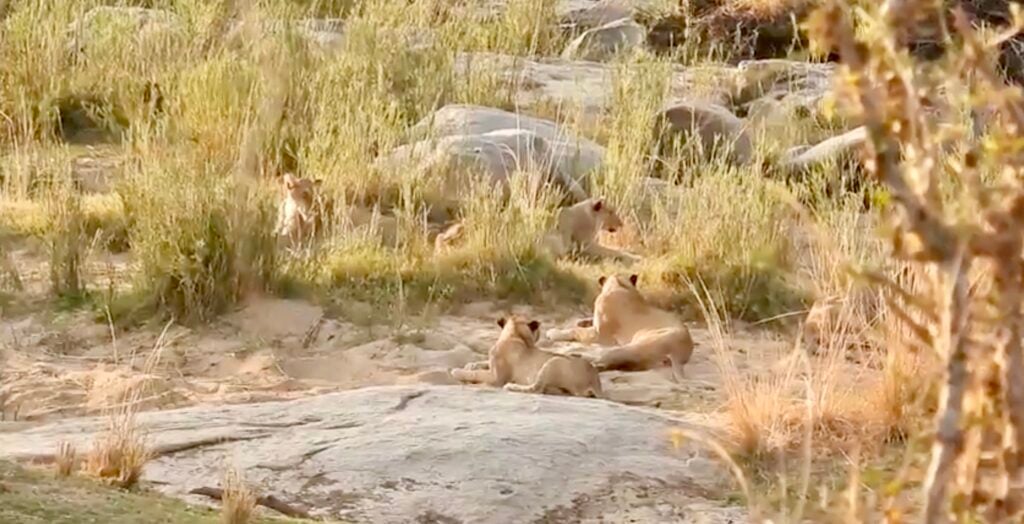
Her footage opens with a group of lions sprawled lazily amongst the sand and tall grass. At first glance, they seem completely relaxed, soaking up the midday heat in typical big cat fashion.
Upon closer inspection, though, there was apparent tension amongst the pride. Every lion was staring intently to the right, ears pricked, and muscles tight.
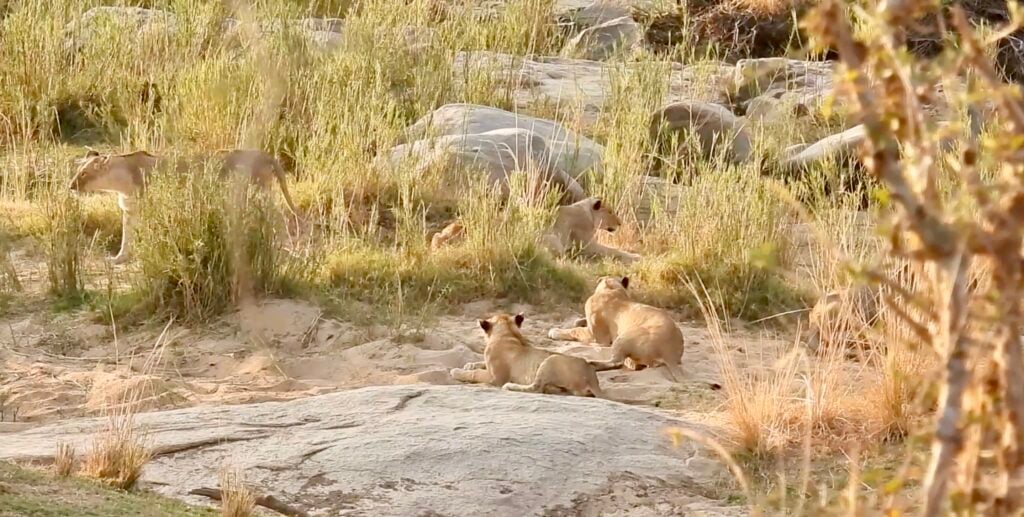
Their stillness wasn’t the peaceful kind; it was the alert, calculating freeze that predators show when something unpredictable is nearby.
Midday Nap Time
Lions can rest up to 20 hours a day, conserving their energy for night hunts when temperatures are cooler and prey are more active. Midday provides the perfect moment to lounge, with shade, warmth, and low activity levels across the savanna.
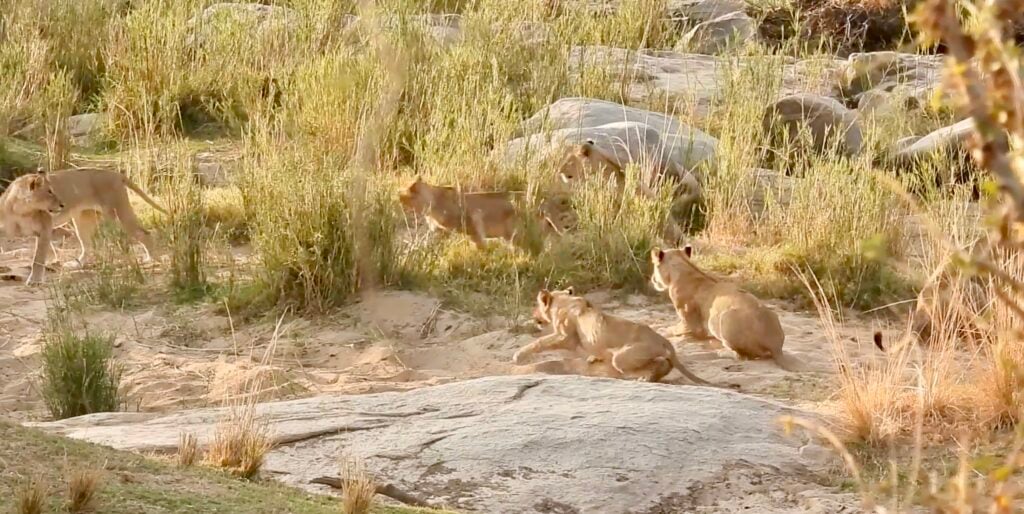
Resting lions are still hyper-aware, however. Their ability to instantly switch from relaxation to full sprint is part of what makes them such successful predators.
As the pride sprawled out in the sun, they appeared vulnerable, but in reality, they were ready to spring into action at a moment’s notice.
The Threat is Revealed
After a few seconds, the source of the lion’s unease became impossible to ignore. One lioness stood up, her body language shifting from rest to retreat.
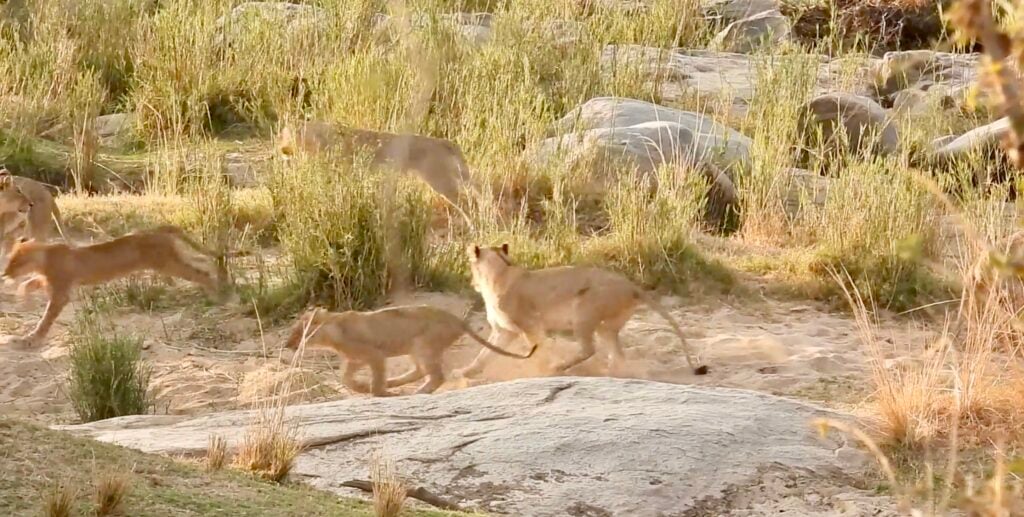
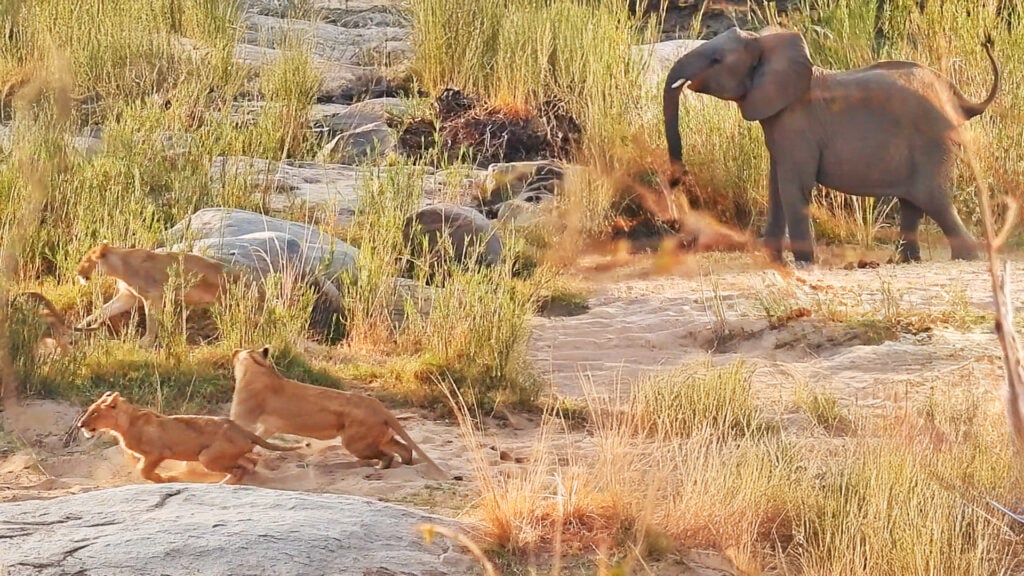
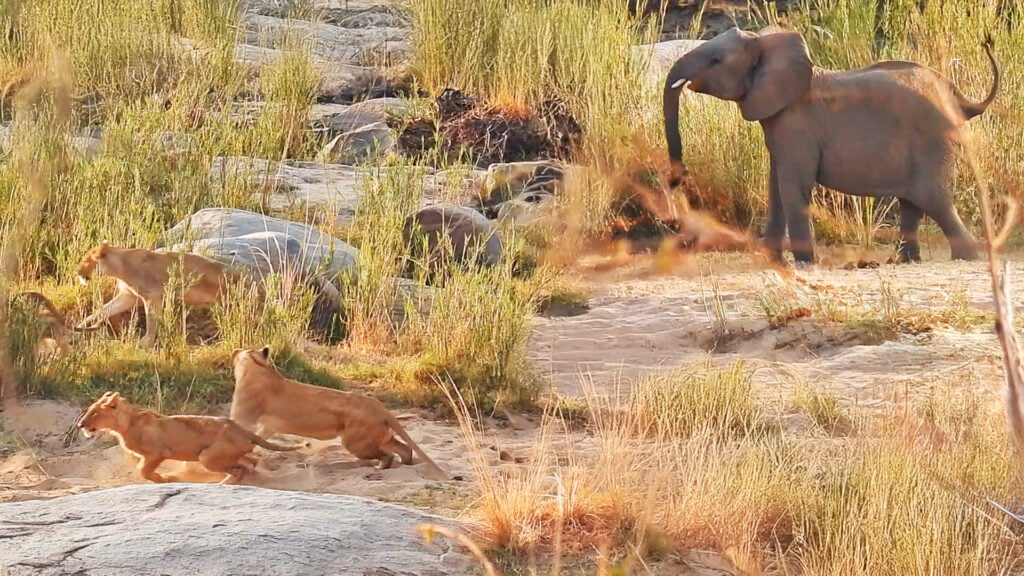
As she began to walk away with the purposeful stride of an animal that knows lingering is a bad idea, the rest of the pride reacted more instantly. In a split second, all of them sprang up and bolted in the same direction, abandoning their nap and their territory in an urgency to escape!
As the lions scattered, a loud trumpet could be heard, revealing the source of the threat. The camera panned to the right, and sure enough, a large elephant stood agitatedly, flapping its ears and swinging its tail and trunk in an unmistakable display of irritation.
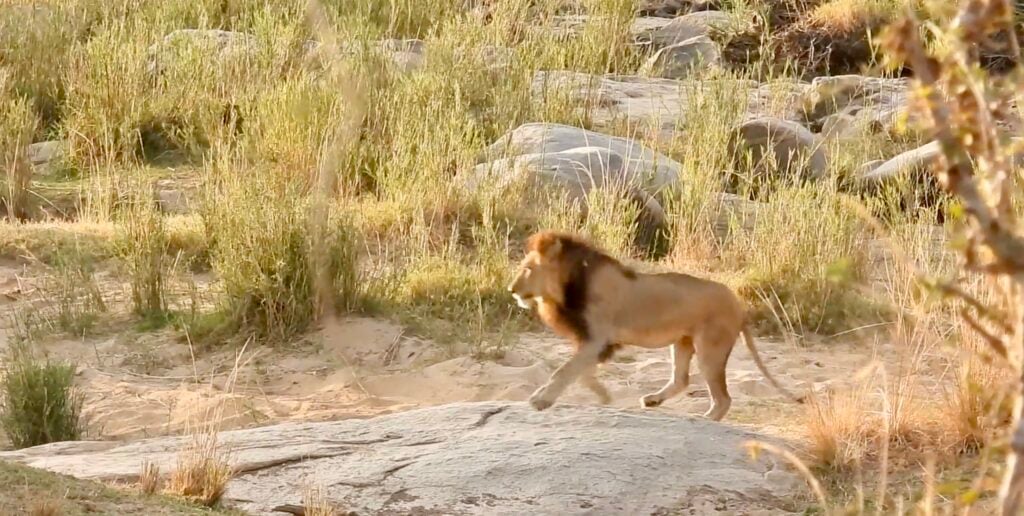
The lions ceded their comfortable resting spot and made room for the elephant, who they had no intention in crossing.
Why Elephants Bully Lions
While lions are apex predators, elephants are simply bigger, and they know it. Elephants are often observed chasing lions away, especially when they have calves nearby or when lions are resting too close for comfort.
Get our Best Sightings as they Come in

Elephants will use a combination of sound, posture, ear-flaring, and forward movement to assert their dominance. Trumpeting, as heard in the video, often accompanies a threat display meant to warn predators that the elephant is fully aware of them and ready to escalate if necessary.
This signing is a perfect example of how even a single adult elephant can displace an entire pride!
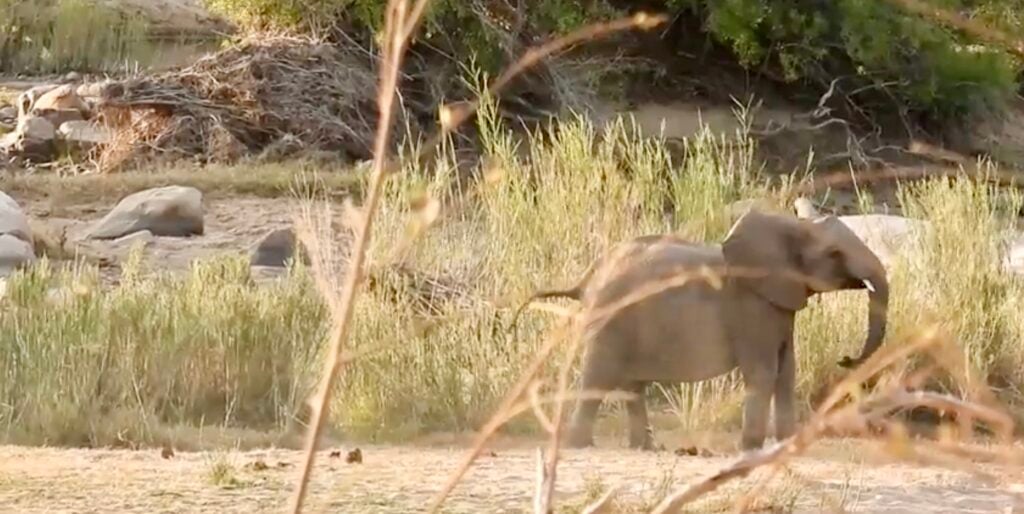
For the lions, the risk wasn’t worth it. One swipe from an elephant’s trunk or a single kick could be fatal to them.
A Reminder of Power Dynamics
This short yet exhilarating moment highlights a core truth of the African wilderness: predator hierarchy isn’t just about who hunts whom. It’s about size, confidence, and situational dominance.
In many encounters, elephants don’t just outrank lions; they overwhelm them.
For Marelize, this unexpected burst of action turned a peaceful sighting into a memory she’ll never forget. For the lions, it was a rude awakening and a reminder that they aren’t always the bosses of the savannah.