
















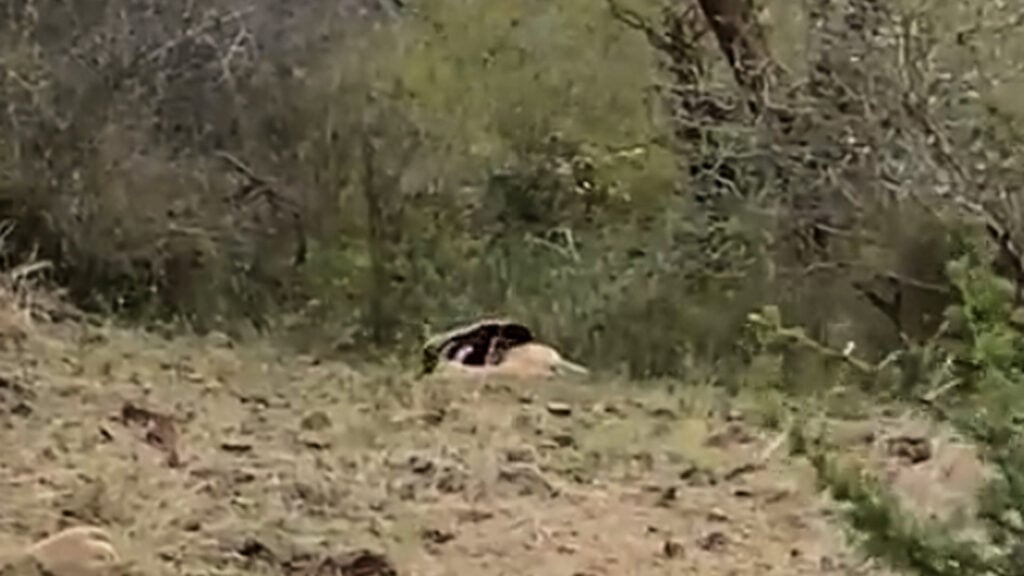


Visitor Daniela Talamantes submitted this video to Latest Sightings. She filmed it on the S29, in the southeastern Kruger National Park, South Africa.
Dead impala
Daniela was on a game drive when she noticed something lying on the ground. On closer inspection, she realised it was a dead impala ram.
Unfortunately, there was no sign of any predators, so how the antelope died is a mystery.
Zoomed in
As she zoomed in, she realised that an animal was near the carcass. Its distinctive black and white coat gave it away as a honey badger.
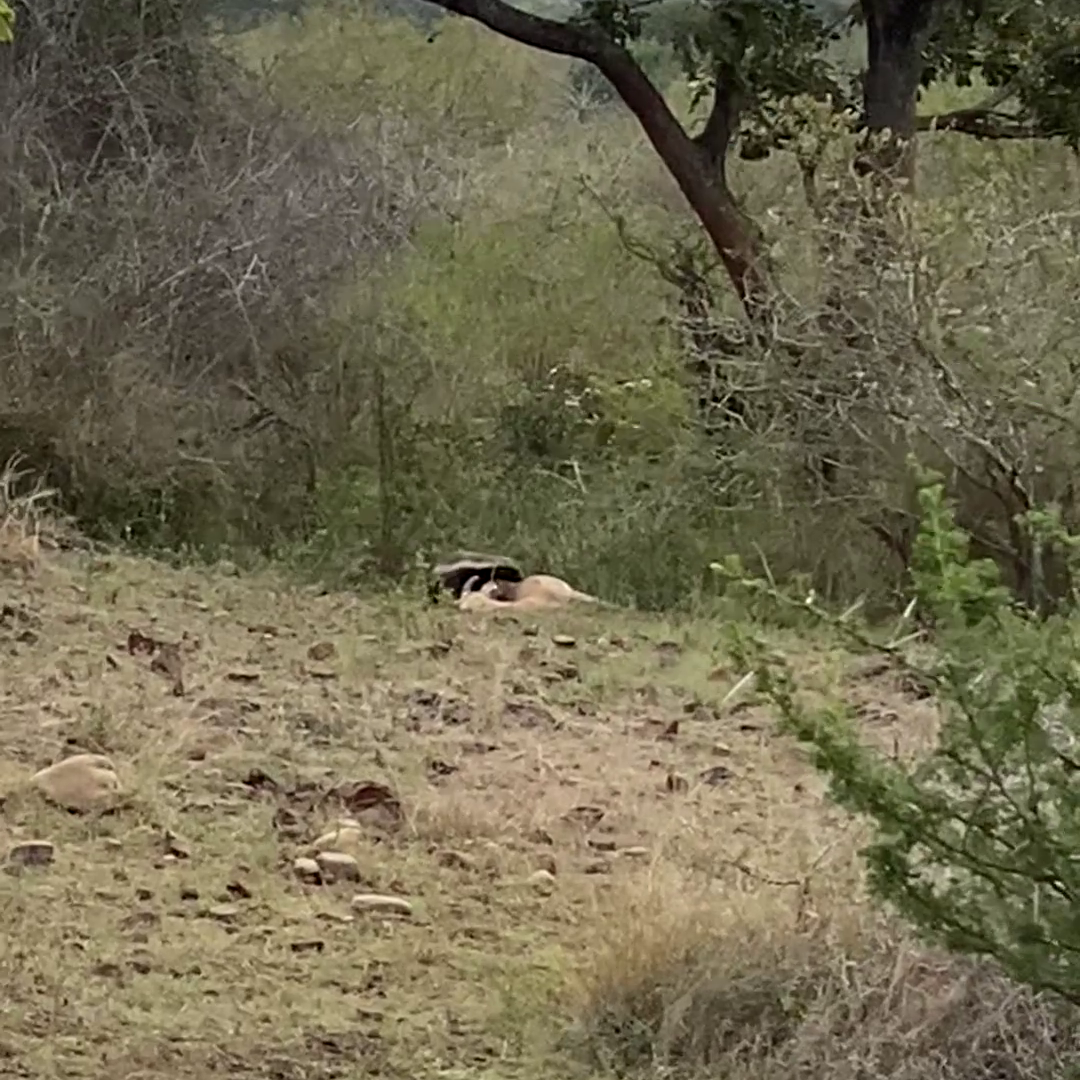
Delighted with her discovery, Daniela began filming. To her surprise, she realised that the badger was feeding on the impala.
It is rare enough to see a wild honey badger. So, to see one actively scavenging was extra special for Daniela.
Feeding badger.
Subsequently, as she watched, she saw that the badger seemed to be chewing on the back of the impala’s neck. From time to time, the badger lifts the ram’s neck and head in its powerful jaws.

In case you’re wondering, it is entirely feasible that the badger killed the antelope. However, since no one saw the incident, we can only speculate.
Honey badger diet
Honey badgers are omnivores, eating a mixture of fruits, honey, insects, rodents, reptiles, and small to medium-sized mammals.
As regards impalas, they normally attack juvenile or injured specimens.
Short-sighted and short-tempered
Every so often, the honey badger would stop feeding and look towards Daniela and the other visitors who were enjoying the sighting.
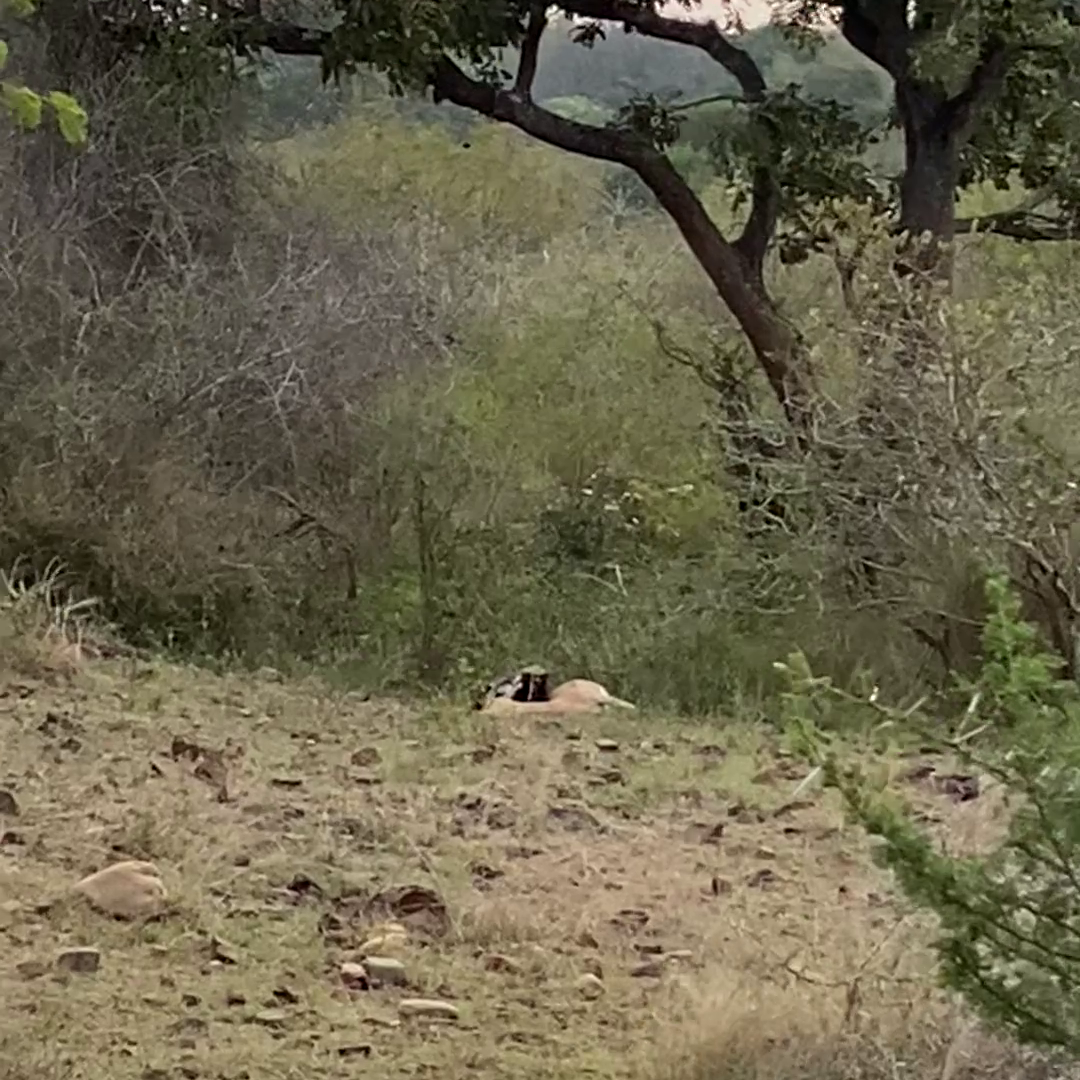
Honey badgers have relatively poor eyesight, so it was probably trying to pinpoint the source of their voices. That said, the noise is unlikely to frighten the badger off.
Honey badgers are renowned for their fearlessness. They have been known to defend themselves against any creature that dares mess with them. This includes leopards, lions, hyenas, and even elephants.
Side-view
After feeding on the neck for a while, it seems the badger decided to look for a fleshier part of the impala to feast on. As it moved, it presented its side profile, showing off its distinctive high-contrast markings.

As is often the case with animals you shouldn’t mess with, these markings serve as a warning to other creatures not to approach.
Get our Best Sightings as they Come in

To defend themselves further, badgers may secrete a noxious chemical. Should this fail as a deterrent, they have sharp teeth, powerful jaws, and long claws with which to defend themselves.
Lastly, they have a thick, loose skin covering a squat, muscular body. Even if bitten or pinned down, they can still manoeuvre, enabling them to retaliate against the odds.
Nutrient-rich organs
As the video draws to an end, it looks like the badger is trying to rip open the antelope’s belly.
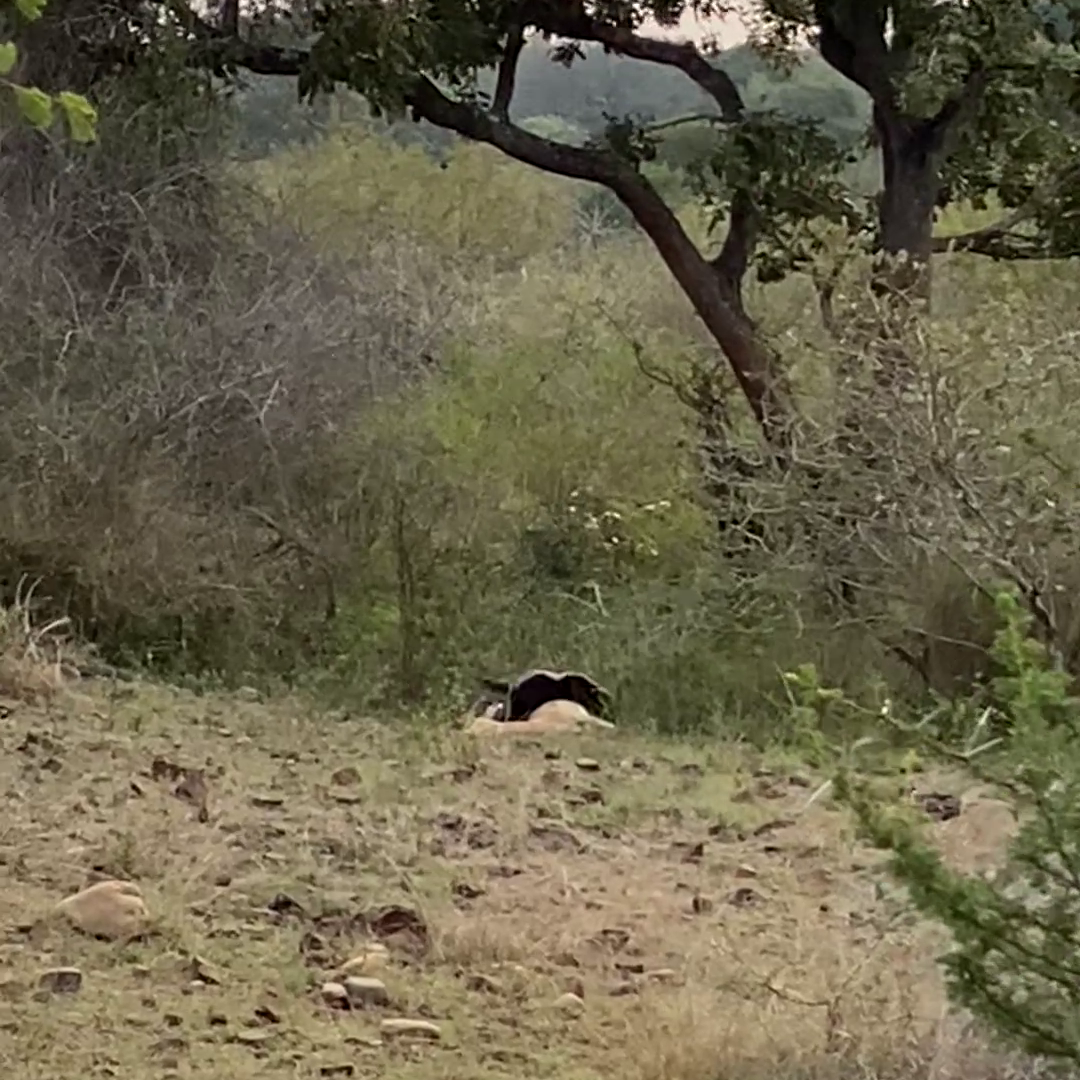
In doing so, it will be able to get to the highly nutritious organs.
More about honey badgers
Honey badgers are found across sub-Saharan Africa and southwestern Asia. They can be found in a wide range of habitats, from deserts to forests. Although seldom seen, they are common and active both day and night.