


















A Lazy Afternoon Interrupted
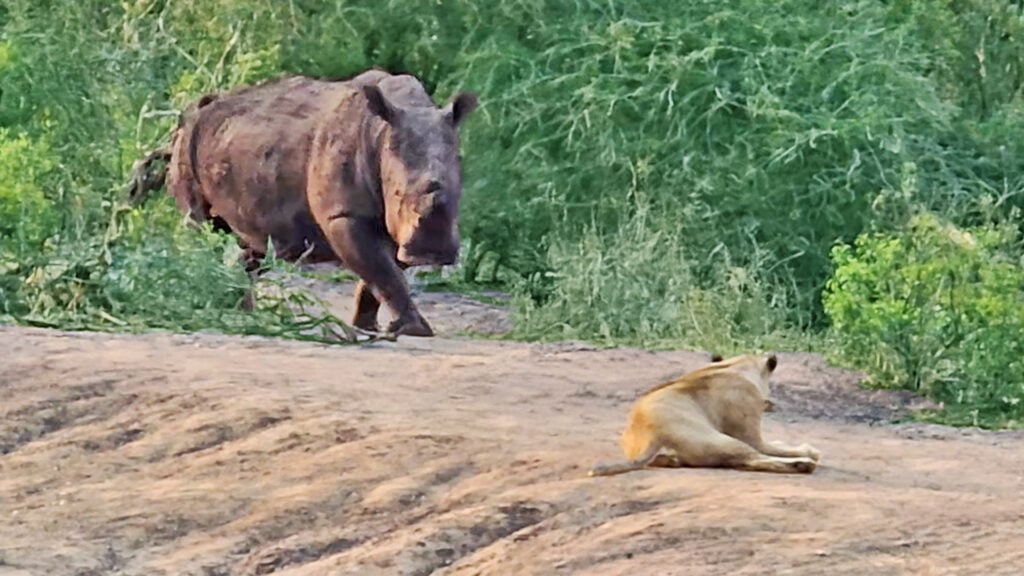
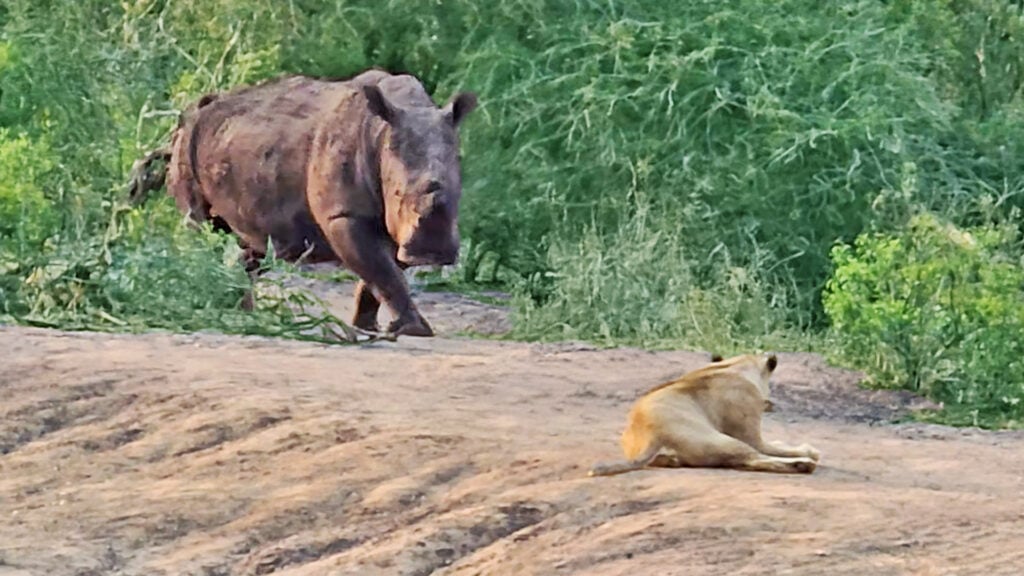
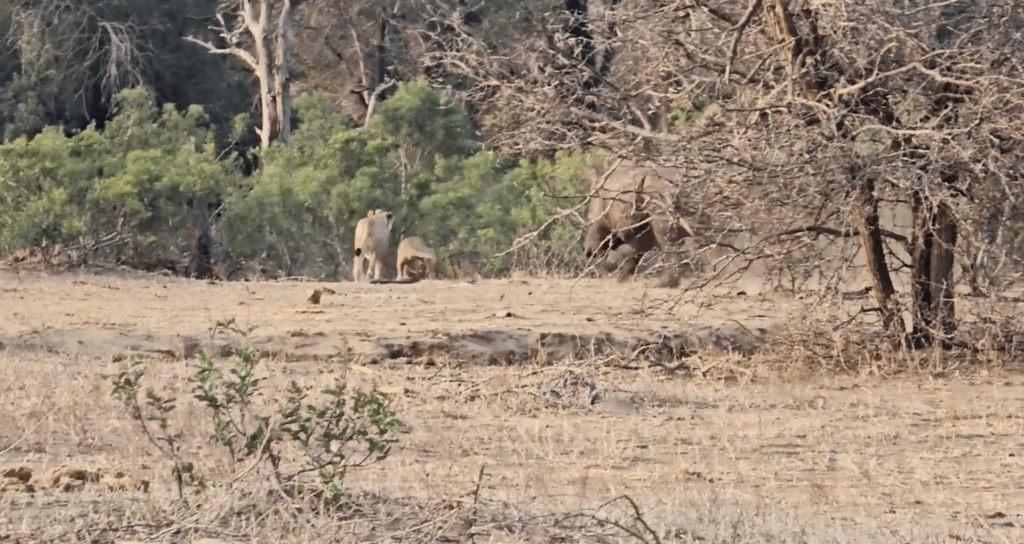
On a warm afternoon along the H7 in Kruger National Park, a few lionesses had settled into the dust for a well-earned rest. The scene was calm, peaceful, and bathed in soft golden light…that is, until a large white rhino emerged from the bushes.
At first, the lions barely reacted. For predators accustomed to ruling their space, a slow-moving rhino wasn’t necessarily worth concern.
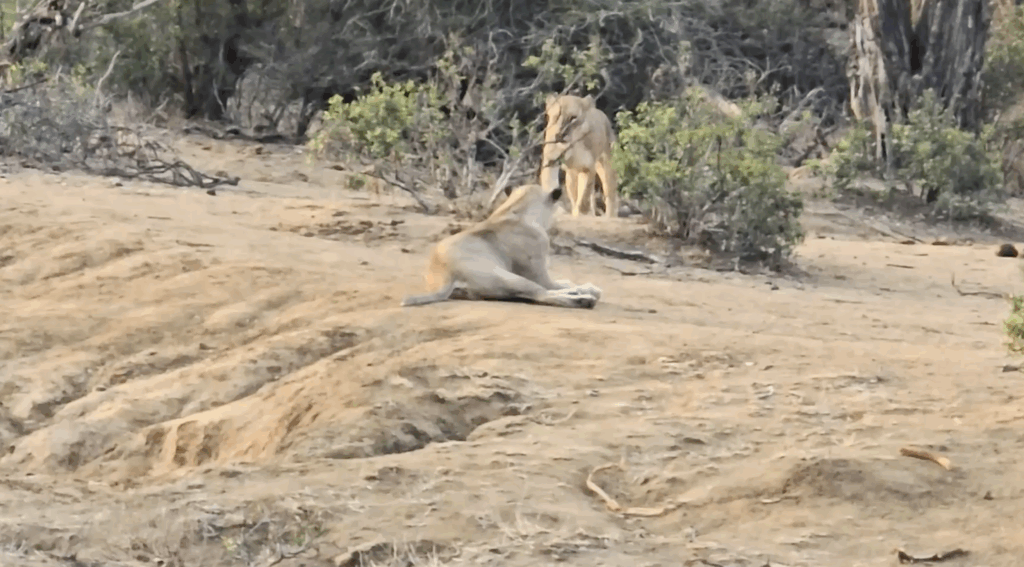
One of the lionesses, who was already walking about, decided she’d rather not test her luck and calmly wandered a few meters away. The other lioness in view, however, lingered and watched with casual curiosity rather than fear.
The Standoff Builds Tension
As the rhino paced around, its agitation became obvious. It paused for half of a second and fixed its gaze on the nearest lioness (the one who had dared to stay put).
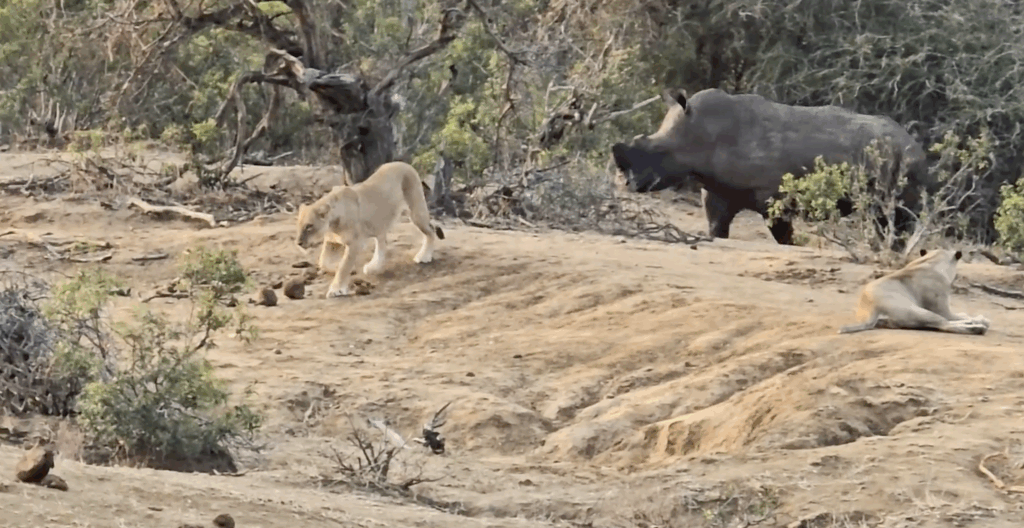
Though lions are apex predators, even they know that a rhino’s horn and 2-ton frame are not to be underestimated. This brief pause was all it took for her to receive the message: time to move.
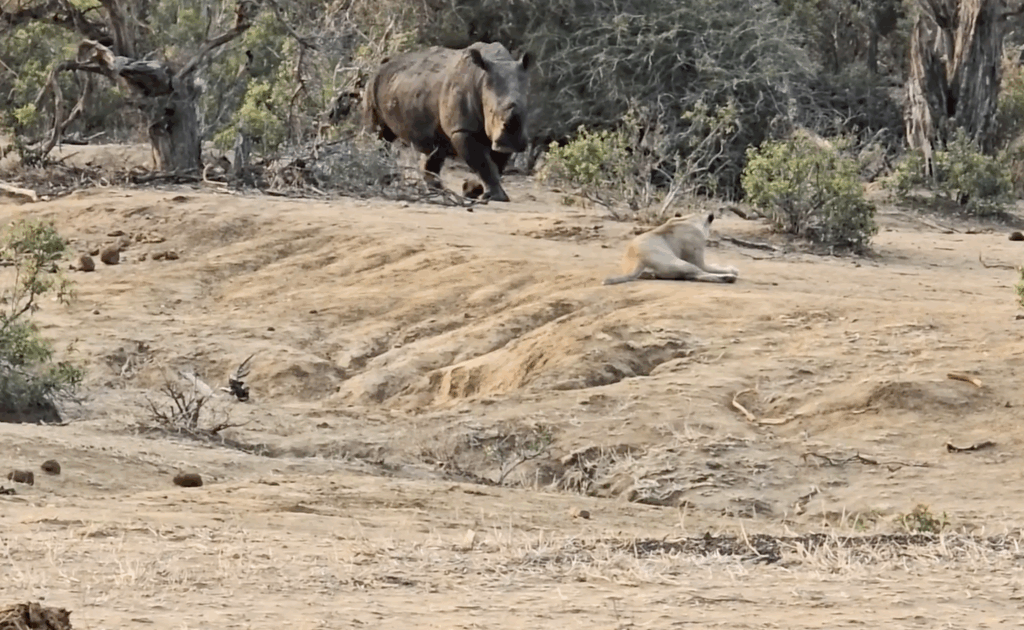
She tensed her muscles as the rhino took a few more intentional steps forward, not quite willing to make a run for it just yet…
A Burst of Power
Then, in an instant, the rhino made its decision. It took off in a sudden burst of speed, dust flying beneath its feet! The lioness, already prepared to escape, bolted upright at the exact moment the rhino took off.
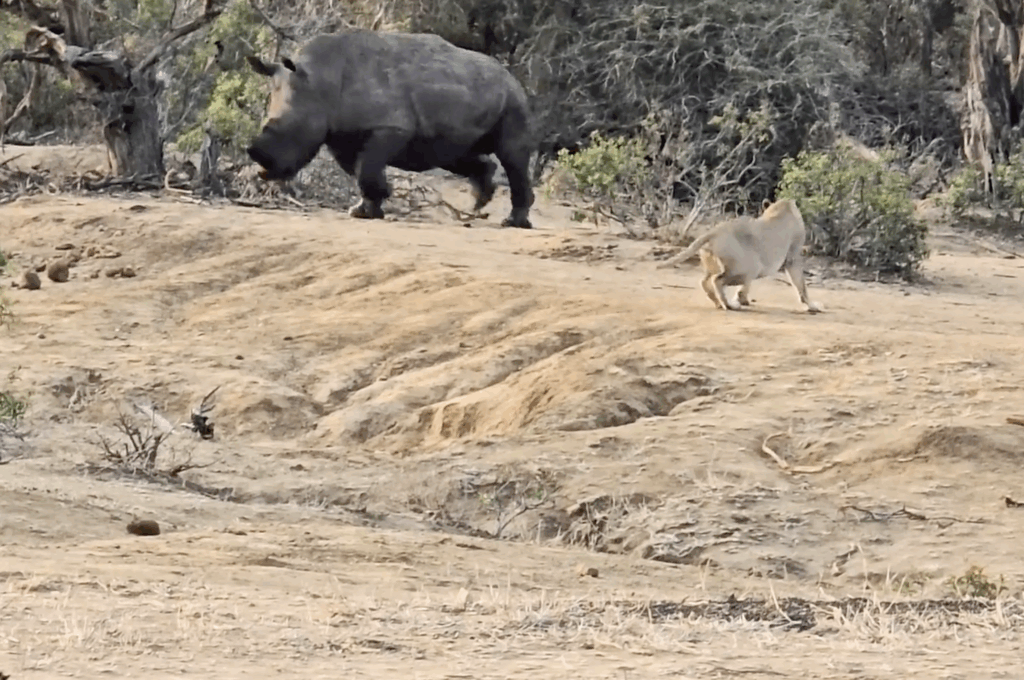
She began to run away, not at a full sprint, but rather a concerned flee, in the direction of the bushes. The rhino thundered after her, wanting to make its message clear.
The chase didn’t last long, as rhinos rely more on explosive force than endurance. Once it scared the lioness far enough away, it slowed, then turned back toward the other lions who had remained behind.
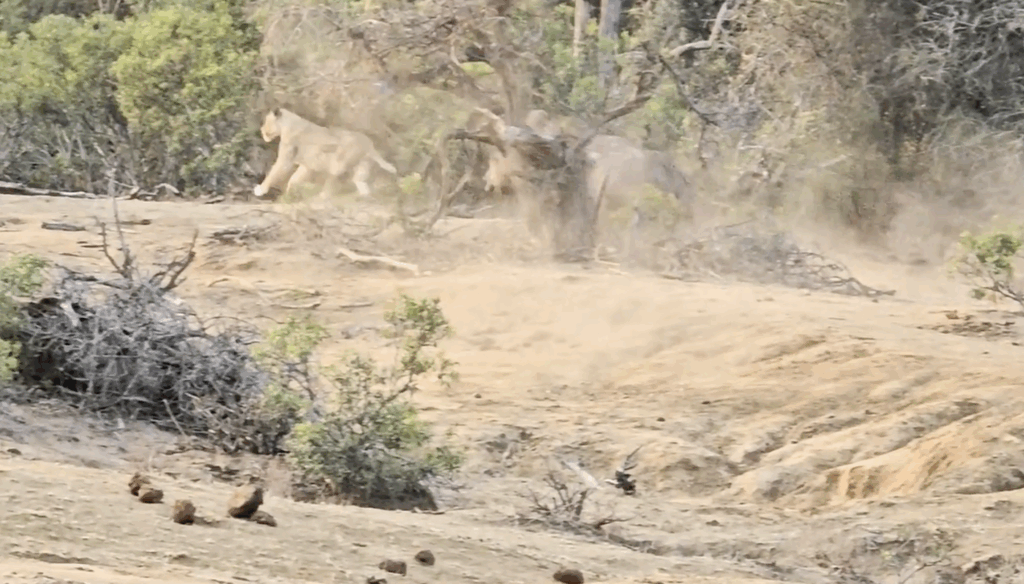
With renewed confidence, it charged again, sending the remaining lionesses scattering in all directions. Within seconds, the area was completely cleared of lions, leaving the rhino to patrol its reclaimed territory with unmistakable satisfaction.
Why Rhinos React So Strongly to Lions
Rhinos are not typically aggressive without reason, but they are highly territorial and easily threatened, especially when predators linger too close. Despite their size, rhinos have poor eyesight, which makes them more reactive to unfamiliar shapes, smells, and movements.
Get our Best Sightings as they Come in

When lions, especially lionesses known for hunting cooperatively, rest in a rhino’s core area, the rhino interprets this as a potential threat. Territorial charges are a common defensive behaviour, meant to drive intruders away rather than harm them.
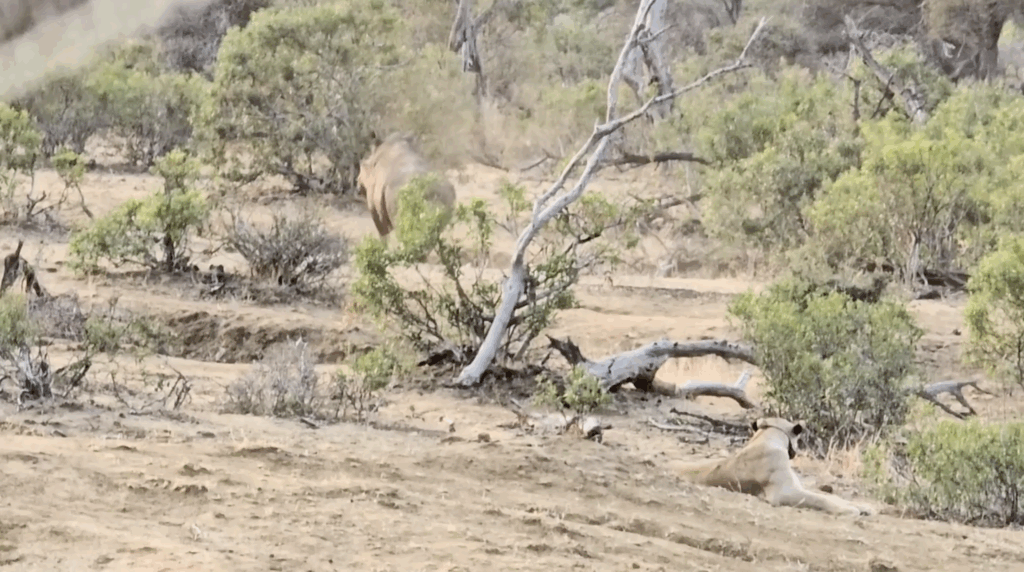
In this case, the rhino’s instinct to protect its space overpowered any hesitation, resulting in a dramatic but typical display of territorial dominance.
Nature’s Power Dynamics on Full Display
This encounter serves as a reminder that even apex predators must yield their space when faced with animals whose strength and instinctive defensiveness give them the upper hand.
For everyone watching, the sighting showcased a rare and thrilling reversal of roles, where lions, usually feared by all, became the ones fleeing for safety.