














The Silent Opening Scene
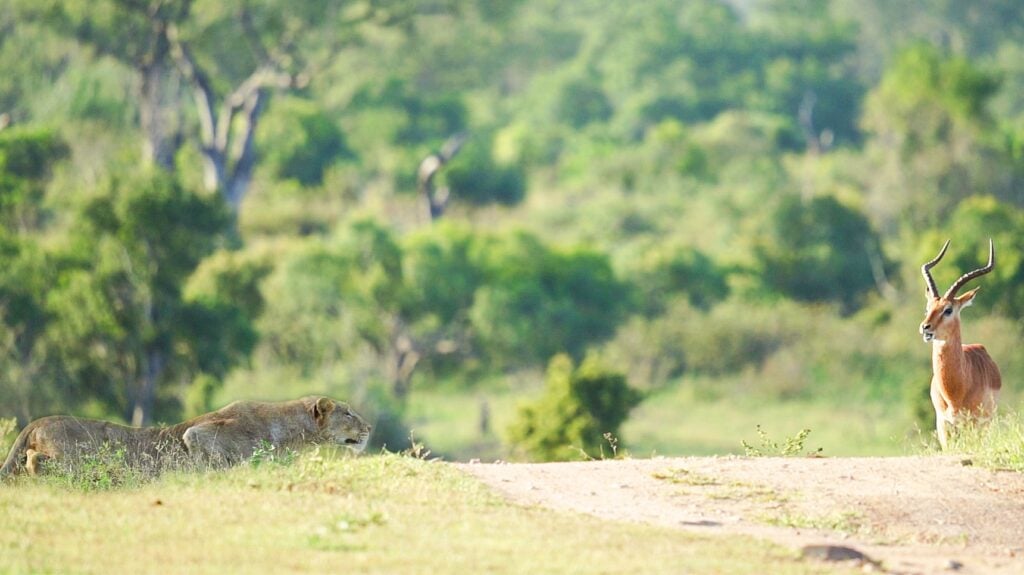
The video filmed by ranger and wildlife photographer Kevan Dobbie begins with an image that could have been pulled straight from a nature documentary. A lion lies completely flat in the tall grass, every muscle poised for action.
Its tawny coat blends seamlessly into the golden vegetation, and its ears are pressed tight against its head. Not a twitch gives away its position.
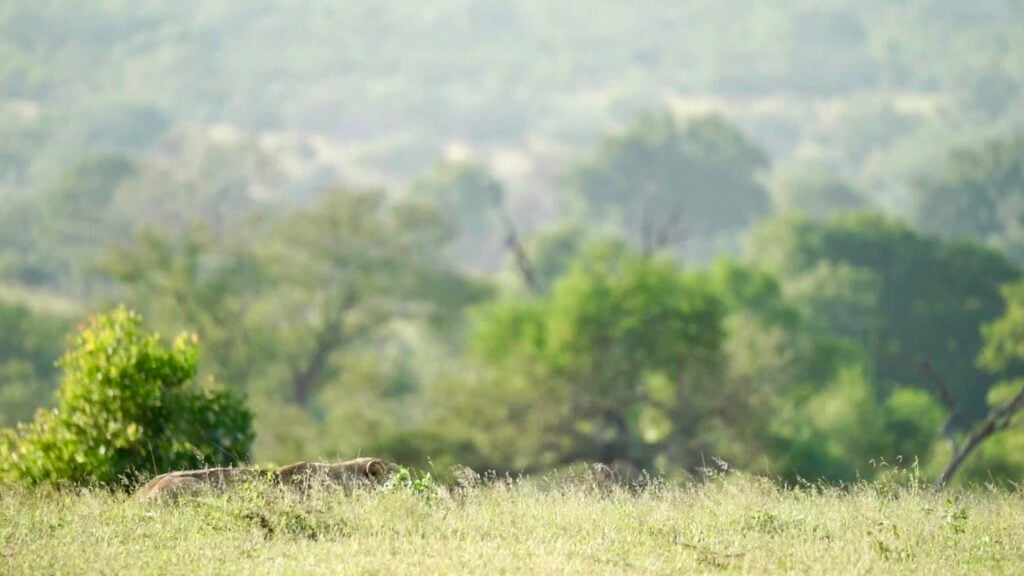
The only movement in the frame comes from the wind, which sweeps across the grasslands, bending the stalks in the same direction and conveniently carrying the lion’s scent away from its target.
A Lone Impala in the Danger Zone
Down a dirt road, not far from the predator’s concealed position, stands an impala. It appears relaxed, with its slender legs steady as it surveys its surroundings and chews away at its meal.

The impala is perfectly positioned for an ambush, and in that moment, it has no idea a skilled hunter is watching its every move. This is the precarious balance of the African bush where one second of inattention can be the difference between life and death.
From Slink to Sprint
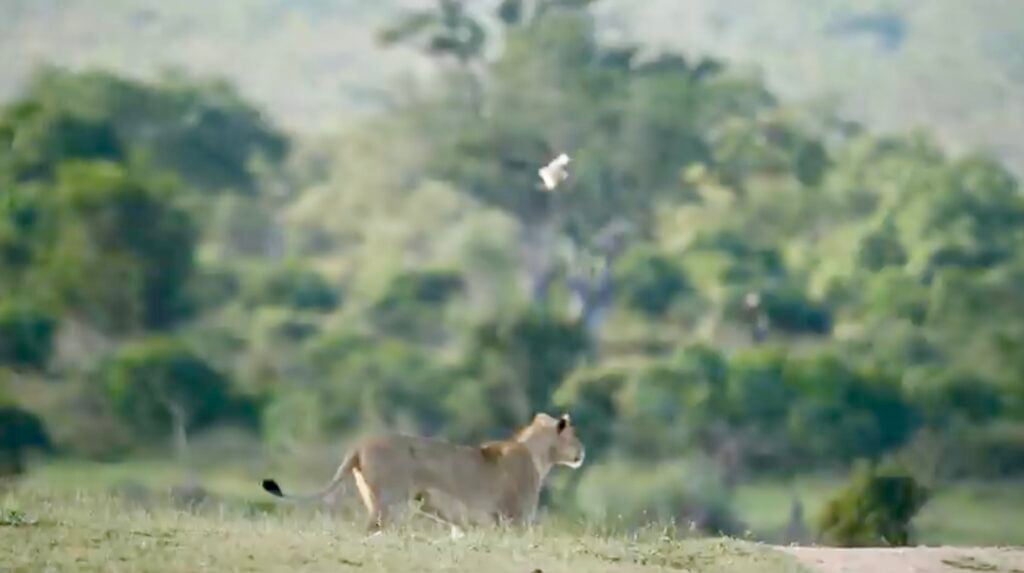
After several tense seconds, the lion makes its move. It lifts its body just enough to glide forward through the grass, its paws making no sound on the earth.
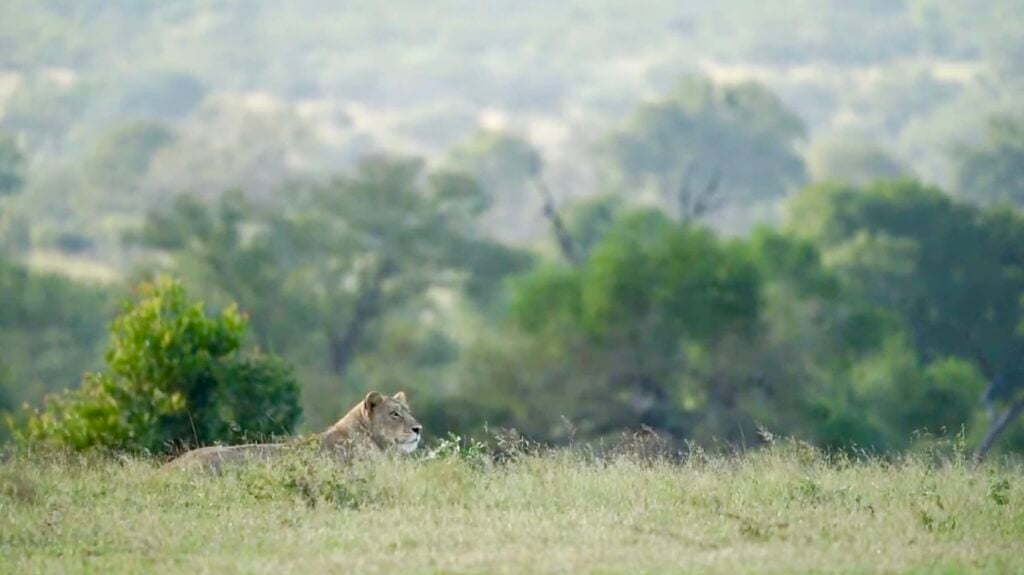
Every step is deliberate: its tail stays low, its head stays forward, and its shoulders roll smoothly as it covers the ground. Then, suddenly, the slow, deliberate movements give way to explosive power!
The lion bursts into a full sprint, its muscles firing in perfect coordination. For a few moments, the outcome hangs in the balance.
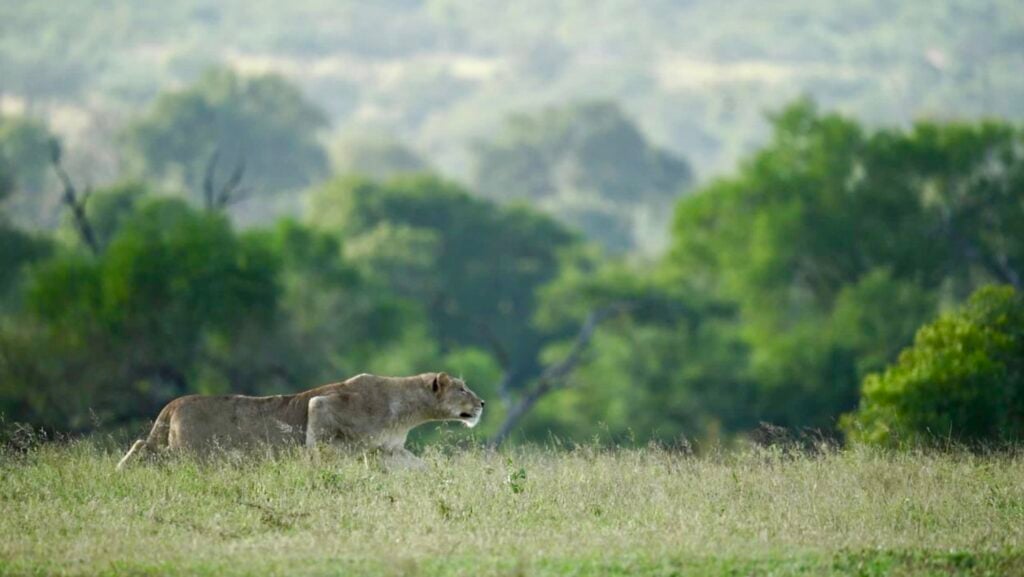
The camera tracks the predator, but the impala is out of view. Then, just as quickly as it escalated, the lion’s pace slackens, and the chase is over before it truly began.
The Prey’s Escape
Though unseen on camera, it becomes clear that the impala must have spotted the danger and reacted instantly. These antelopes rely on sharp eyesight, speed, and agility to avoid predators, and this time, those instincts paid off.
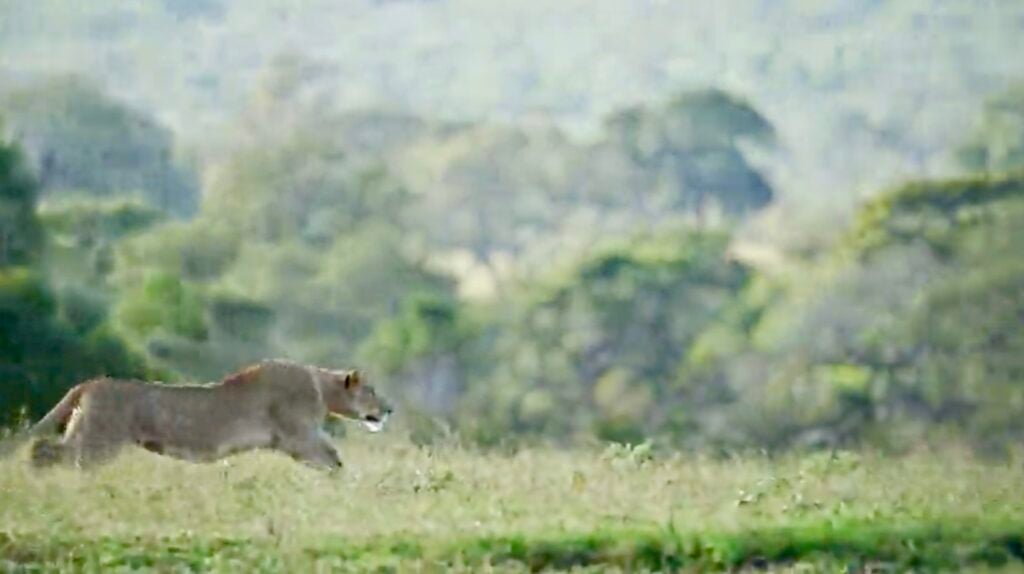
With an open stretch of road in front of it and a head start on the lion, the impala likely darted away at full speed, weaving to throw off the chase. While lions are apex predators, their hunts are far from guaranteed.
Get our Best Sightings as they Come in

Studies suggest that a single lion’s hunting success rate hovers around 20–30%, depending on conditions. Prey animals in places like MalaMala Game Reserve are constantly on high alert as their survival has been honed by generations of predator encounters.
Even when the wind and terrain favour the hunter, one flick of an ear or sudden movement can send the quarry fleeing to safety.
A Lesson in Patience and Persistence
For the lion, this failed hunt is just one of many. It will conserve its energy, bide its time, and wait for the next opportunity.
In the African bush, persistence is as vital as power, and patience often pays off for those who can outlast their prey. For the impala, this was a narrow escape and a reminder that every day in the wild is a gamble where vigilance is the ultimate survival skill.