















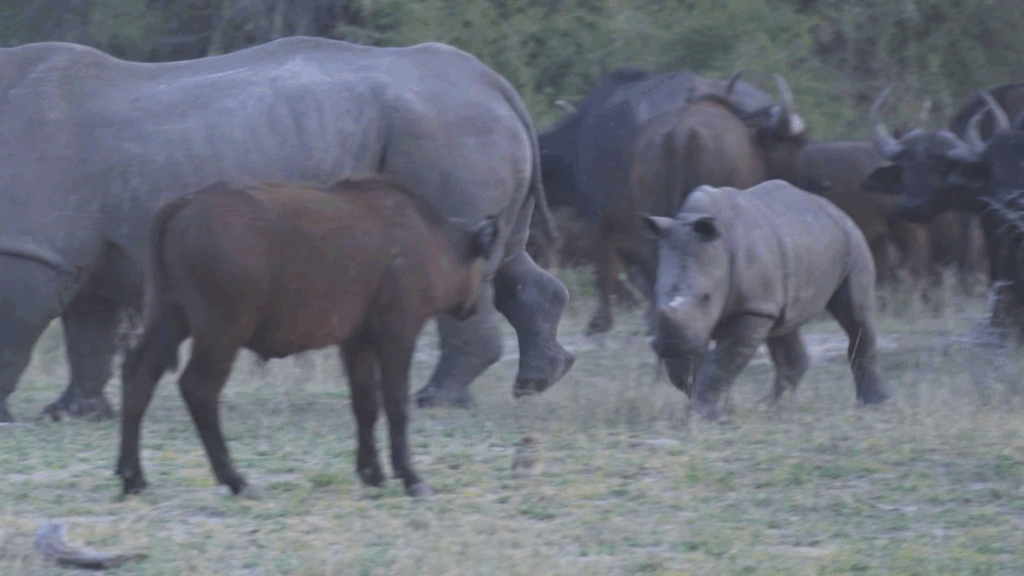

The two young animals noticed the other’s presence… in spite of there being so many ‘boring’ adults around.
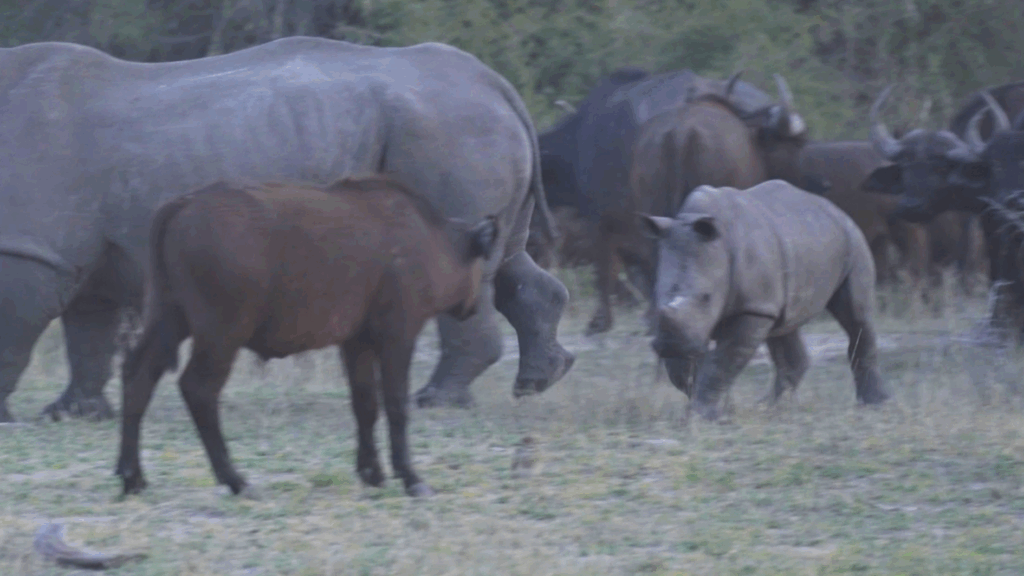
Scenes of young animals encountering one another in the bushveld often carry a gentle charm which contrasts with the harsh realities of the wild.
This baby rhino and a baby buffalo noticing each other among their respective herd members was a tender example.
Though they belonged to very different species, the baby animals’ curiosity and youthful energy created a brief moment of interaction which highlighted the innocence of early life.
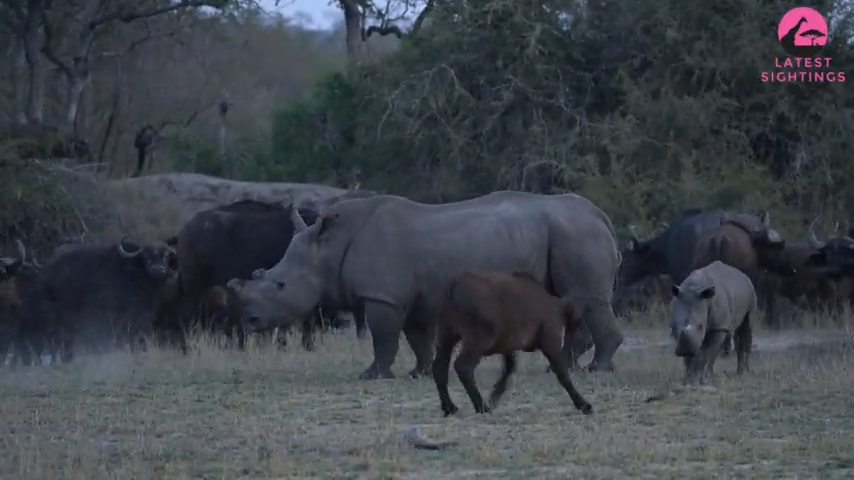
Playful natures come to the fore
Baby rhinos, or calves, are born after a long pregnancy of around 15 to 16 months. At birth, they can already weigh between 40 to 65kg. This is a remarkable size for a newborn. However, they still appear small compared to their massive mothers.
They are heavily dependent on their mothers for nourishment, protection, and guidance. Rhino calves usually stay very close to their mothers’ sides, often trotting just behind or slightly to one side, mimicking her movements and learning the patterns of the land.
They are also very playful, as this one showed through its approach to the baby buffalo. The playfulness of baby rhinos usually shows in mock charges, head-shaking, and curious sniffing at anything new they encounter, including other animals.
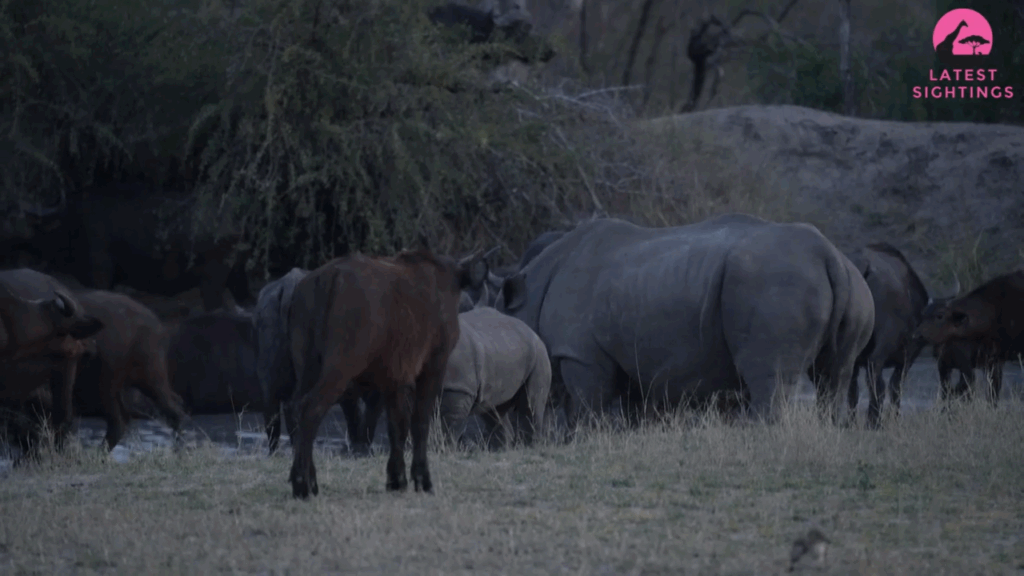
The baby buffalo stared on in interest as the little rhino mock-charged and showed innocent attempts at intimidation.
Get our Best Sightings as they Come in

Compared with baby rhinos, baby buffalo are born after a shorter gestation of about 11 months. They weight around 35 to 45kg at birth, and are more immediately integrated into the large and tightly-knit herd.
Unlike rhinos, which are usually solitary or move in small groups, buffalo live in great numbers. The calves grow up surrounded by the protection of many adults. This is a strategy which helps guard them against predators like lions.
Within hours of birth, a calf is already strong enough to walk and keep pace with the herd, though it continues to nurse for up to a year.
Much as with the baby rhinos, play is a central to the buffalo’s early development, and calves are often seen chasing one another, butting heads gently, or exploring under the watchful eyes of their mothers.

While being from different species, these two baby animals showed some amusing interactions.
In a poignant moment they pretended to charge one another. They also walked up to each another to see the other from close up.
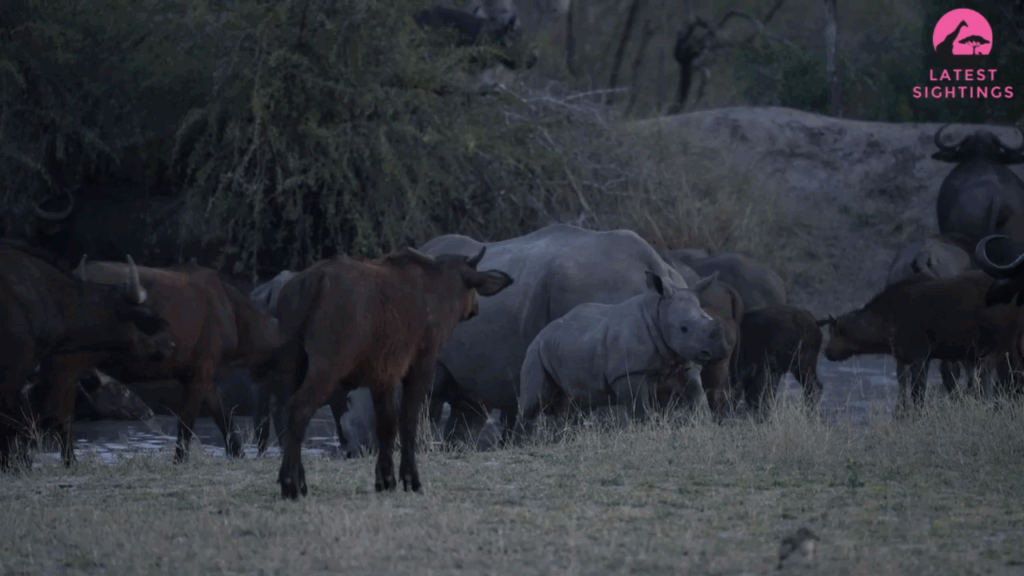
Then they stood staring at each other, perhaps sharing an understanding as the youngest of their herds.
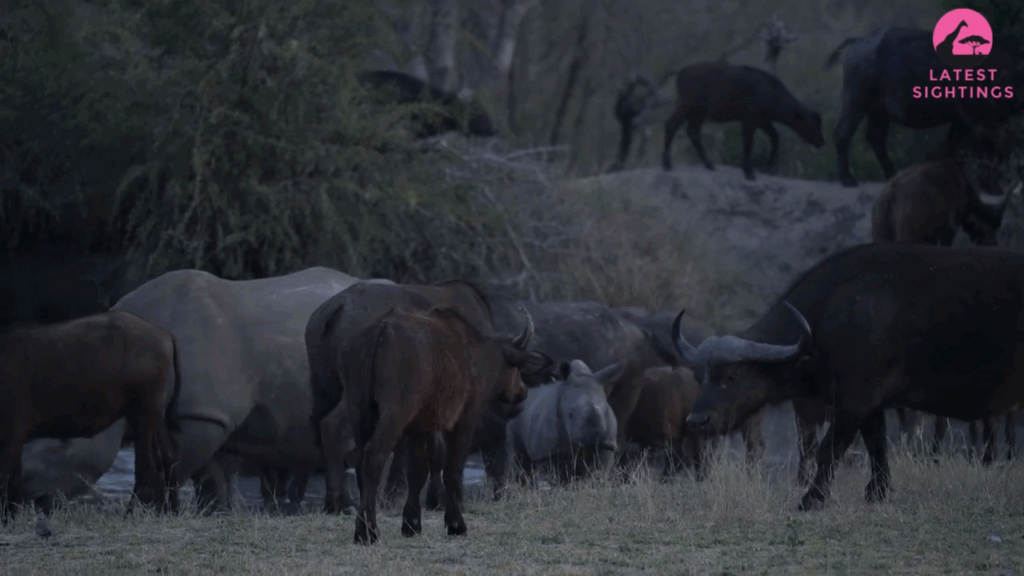
A mutual love for play
For the most part, the rest of the animals present were adults with no desire to play, and while the baby creatures were different animals, they possibly perceived the adults’ focus on grazing as dull and boring.
This beautiful moment provided a refreshing glimpse into the innocence of youth, which is evident in all species. The baby rhino and baby buffalo recognised in each other the desire for an adventure and the will to play.