
















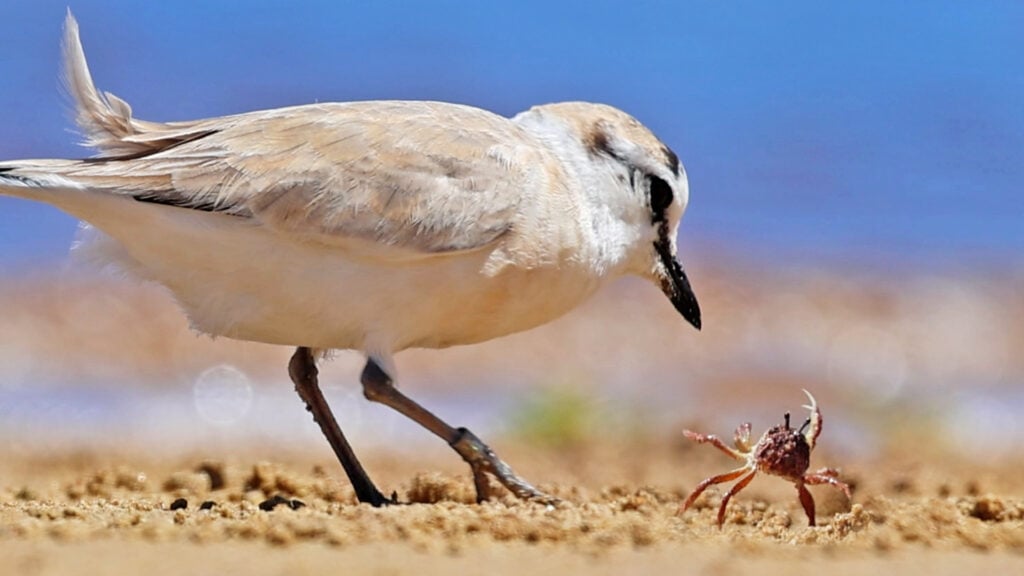

Photographer Peter Martin captured this incredible sighting on camera during a visit to Witsand in the Western Cape.
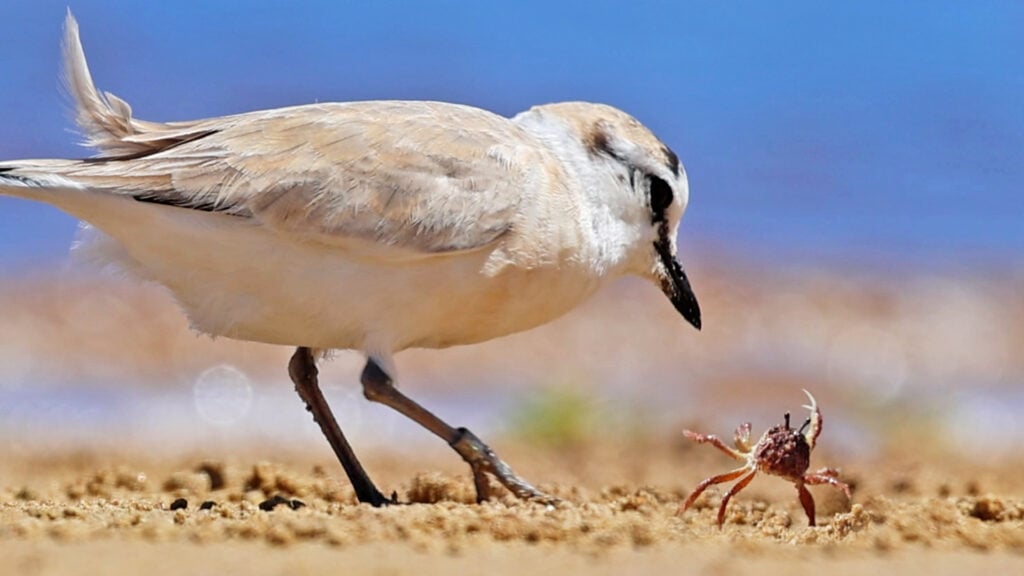
White-fronted plover settles near water’s edge
Peter explains how he had been walking along the beach in Witsand, admiring the beauty of the Western Cape coastline, when he spotted a couple of white-fronted plovers near the water’s edge.
“They were surprisingly calm in my presence, allowing me to get close enough for a great shot,” he says.
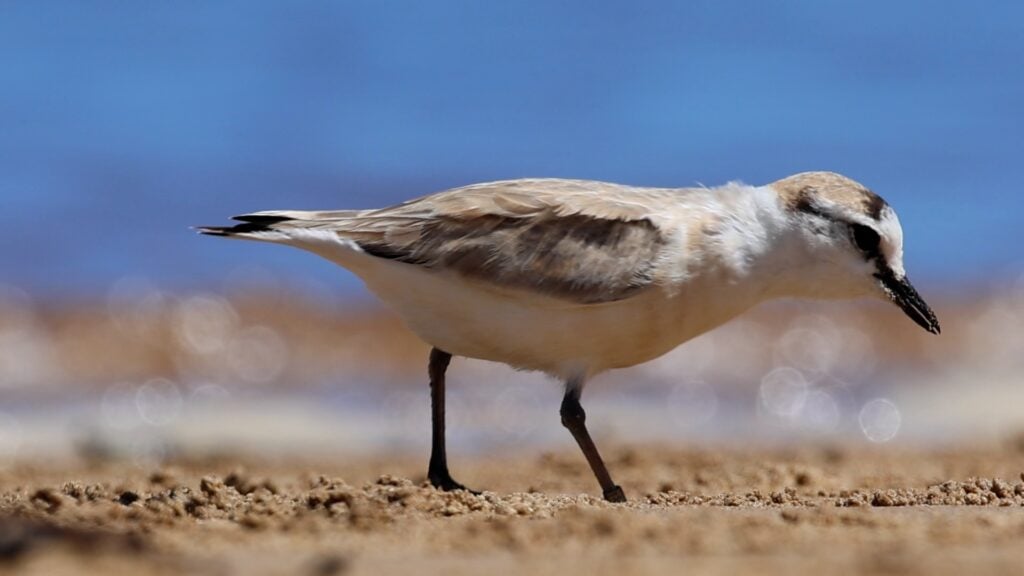
Clover spots crab on the sand
He says that he lay on his belly, aiming to photograph the birds at their eye level, which would give a unique perspective.
White-fronted plovers are small, interesting birds found along the coastlines of southern Africa. These birds are known for their varied diet, which mainly consists of small insects, crustaceans, like crabs, and sometimes even small fish.
They use their sharp eyesight to find food on the beach and in shallow waters.
Get our Best Sightings as they Come in

He says that as he was focusing his lens, one of the plovers spotted a small crab. The crab was right besides one of the white-fronter plovers. There was little nearby for the crab to escape under. As such, it was left vulnerable there on the sand.
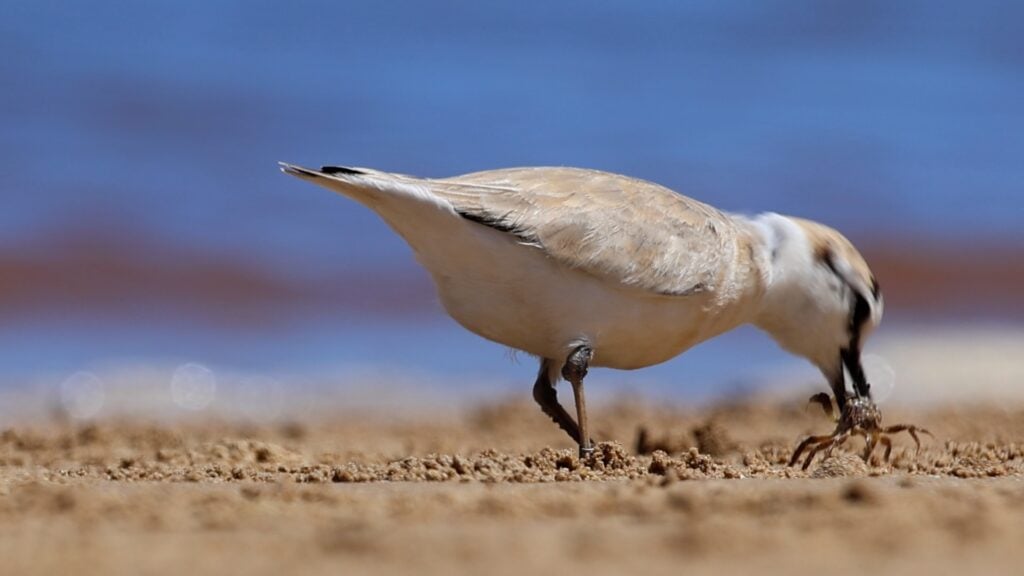
Determined crab fights against being eaten
Peter says that he watched as the plover tried to make a meal out of the little crab. It cautiously approached the crab, then, in one quick motion, pecked at it, skillfully avoiding the crab’s pincers. “The crab, despite its size, was determined to defend itself.”
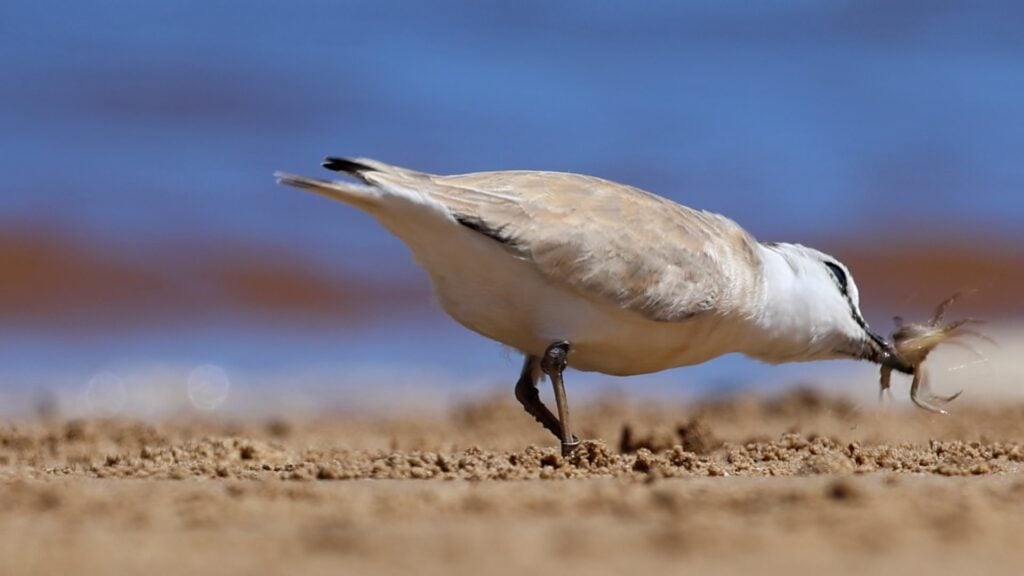
Clover proves to be a strategic eater
Peter recalls how the most intriguing part about the viewing was how the plover strategically targeted the crab’s pincers. “It seemed like a calculated move,” he says.
The smart little bird broke off the pincers one by one with lightning-fast strikes. This left the crab disarmed.
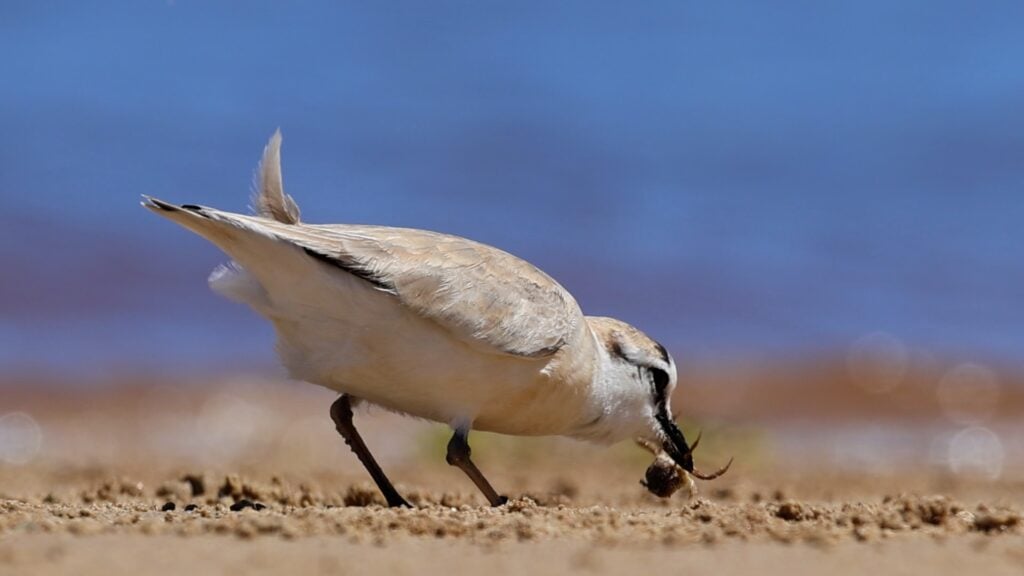
Plover swallows crab whole
With the crab’s main defence mechanism gone, the plover seized its opportunity. With one last strike, it grabbed the crab and swallowed it whole!
As Peter discovered, from behind his camera lens, white-fronted plovers are quite clever and quick in catching and eating their food, making them fun to watch while they’re busy searching for their next meal.
They typically forage along sandy beaches or mudflats, using their sharp eyesight to spot movement in the sand. When a plover detects a crab, it quickly darts in and grabs it with its slender, pointed beak.
If the crab is small enough, the plover will swallow it whole. However, if it’s too big or has strong pincers, as in the case with this objectionable crab, the bird will use a clever method. It will shake the crab violently or peck at it repeatedly to disable it, often aiming for the legs or pincers to immobilise it before eating.
Sometimes, plovers will even flip the crab onto its back to get easier access to the soft underside. Once subdued, they will break it into smaller parts or swallow the soft body after removing the harder limbs.