
















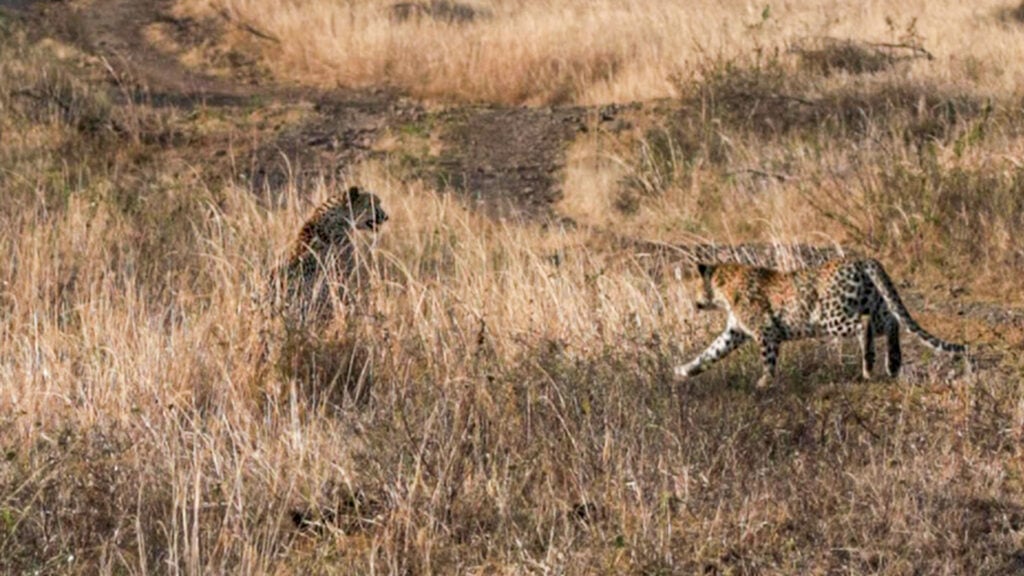

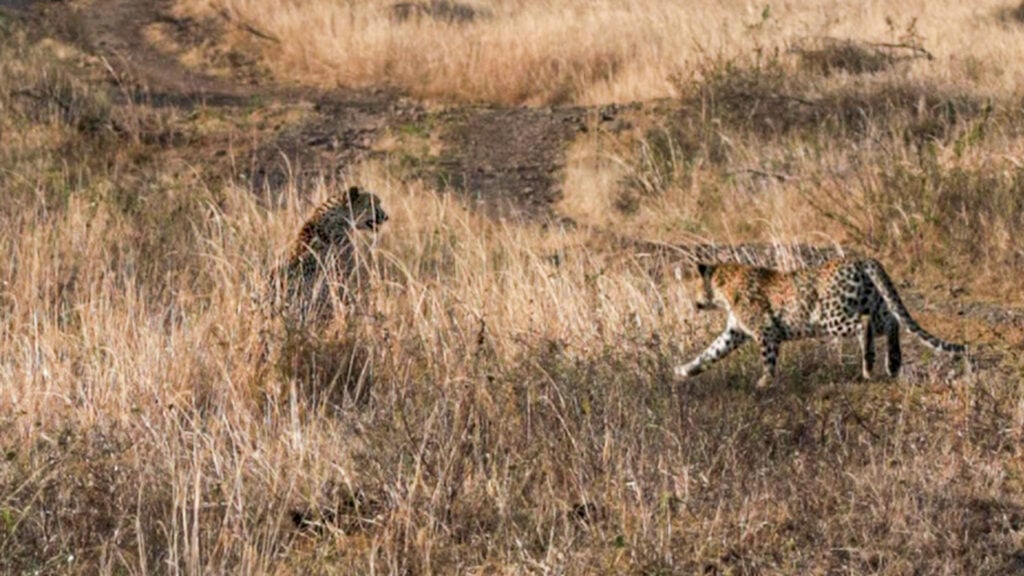
The sighting, captured by safari guide Grant Rattray in Phinda Private Game Reserve, unfolded in the blink of an eye. His footage opens calmly, showing a lone cheetah standing beside a dirt road amongst the tall grass.
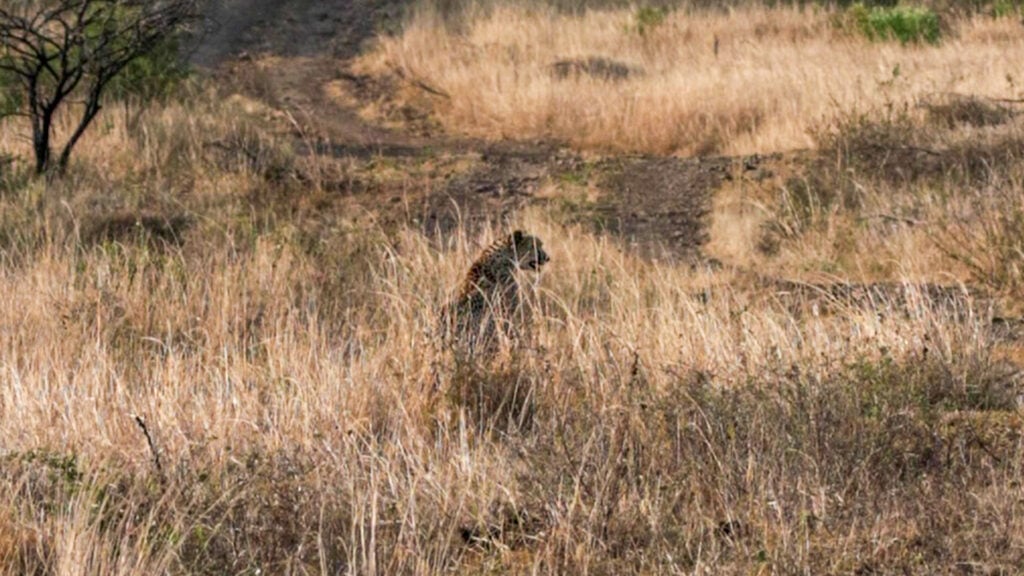
It was alert with a poised frame and eyes scanning the bush, portraying a picture of cautious confidence. Then, without warning, everything changed.
The Chase
From the opposite side of the road, a leopard burst into view, and the ambush was instantaneous. In a split second, the cheetah’s confidence evaporated, and it bolted.
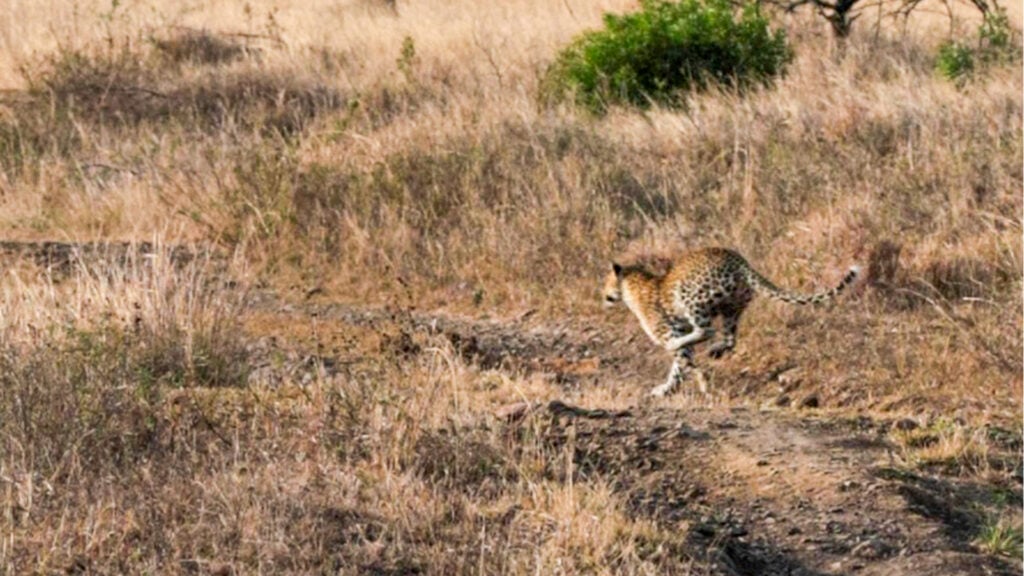
An explosive chase erupted across the road, with dust flying beneath both cats’ feet. In a matter of seconds, they vanished from the frame, disappearing into the bush and leaving the outcome unknown.
Why Leopards Target Cheetahs
Although both species are apex predators in their own right, encounters like this are not unusual, and they are rarely friendly. Leopards are dominant competitors, and cheetahs often fall victim to their aggression.
Unlike cheetahs, leopards are heavily built, immensely powerful, and capable of killing prey much larger than themselves. They are also opportunistic predators that prey on their rivals.
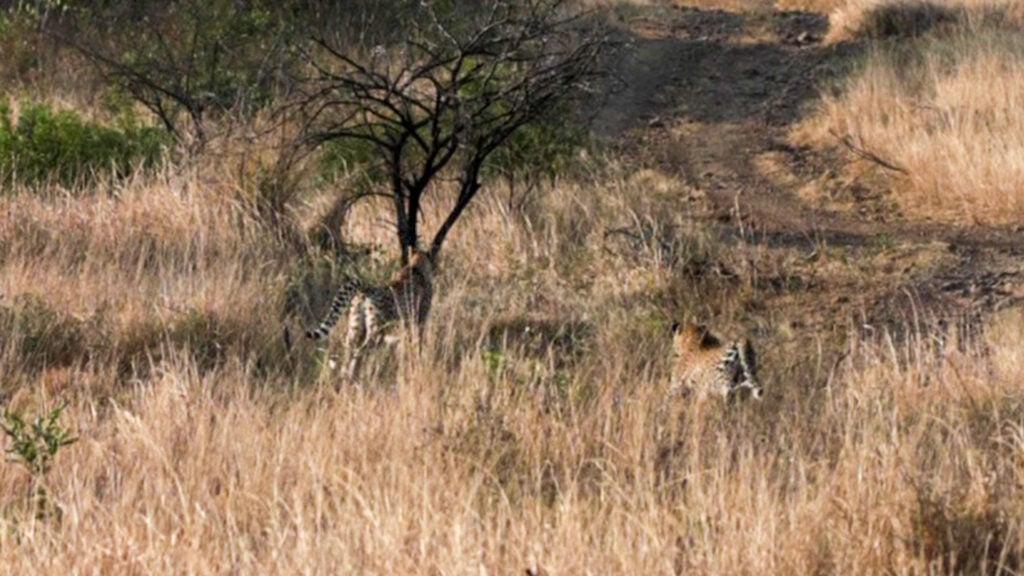
This leopard could have been driven to chase the cheetah if defending territory, competing for prey, or simply because of an instinct to eliminate a rival that could threaten future hunting success.
Cheetahs, by contrast, are built for speed rather than combat. Their lightweight frames, smaller jaws, and reduced muscle mass make them ill-equipped to fight off larger predators.
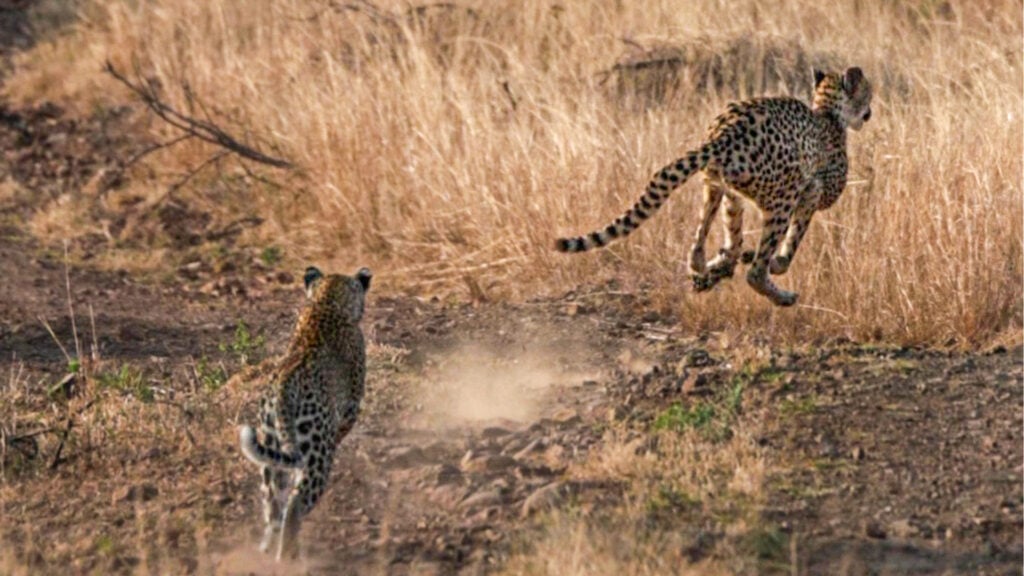
When confronted by leopards or lions, their only viable strategy is escape, and that is exactly what this cheetah did. In the wild, many decisions are made in a split second and are always motivated by survival.
A Dangerous Landscape for Cheetahs
Phinda Private Game Reserve supports a healthy population of large predators, including lions, leopards, cheetahs, and hyenas. While this biodiversity is a conservation success, it creates a challenging environment for cheetahs.
Cheetahs thrive best in open landscapes where visibility allows them to detect threats early. In areas with thicker vegetation, like the Phinda landscape in the video, ambush predators such as leopards hold a significant advantage.
Get our Best Sightings as they Come in

This makes every hunt, and every moment of rest, a calculated risk for cheetahs, who regularly lose kills to stronger predators. In some regions, lions and leopards will even kill cheetah cubs as a means to reduce competition.
Why the Chase Happened So Fast
The suddenness of this encounter suggests that the leopard was already stalking or resting nearby, concealed by the thick vegetation. Leopards are masters of stealth and often remain completely invisible until the moment they strike.
The cheetah’s position near the road may have offered a brief sense of security, as open ground can reduce the risk of ambush. But the leopard’s explosive entry shows just how quickly that illusion can shatter.
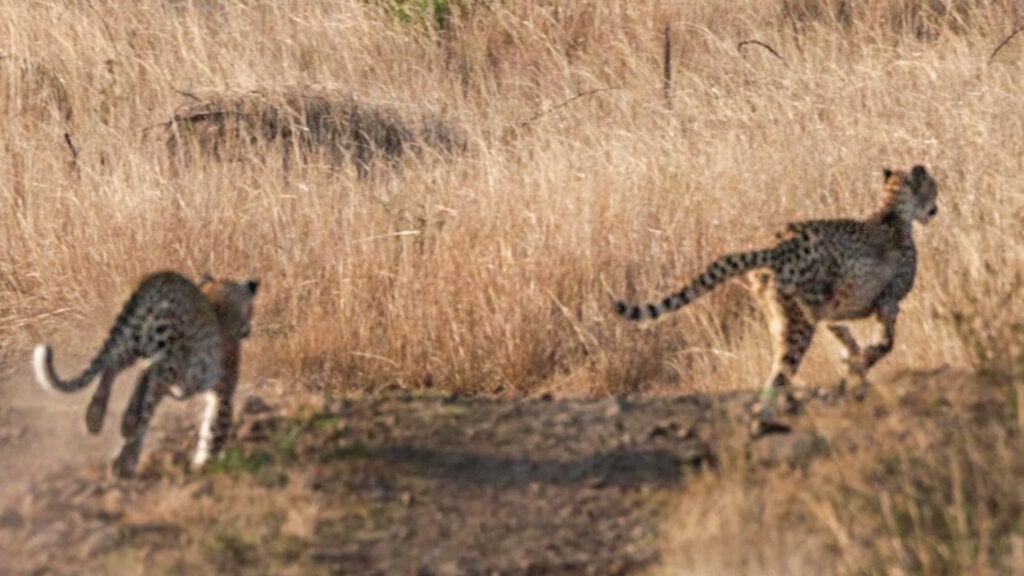
Fortunately for the cheetah, its greatest weapon is speed. While leopards are powerful sprinters, they cannot match a cheetah over longer distances.
Most leopard-on-cheetah chases rely on surprise, and if the cheetah gains even a few seconds’ head start, survival becomes far more likely.
A Harsh Reality of Predator Life
This brief but intense moment highlights the constant pressure cheetahs live under. Even as elite hunters, they are still vulnerable to competitors.
In the wild, survival is not just about catching food. It’s about avoiding those who are stronger, heavier, and just as hungry.