















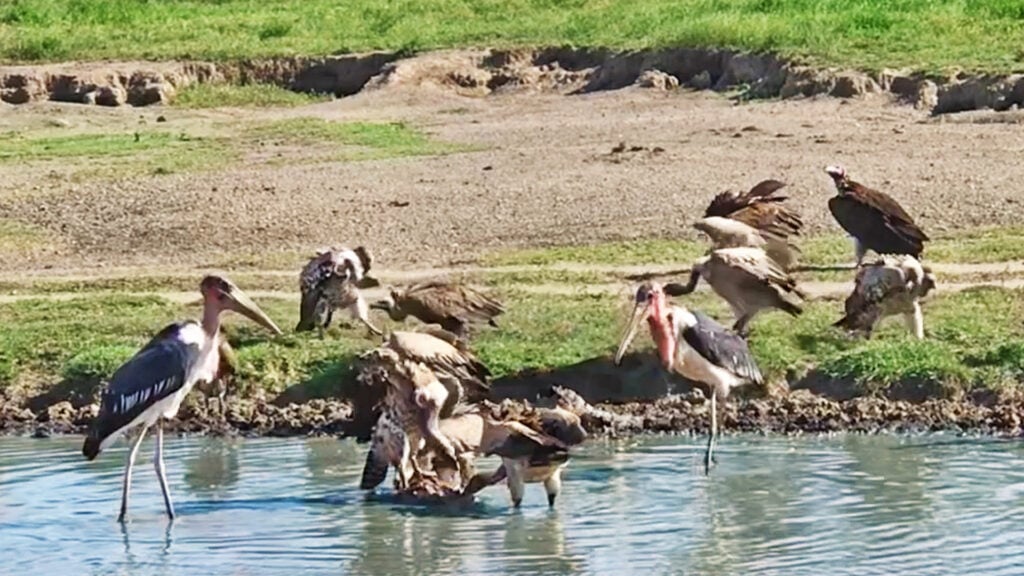

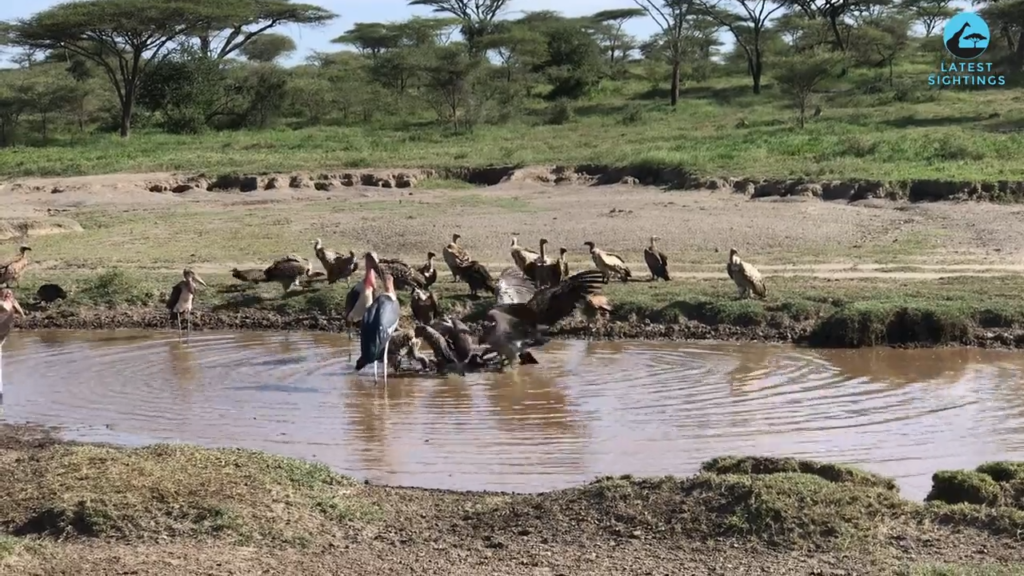
Nick Dale was privileged to have a front row seat to witness the spectacle, though it is not unusual to witness these birds feeding alongside one another. Marabou vultures and storks are often seen feeding side by side because they occupy a similar scavenging niche and tolerate each other well at carcasses.
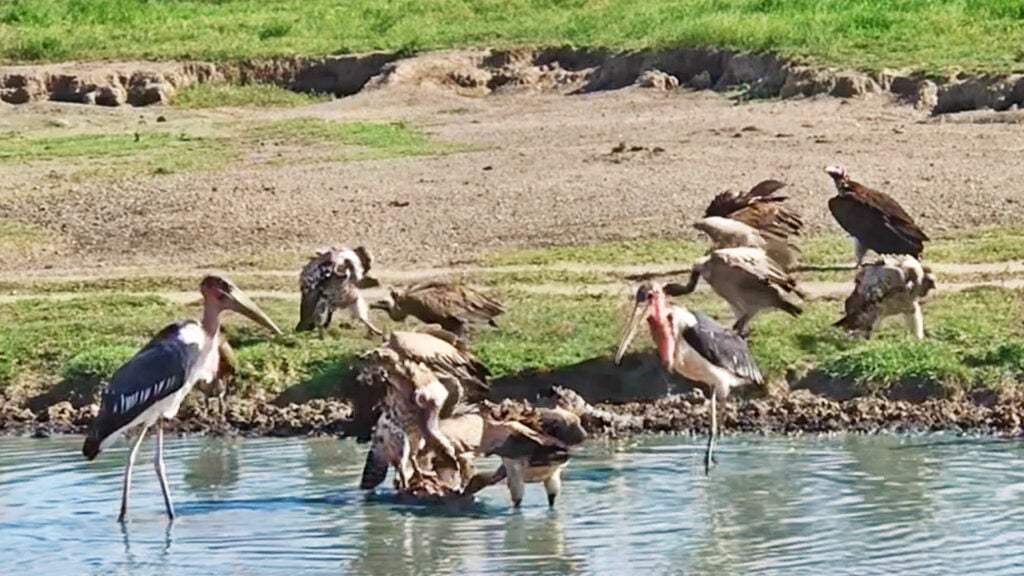
Maribou storks are large, intimidating birds; which while not the most beautiful of birds are definitely impressive with their imposing stature.
Watch the sighting:
The marabou stork has actually been called the ‘undertaker bird’ because of its bald head and dark wings and its appetite for carrion.
These birds could be seen alongside the vultures, using their long, powerful bills to feed from the carcass.
Get our Best Sightings as they Come in

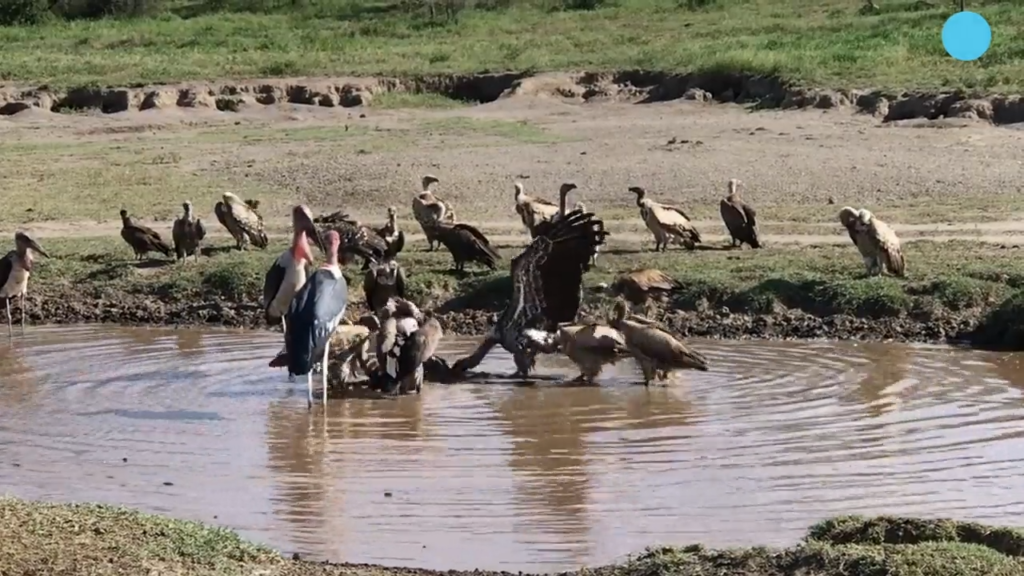
Some of the vultures fed alongside them. Others could be seen resting at the side of the waterhole. Their solemn silhouettes were almost ominous as the raucous feeding continued.
Vultures are often found by kills in the bushveld. With their excellent eyesight, they are able to easily locate a carcass. Their hooked beaks are used to tear open the carcass, making it easier for other scavengers to feed.
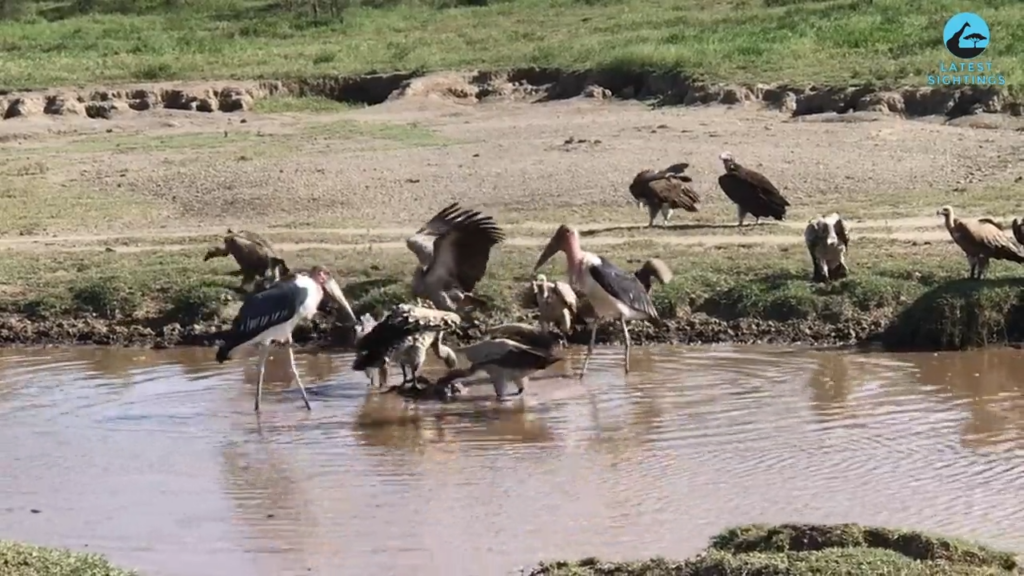
A gathering of multiple species
Although both maribou storks and vultures can be aggressive, these birds rely more on intimidation displays, wing spreading, and bill jabbing than on serious fighting.
This uneasy truce allows multiple species to feed at once, ensuring that a carcass is stripped quickly and efficiently.
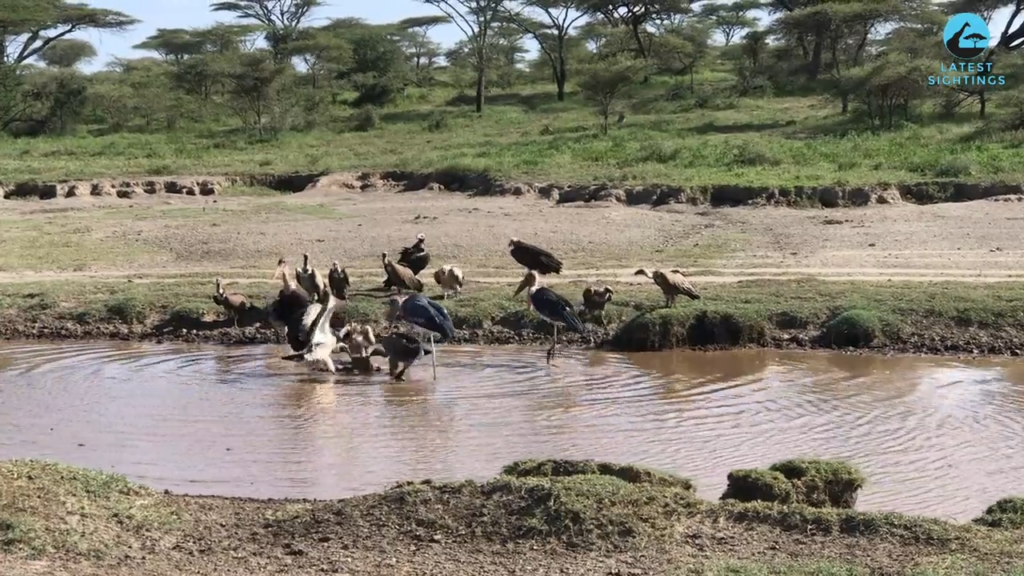
The birds continued to feed on the kill, with new birds swooping down to be a part of the feeding festivities.
Vital for ecosystem sustainability
Scavenger birds, such as marabou storks and vultures, play a vital but often misunderstood role in African ecosystems.
They are also have fascinating adaptations which make them perfectly suited to this lifestyle.
Interestingly, both species have bald or sparsely feathered heads, which helps keep them clean when feeding deep inside carcasses. Blood and fluids do not cling to bare skin the way they would to feathers, reducing the risk of infection.
After feeding, they often stand with wings spread wide, using the sun to dry and sterilise their bodies.
Vultures have some of the strongest stomach acids of any bird. Their digestive systems can safely break down meat that is heavily decayed and loaded with dangerous bacteria like anthrax or botulism, preventing these diseases from spreading to other animals. Marabou storks, while not as specialised internally as vultures, are highly opportunistic and will eat almost anything, from carrion and fish to small animals and even human refuse near settlements.
Protecting the delicate balance of nature
This feeding frenzy seemed chaotic, however, the rapid consumption of a carcass is beneficial to the environment. It helps to prevent the buildup of rotting flesh, reducing the spread of disease, and recycling nutrients back into the environment.
Without vultures and large scavengers like marabou storks, ecosystems would be less healthy, and outbreaks of disease would be far more common.
Still, in this moment, these birds were definitely thinking more about their stomachs than anything else! Each was determined to have its fair share of the meal.