
















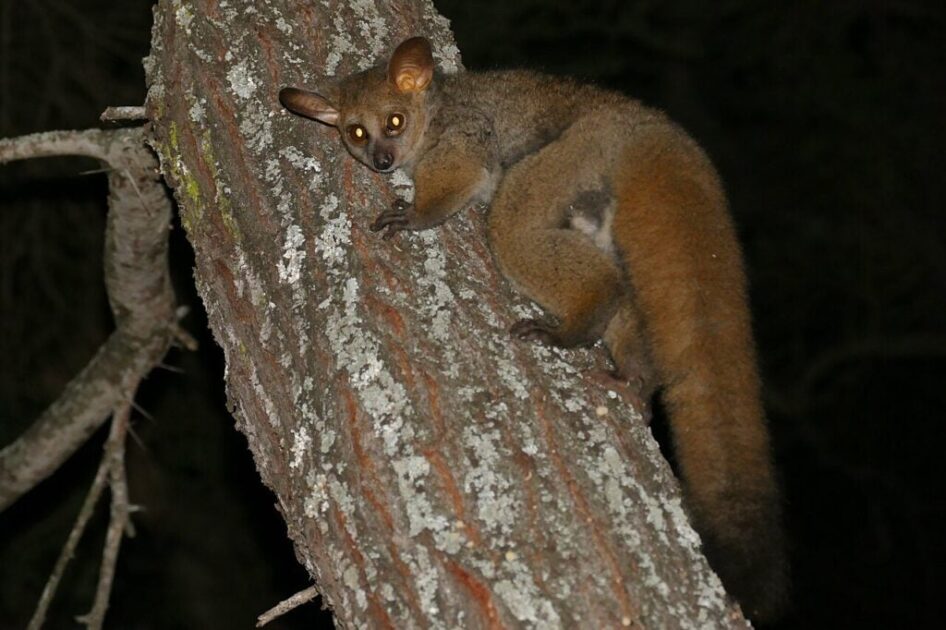

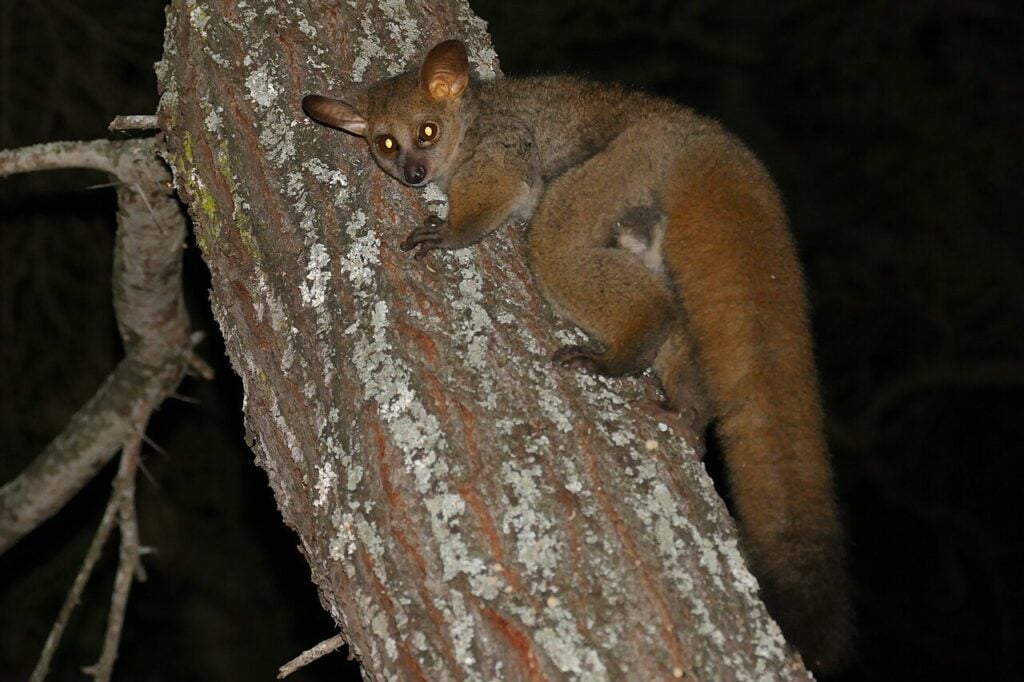
There is alarming news regarding one of Africa’s most endearing primates: the thick-tailed bushbaby. Conservation authorities recently changed the status of these nocturnal mammals from “least concern” to “near threatened.”
The change in status follows research by conservation scientists, as revealed in an article published in CU Boulder Today. This is an online publication of the University of Colorado Boulder.
The research, which spanned a decade, revealed a change in conservation status necessitated by various factors. The change reflects mounting threats to their habitats and survival across southern Africa, including within South Africa’s protected landscapes.
A post shared by Lajuma Research Centre (@lajuma_rc)
Bushbabies, known locally as nagapies (night apes), are agile nocturnal primates with distinctive large eyes. They feed on insects, tree gum, and fruits found in riverine woodlands, forests, and savannas.
Despite their diminutive size, they play an important ecological role as both predator and prey.
Threats everywhere
According to primatologist Frank Cuozzo, while human threats exist for all species, in this case,
“We’ve been able to document that the human threats facing bushbabies, including deforestation and habitat loss, are increasing.”
What the new status means
The “near threatened” designation does not imply an immediate risk of extinction. However, it does signal that bushbaby populations are in decline.
However, without intervention, they could move to higher risk categories if pressure continues.
Conservationists arrived at the decision based on solid evidence of human-induced habitat loss, as well as an increase in mortalities connected to human-related sources.
One analysis found that habitat loss, roads, powerlines, and predation by domestic dogs drove the uplisting of the thick-tailed bushbaby. These all highlight emerging threats in areas near human settlements.
Bushbaby Ecology & the South African context
Bushbabies occupy habitats ranging from moist riverine forests to open woodlands and the savanna fringe.
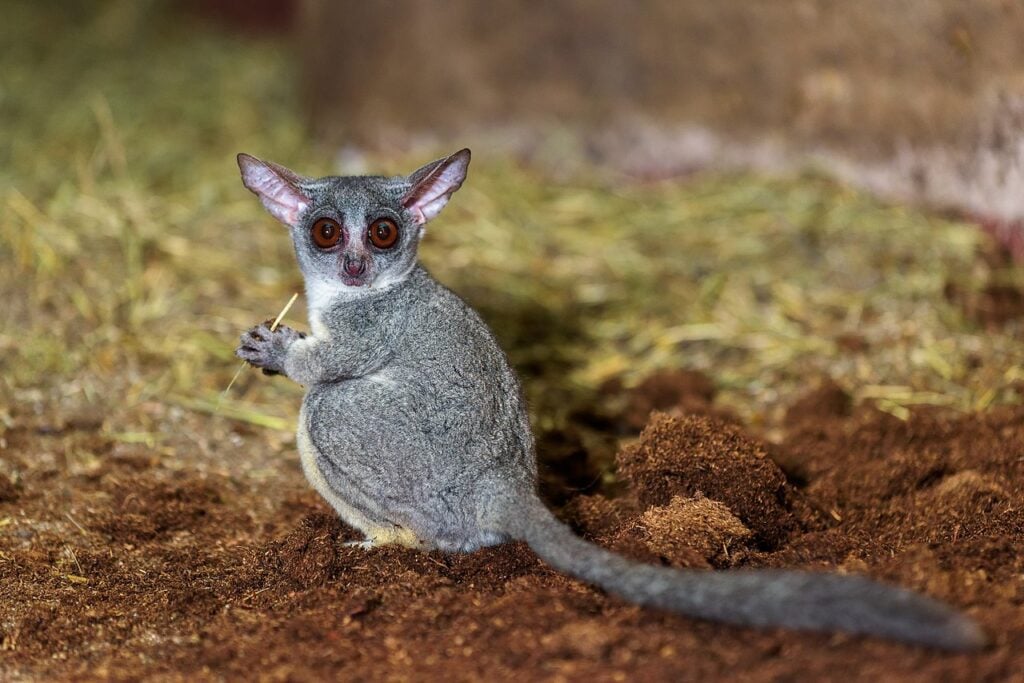
In South Africa, we find two species, namely the thick-tailed (Otolemur crassicaudatus) and lesser (Galago moholi) bushbabies. They occur in several provinces and are present in both Kruger and Pilanesberg National Parks.
According to the South African National Biodiversity Institute, thick-tailed bushbabies are abundant in Kruger, where protected tracts of their preferred habitat offer refuge.
By contrast, fragmented landscapes outside the park restrict subpopulations to highly localised areas.
Bushbabies are highly adapted to their niche environments. Consequently, their nocturnal habits, acute hearing, and amazing leaping ability enable them to navigate through trees, hunting insects and feeding on treegum.
Despite this, fires damage their resources, dogs kill them on the ground, and habitat fragmentation further threatens their survival. This makes moving between patches fraught with danger.
And, although the lesser bushbaby has not been similarly classified, since it shares many of these ecological pressures, it may also be under threat.
Lesser bushbabies live in savanna woodlands and riverine bush. Here, they communicate through calls and scents. Today, these adaptations help them survive, but this could change if their habitat is negatively impacted.
What this means for Kruger and Pilanesberg National Parks
Protected areas are critically important sanctuaries for bushbabies. They safeguard their preferred habitats, but also buffer them from threats like the uncontrolled development and dog attacks common outside park boundaries.
Today, it is not uncommon to hear their infant-like wailing emanating from the riverine forests along the Sabie and Limpopo rivers, even if they are not often seen.
In Pilanesberg National Park, although it is drier, the wetter areas support bushbaby subpopulations. Here, habitat management, such as controlled fires and watercourse maintenance help sustain pockets of bushbaby-friendly habitat.
In essence, where water is stable and vegetation is intact, bushbaby populations can continue in their ecological roles.
However, in both parks, the good they do often ends at the boundary fence. Therefore, there is a call to create corridors that connect fragmented habitats. Ideally, these would not intersect roads, and the adjacent community would need to be engaged about wildlife-friendly practices.
A call to action
Study co-author Professor Michelle Sauther said that while the reclassification was alarming, it was also an opportunity to act.
“We don’t want this species to ever become endangered … Now that we know they’re near threatened, we can do something about it.”
The shift highlights the importance of monitoring even species considered common. This is the best way to halt the slide towards becoming endangered.
For conservationists, land managers, and visitors to our national parks, it is a reminder that biodiversity management is dynamic. And, that even small animals, like bushbabies, can be vital indicators of ecosystem health.