
















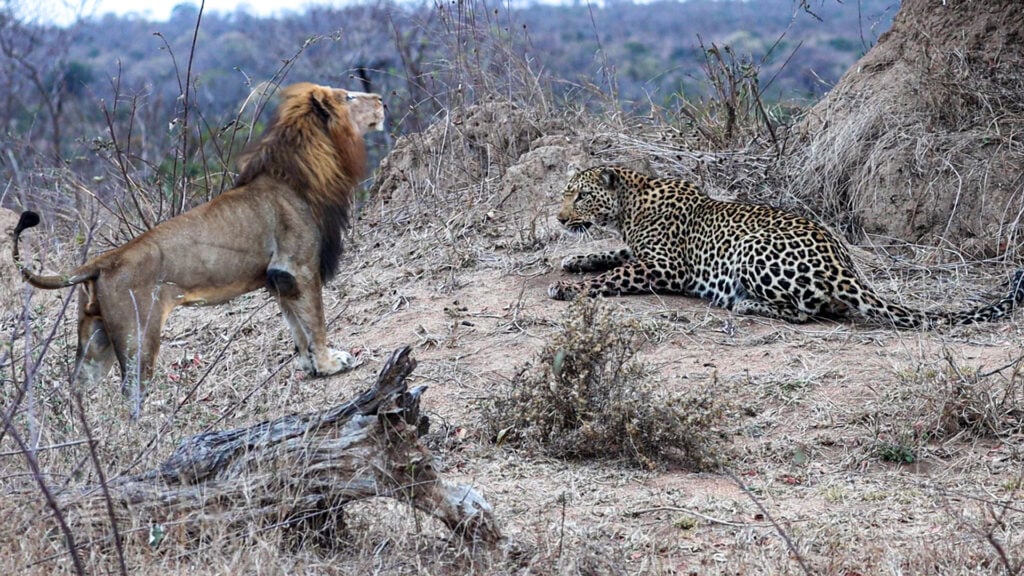

How far would you go for a good meal? For this lion, the answer was ‘pretty far’.
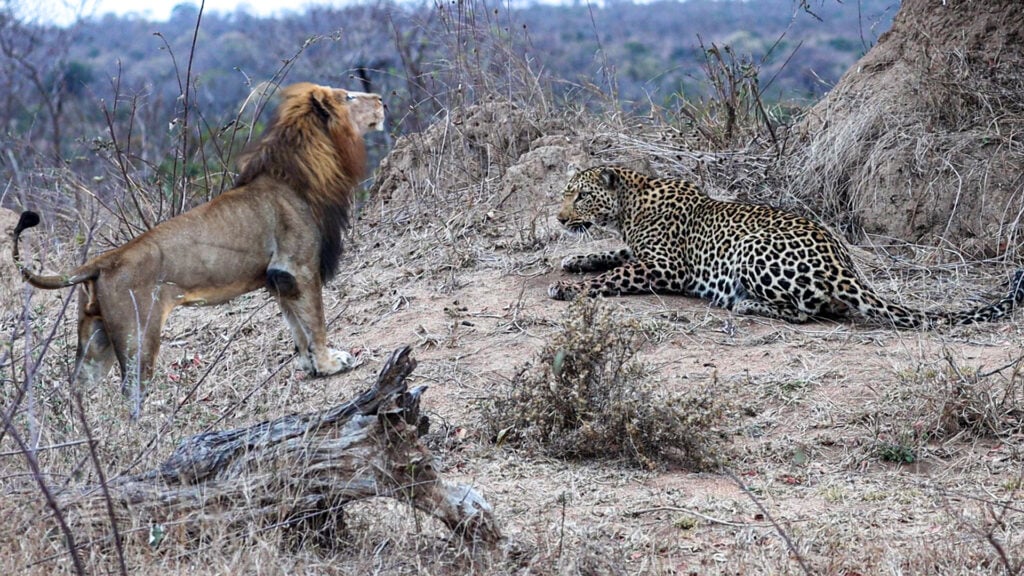
The hungry male lion went all the way up a tree to fetch a carcass to feast on, in this spectacular sighting filmed by Bryan Malakou in the Thornybush Game Reserve.
For Bryan, this must’ve been a surreal viewing experience, as one usually expects leopards to climb trees in such a fashion, and not lions.
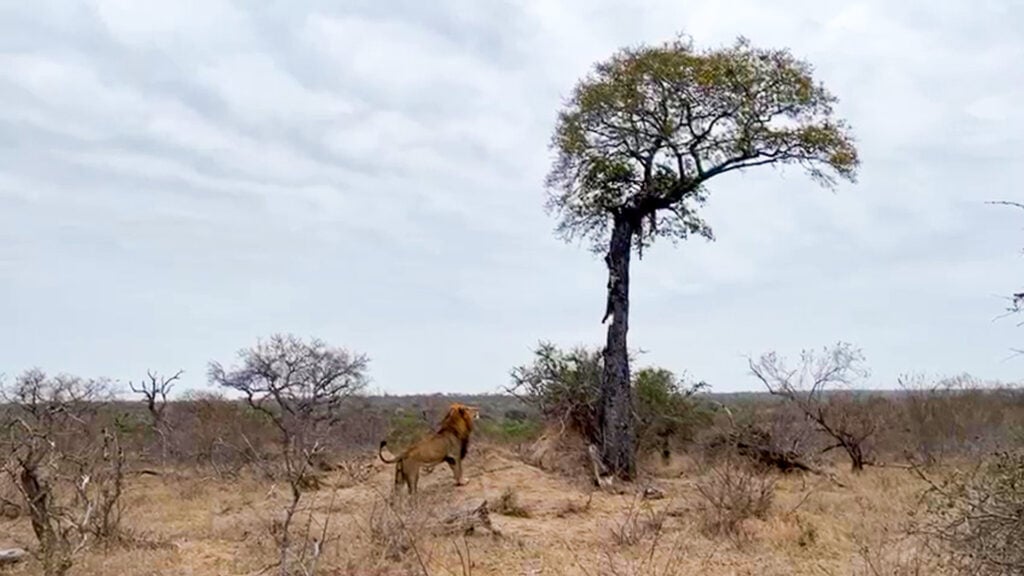
Lion spies carcass in treetop
The lion had been walking across the bushveld terrain when it spied the carcass, high up in the branches of a nearby tree.
However, instead of being intimidated by the height of the branches or the challenge of reaching the meat, it started to sprint towards the tree. This lion knew a free meal when it saw one!
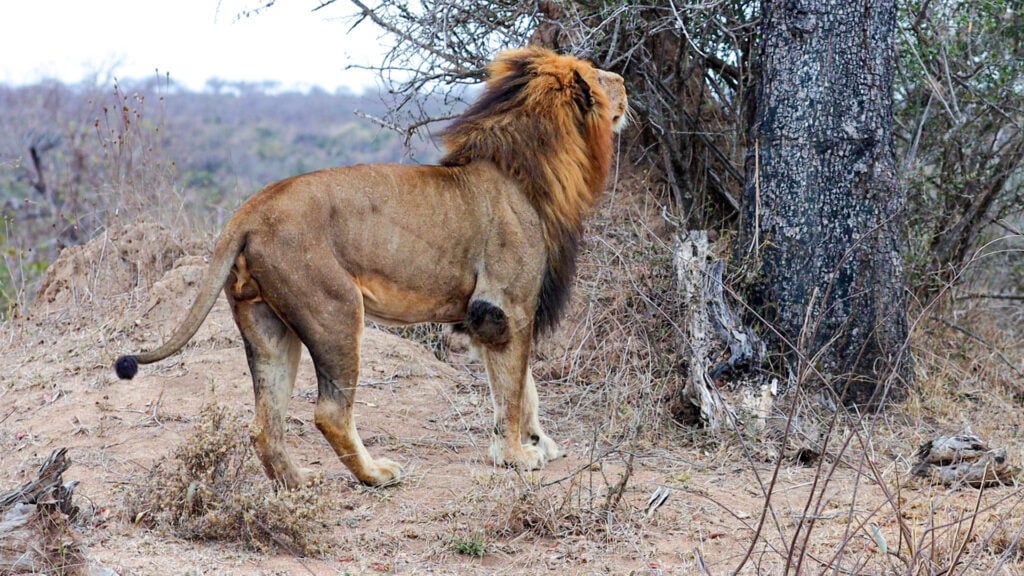
Lion makes decision to climb tree
When it got to the tree, it started to climb with surprising dexterity. This was an incredible display of just how adaptable lions can be.
Get our Best Sightings as they Come in

While lions are not natural climbers like leopards, they are capable of climbing when motivation is high, such as accessing food or avoiding competition on the ground.
In areas where leopards often stash kills in trees, lions have learned to follow the scent and attempt to claim the prize, even if it means hauling their heavy bodies upward.
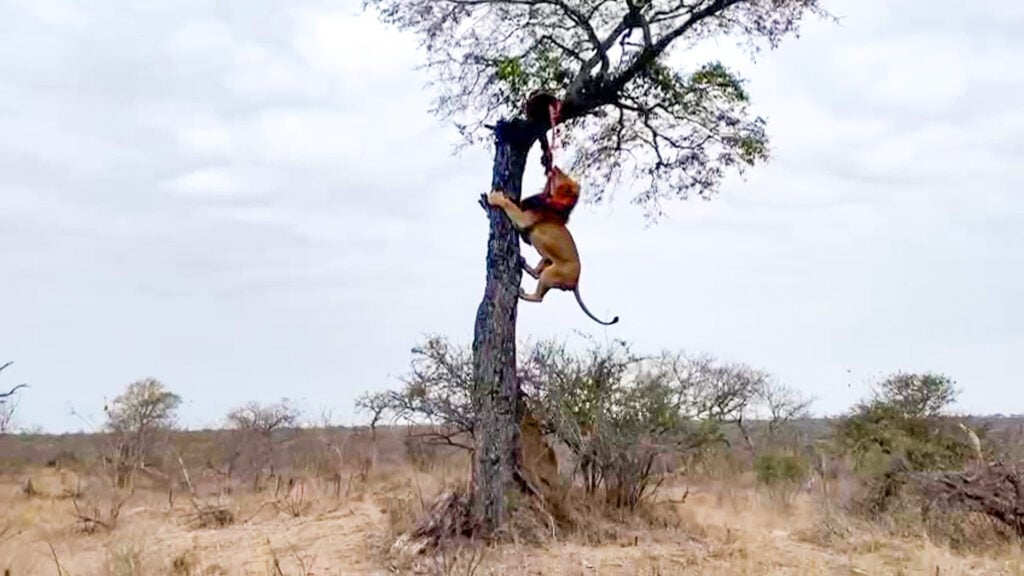
Lion succeeds in reaching the top of the tree
Adult male lions can weigh over 190kg, which makes climbing awkward and risky. However, this lion was willing to take the risk.
This lion made it all the way to the prize, and pulled the carcass down with surprising ease. It did not falter in bringing the kill to the ground, and walked to a suitable area, before settling down to enjoy its feast.
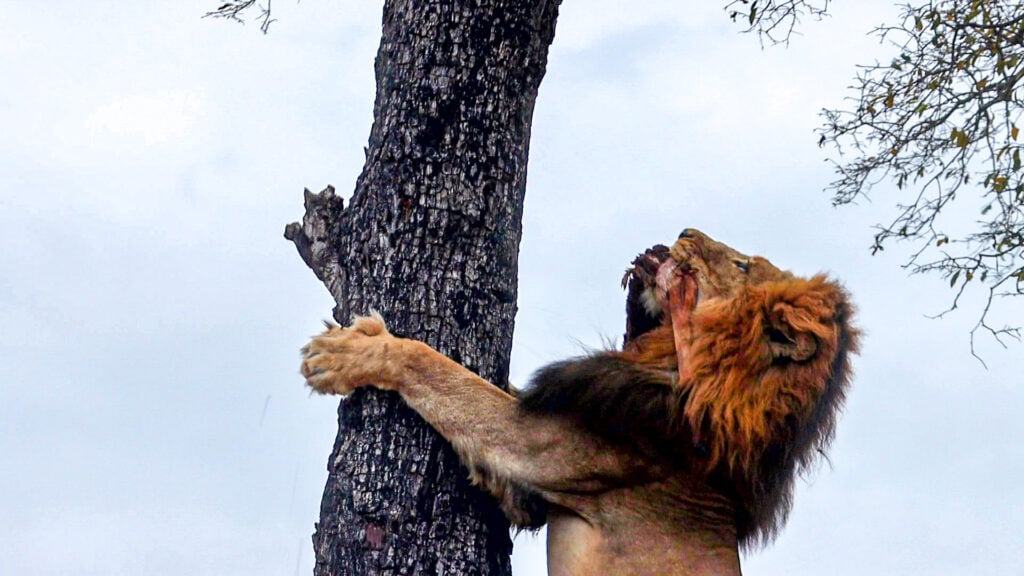
This behaviour highlights the intense competition among predators, where energy-rich meat is too valuable to ignore.
While lions usually dominate through strength on the ground, moments like this reveal their willingness to adapt and take chances when survival and hunger are on the line.
Lion settles down for a feast
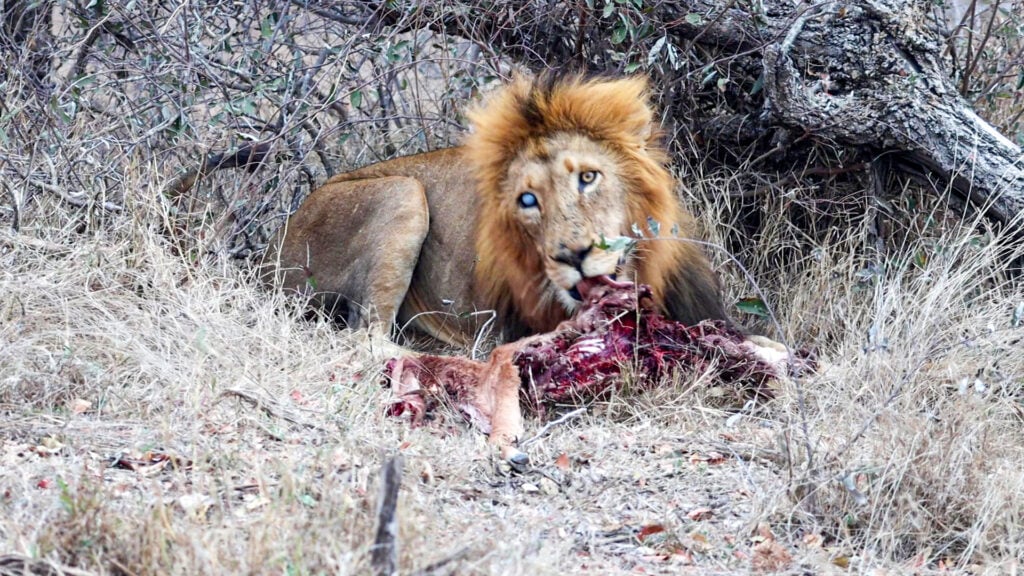
Following its victorious climb, the lion settled down to feast. The carcass still had a surprising amount of meat on it so this definitely was a trophy for the lion.
It soon became evident that one of the lion’s eyes was bluish and cloudy, and that the lion was quite elderly. An elderly lion with a cataract or a damaged, cloudy eye is often forced to change its behaviour to survive in the bushveld. This might mean relying more on scavenging than active hunting.
Climbing a tree to reach a carcass may seem unusual for a lion, but for an ageing individual it can be a calculated decision.
Ageing lions are also more likely to take risks, especially if they are no longer part of a pride or have been pushed out by younger males. With fewer opportunities and declining physical abilities, adaptability becomes their greatest asset.