

















A Trapped Impala Becomes an Easy Target
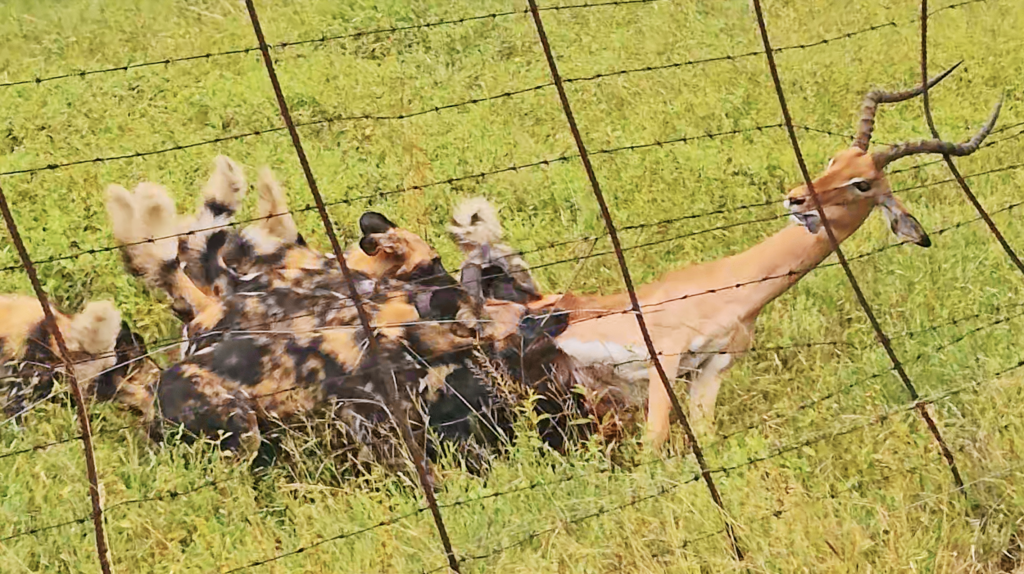
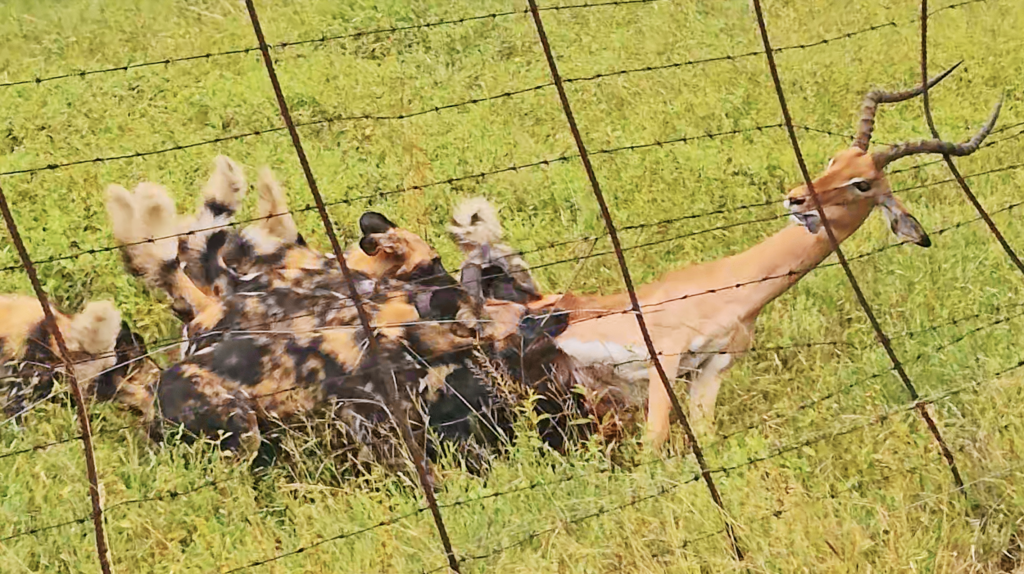
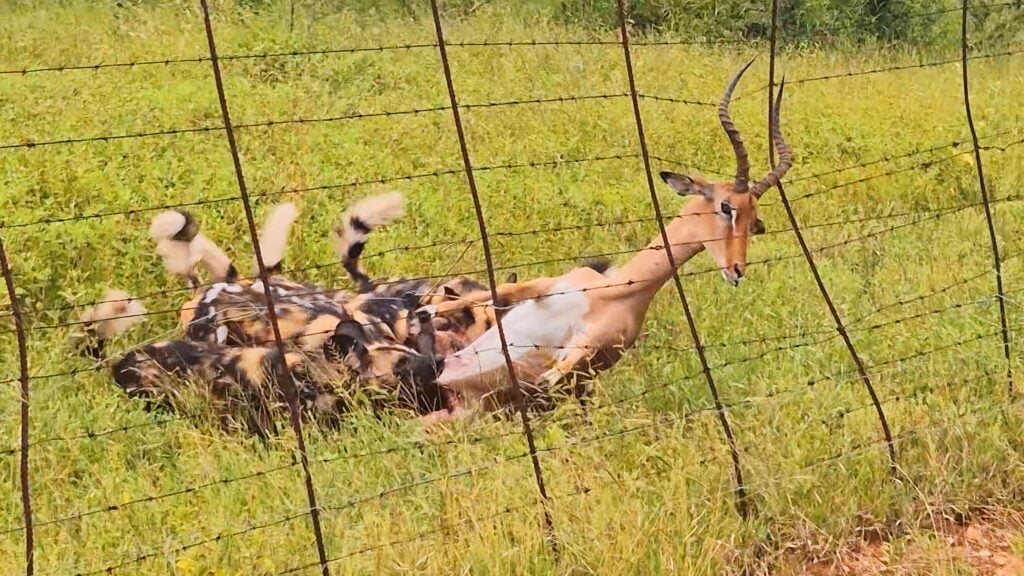
The footage from Thornybush Game Reserve, sent in by Jared Lindell, begins in the midst of a feast. An impala’s body hangs limp while its horns are firmly caught in a wire fence.
Watch the sighting here:
A pack of wild dogs had discovered the incapacitated impala and jumped on the opportunity for an easy meal. The poor impala didn’t stand a chance.
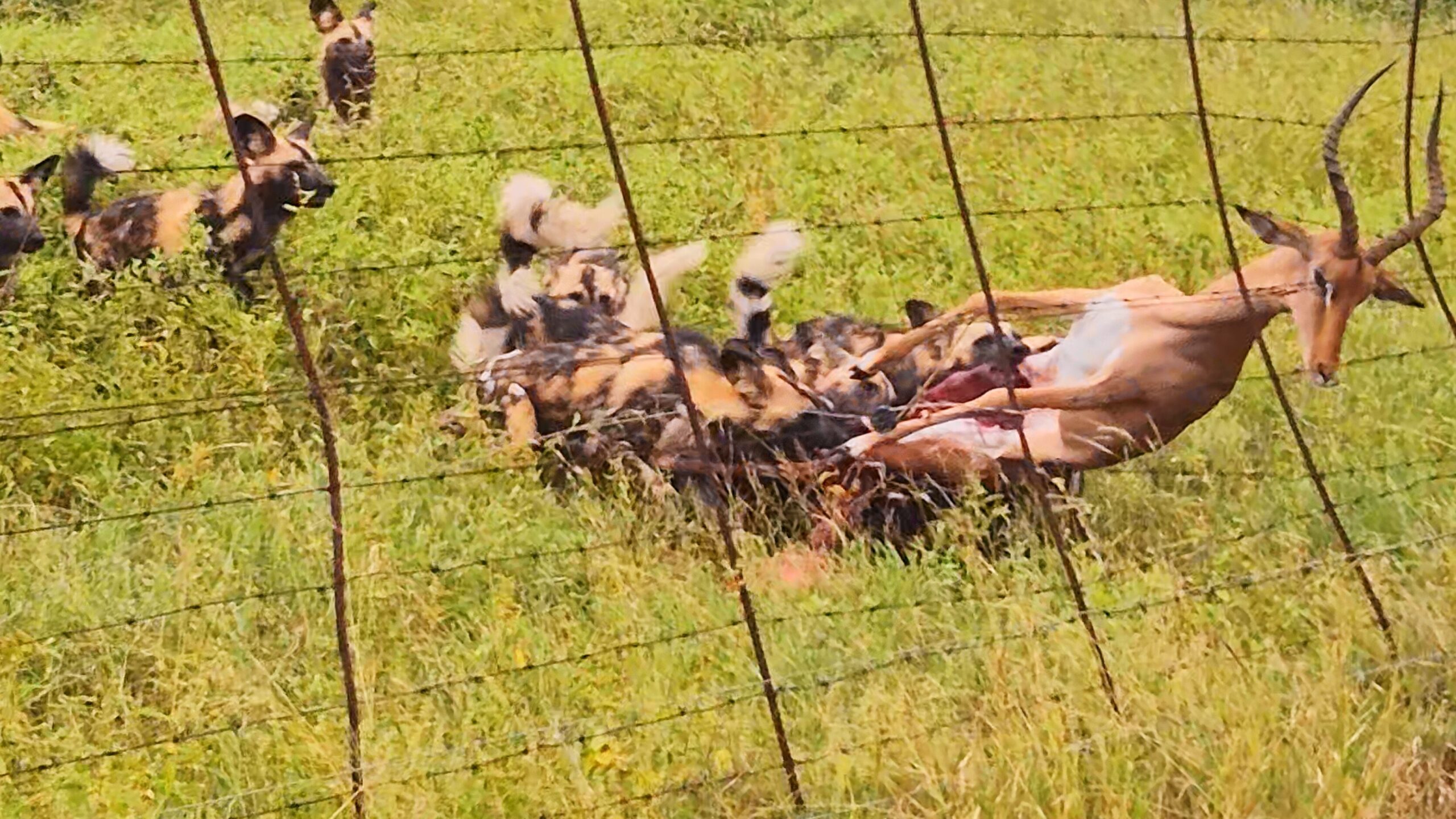
The carcass was suspended and swinging as the dogs tore into it. Each powerful tug sent the body rocking back and forth like an odd game of tug-of-war.
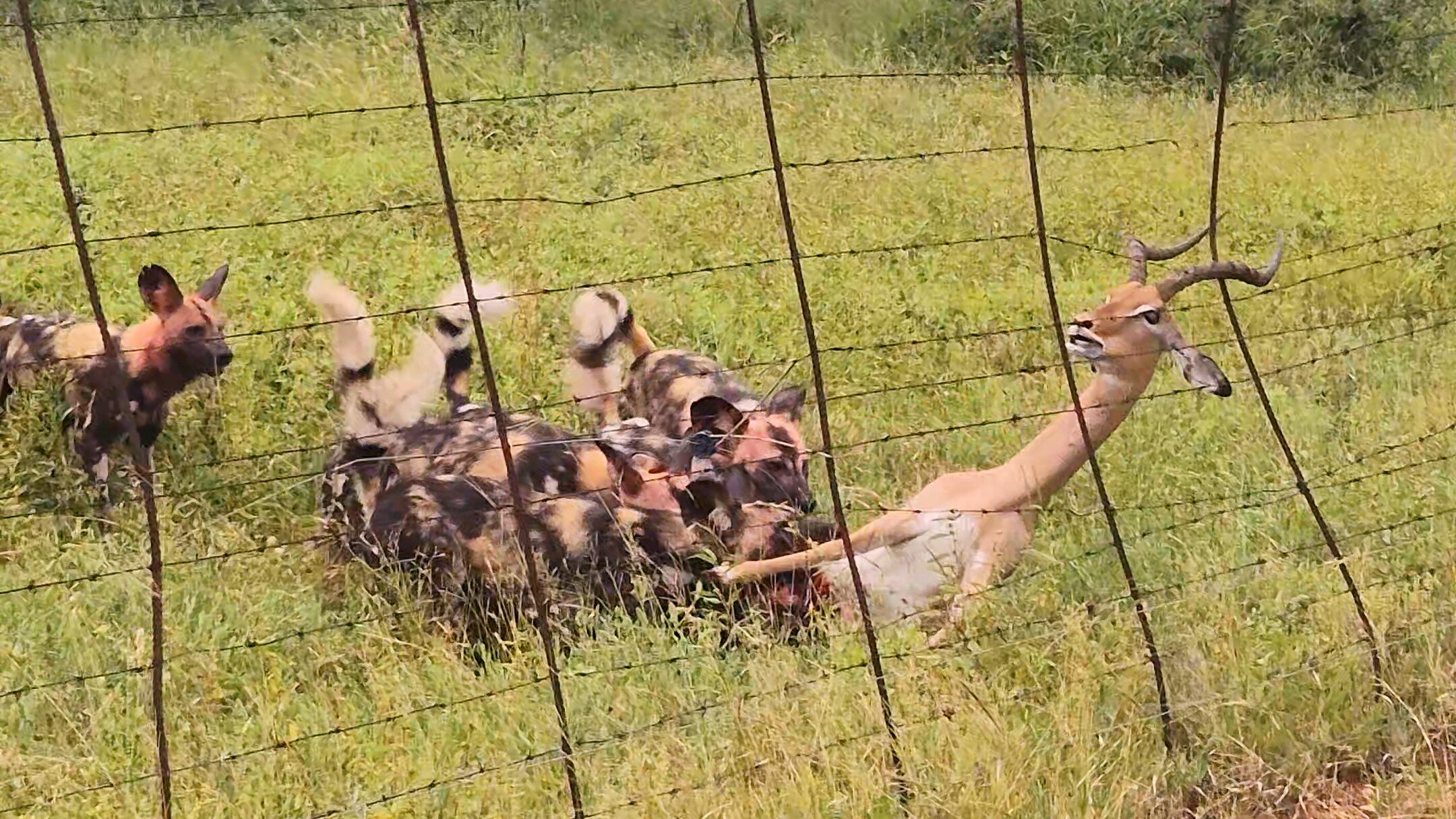
There was a stark contrast between the impala’s complete helplessness and the frantic energy of the feeding pack. Eventually, the dogs pulled so hard that the body came free from the fence.
It dropped to the ground, allowing the dogs to finish their feast much more easily.
Wild Dogs Built to Exploit Opportunity
African wild dogs are predators that have evolved to take advantage of any opportunity that lowers the cost of a kill. In most cases, that means targeting an injured antelope, a separated youngster, or an animal slowed by thick vegetation or exhaustion.
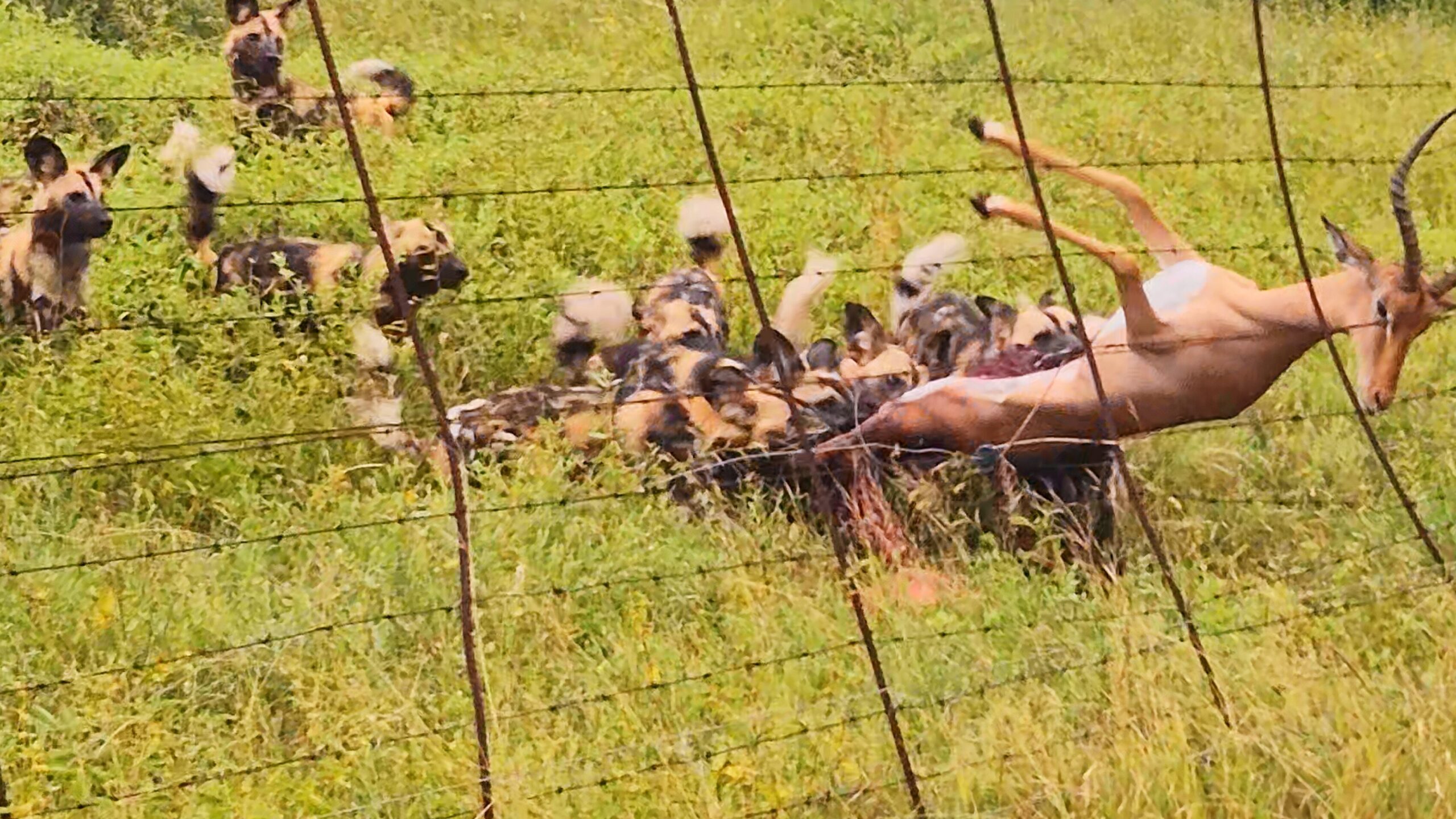
In this case, the fence did the hardest part of the job for them. It immobilized the impala and removed any chance of escape.
From an ecological standpoint, the dogs were simply doing what they do best: capitalizing on vulnerability to turn energy into food for the pack.
When Wildlife Meets Man‑Made Barriers
Scenes like this are a powerful reminder that animals don’t just live in “pristine” wilderness. They are often forced to navigate landscapes shaped by humans.
Fences, roads, and other structures can trap or injure animals, creating artificial advantages for predators. In some cases, dangerous barriers can even limit movement and access to food and water.
Get our Best Sightings as they Come in

The wild dogs are not to blame, they are simply responding to what they find. The reality highlights the responsibility managers and landowners have to design and maintain infrastructure with wildlife in mind.
By checking fences regularly, using wildlife‑friendly designs, and planning boundaries carefully, the unnecessary suffering of animals can be reduced. As humans, it’s our responsibility to prevent situations where our structures can tip the balance in unnatural ways.
A Difficult but Honest Glimpse of Nature
For many viewers, this kind of footage can feel brutal. It’s especially hard to see the impala’s fate tied so clearly to a man‑made object rather than a “fair chase.”
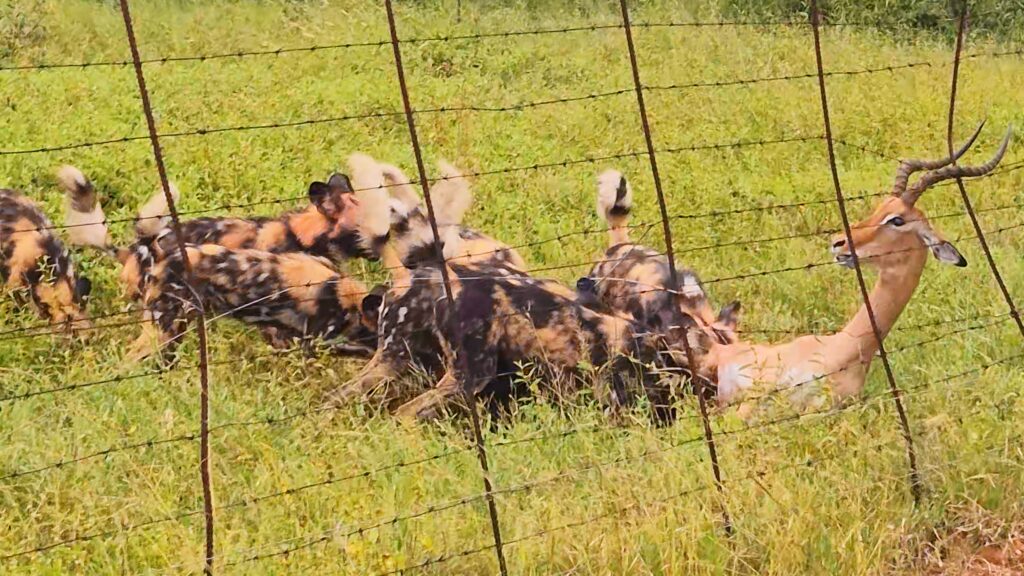
Even so, the encounter is also an honest reflection of life at the edge of wild spaces, where predators, prey, and human influence all intersect.
The wild dogs are simply seizing a rare, low‑risk feeding opportunity that will help fuel their next hunt, raise their pups, and keep the pack strong. As we expand and manage reserves like Thornybush, moments like this challenge us to think more carefully about how our presence shapes not just individual lives, but the very rules of the predator–prey game.