
















Watch the Sighting:
Danger Closes in at Marloth Park
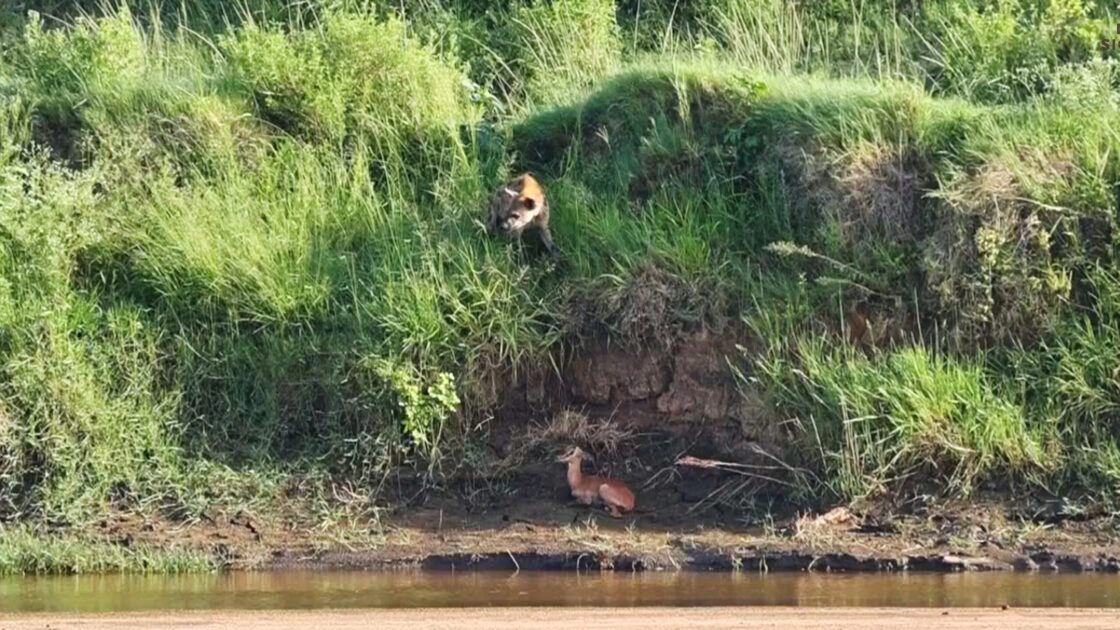
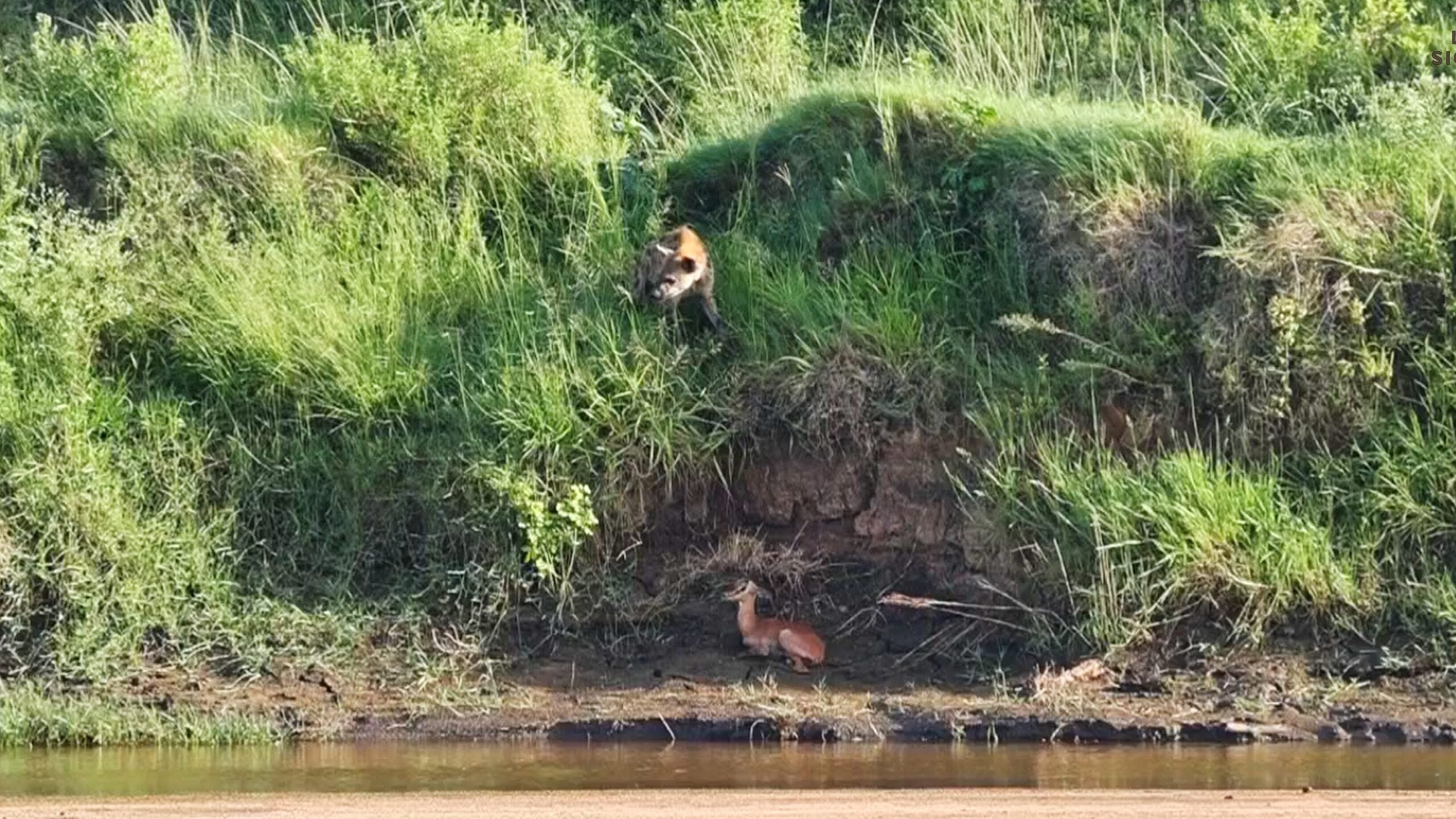
The sighting, captured by Travis Carreira in Marloth Park, begins in the midst of a tense moment. A tiny impala lamb lay quietly in the shade near the water’s edge, tucked into what appears to be a perfect hiding place.
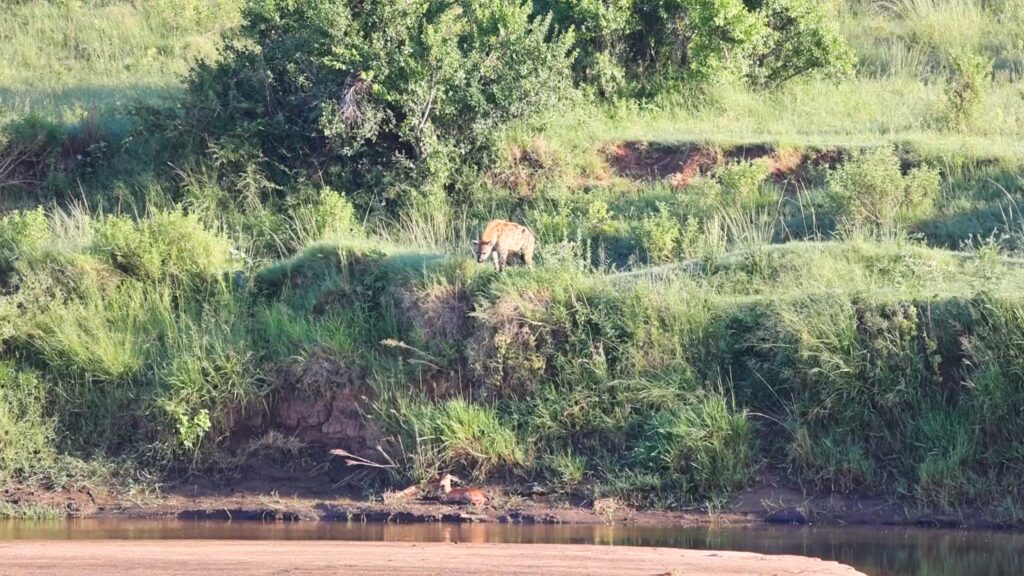
Its legs were folded neatly beneath it, its ears were still, and its body blended perfectly into the riverbank. While this could have been a relaxing and serene moment, danger was lurking just overhead.
A Predator with the High Ground
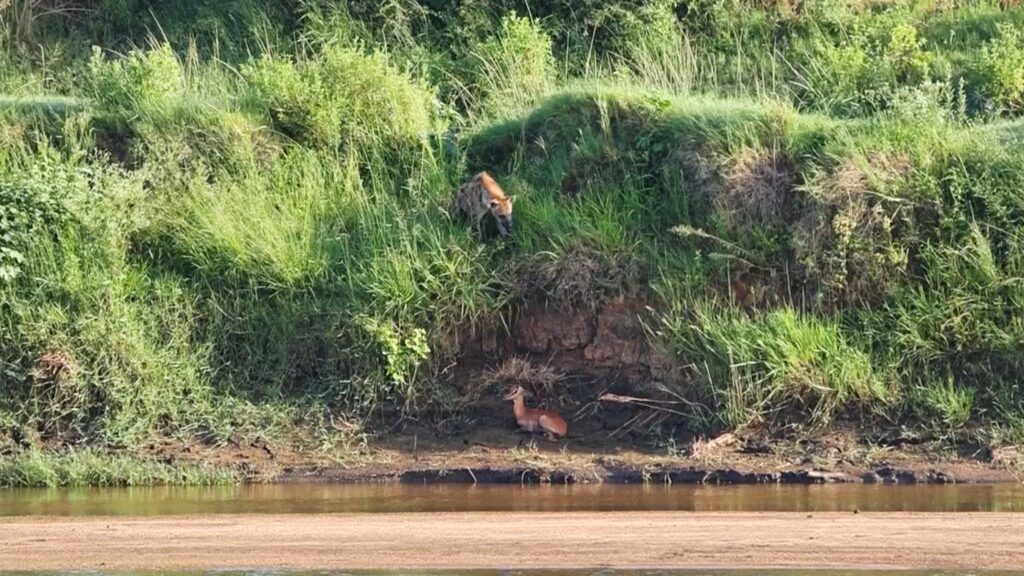
From the elevated bank, a hyena closed in. It moved cautiously and deliberately, with its head lowered and nose working the air.
Unlike big cats that rely heavily on sight and ambush speed, hyenas possess an extraordinary sense of smell. Their powerful olfactory abilities allow them to detect carrion and vulnerable prey from remarkable distances.

The hyena paused frequently, appearing to assess the terrain. It carefully considered its descent, picking a route that kept it partially concealed by the tall grass and the slope.
Unfortunately, the lamb remained all too unaware. Impala lambs survive their first weeks of life by staying hidden and motionless while their mothers graze nearby.

This strategy works well against predators scanning visually across open plains. But against a predator approaching from above, the tactic offers little protection.
The Moment of Realization
Only when the hyena was within a meter did the lamb finally turn its head. The realization was instantaneous, but it was too late.
The hyena launched forward with precision, clamping its jaws around the lamb’s head. There was no dramatic chase, and no extended struggle as the lamb offered practically no resistance.
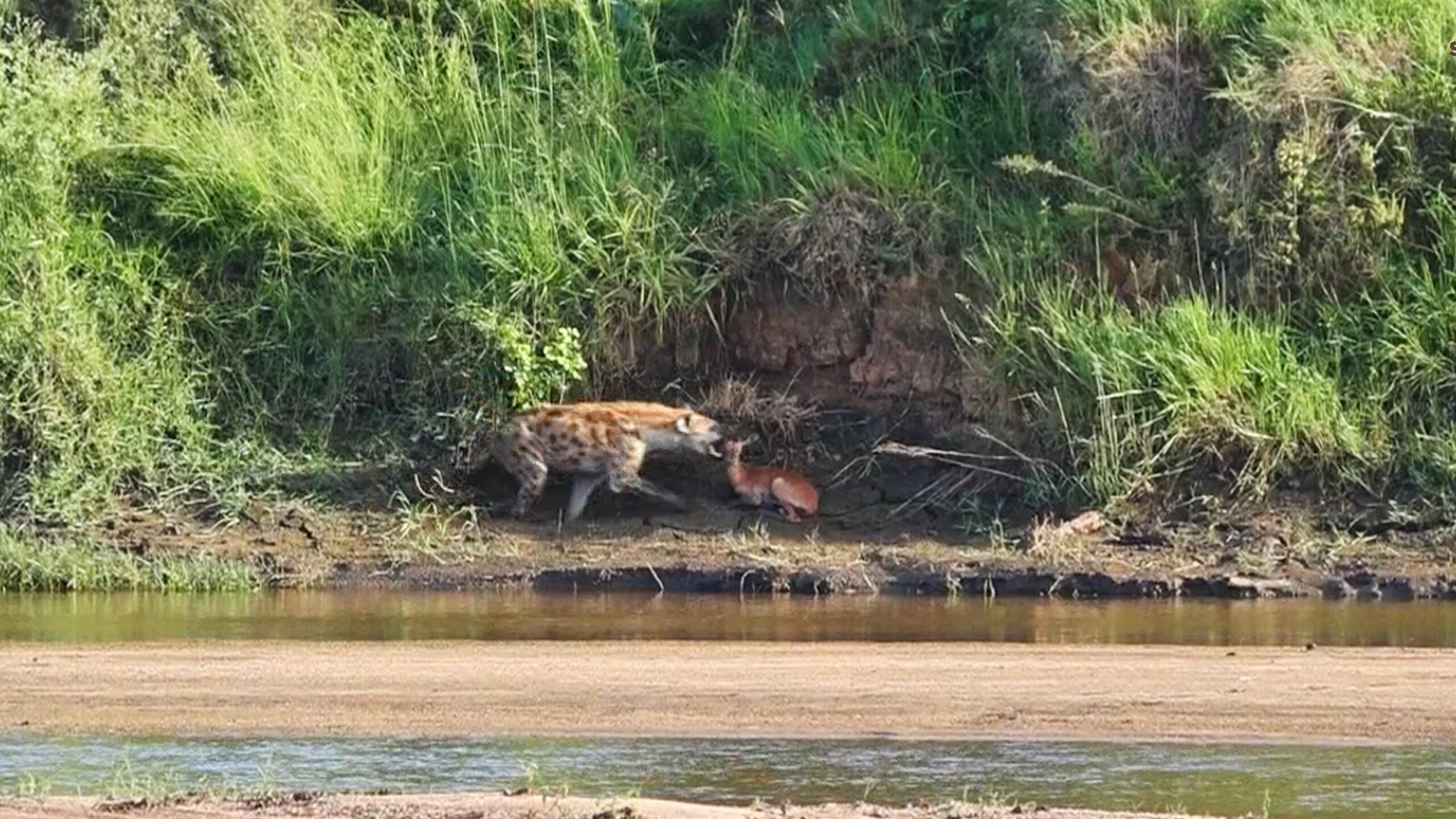
Whether frozen by fear or overwhelmed by shock, it didn’t attempt to flee. The hyena then immediately dragged its prey uphill, away from the water’s edge and out of sight.
The Vulnerability of Lambs
Impala lambs are born during a synchronized birthing season, often referred to as a “predator swamping” strategy. By giving birth around the same time, herds increase the odds that some offspring will survive simply through numbers.
Get our Best Sightings as they Come in

Even with the predator swamping method, individual lambs are extremely vulnerable in their first weeks. They lack the speed and strength of adults and rely heavily on concealment.
Predators such as hyenas, leopards, jackals, and even eagles take advantage of these brief windows of vulnerability. Hyenas in particular are opportunistic and intelligent hunters.
While often associated with scavenging, they are highly capable predators that regularly hunt live prey. Their patience, stamina, and crushing bite force make them formidable adversaries for small, defenceless animals.
A Reminder of Nature’s Balance
This encounter is difficult to watch as the lamb’s innocence contrasts sharply with the calculated approach of the hyena. Yet, interactions like this are fundamental to the balance of the ecosystem.
Predators regulate prey populations, ensuring that only the strongest and luckiest survive to adulthood. These interactions sustain the intricate web of life that defines wild landscapes like Marloth Park.
In the bush, survival is often decided in silence, on a shaded riverbank, beneath a grassy ledge, in the space between scent and sound.