














From Still Waters to Sudden Strikes
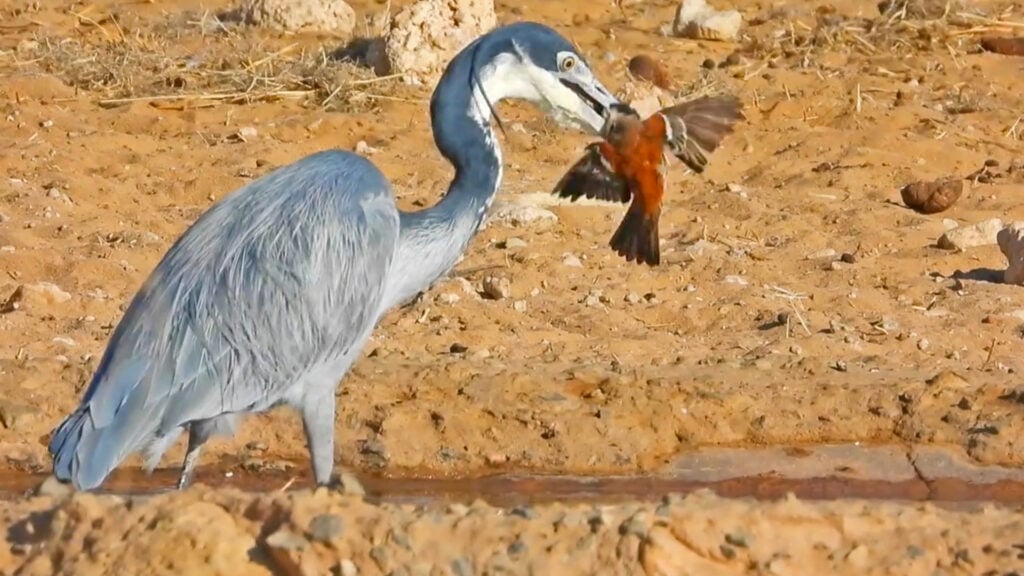
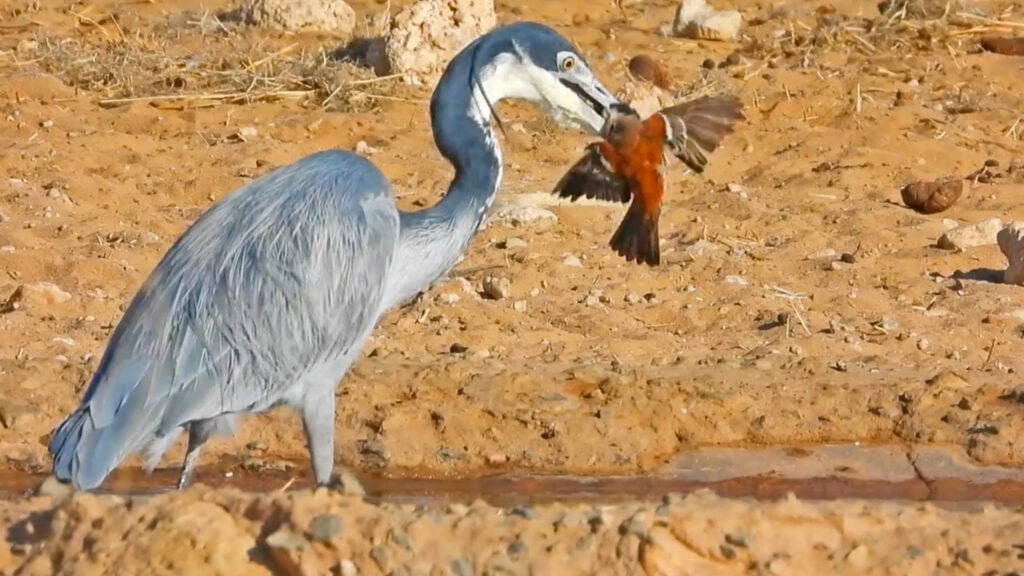
Filmed by safari-goer Anchia Harmse at a small muddy waterhole, this footage begins innocently enough: a grey heron wades in silently, surrounded by a fluttering cloud of red-billed queleas. As the heron settles into the water, the birds return, seemingly unfazed by its presence.

Beneath its calm appearance, however, the heron is locked in full predator mode. Slowly crouching and creeping forward with surgical precision, it locks eyes on its target, and without warning, it strikes!
In a flash, the heron snares a quelea in its beak and while the small bird flaps frantically, it’s no match for the heron’s power. With practised ease, the heron tilts its head back and swallows the bird whole, then takes a quick sip of water to seal the meal.

The Queleas Keep Coming Back
What’s perhaps more astonishing is what happens next. The other queleas, clearly aware of the threat, return once more to the waterhole!

Although slightly more hesitant, they continue to hop up to the water’s edge and stare danger directly in the face. Whether driven by thirst, habit, or simply failing to recognize the threat, they circle back time and time again.

The heron uses this to its advantage and wastes no time. Within minutes, it strikes again and manages to devour another two birds alive with the same ease as the first!
The Predator They Never Expected
While many people associate herons with fish or frogs, these birds are far more opportunistic than most realize. Grey herons, in particular, have been documented eating rodents, reptiles, and like in this case, other birds.

This sighting highlights their ability to adapt and take advantage of whatever prey is available. With patience, speed, and a dagger-like bill, this heron becomes a top predator at the waterhole, showing that you don’t need teeth to be terrifying!

It’s easy to wonder: why do the queleas return to a place where they just watched their flockmates vanish down a heron’s throat? The answer might lie in their biology.
Get our Best Sightings as they Come in

Red-billed queleas, often referred to as “Africa’s most abundant bird,” form massive flocks that move constantly in search of food and water. Their survival strategy relies on numbers, not individual caution.

In this case though, that evolutionary gamble didn’t pay off.
A Jackal Disrupts the Hunt
Just when it seemed like the heron might go for a fourth catch, a thirsty jackal entered the scene. As it approached the waterhole, the heron’s demeanour changed completely.
A land-based predator is a different kind of threat, and this time, it was the hunter who retreated. With the heron gone, the queleas were safe for the time being, but in the wild, danger lurks around every corner.

This rare and eye-opening moment reveals the hidden predatory instincts of a bird we often see as graceful and passive. In nature, survival demands adaptability, and this heron proved it’s more than just a patient fisherman, it’s a stealthy, strategic predator hiding in plain sight!