
















A Routine Operation Turns Dramatic
Relocating a displaced hippo is never simple, but it’s just another day on the job for the team at ParaWild. Based in South Africa, ParaWild specializes in wildlife capture, relocation, and conservation training, and often undertakes many high-risk conservation operations.
During what was meant to be a scheduled darting operation under veterinary supervision, the ParaWild team worked from two boats positioned on a dam. The objective was clear: safely dart and relocate a hippo that had been displaced following recent flooding.
Watch the Sighting:
Footage courtesy of ParaWild. Filmed by The Digital Ark.
The team used two vessels. One was specially designed to withstand an attack, fitted with protective tires for animals to bite onto, and the second was a “ferry” boat tasked with positioning the armoured craft in the correct location.
But things changed quickly.
A Mother’s Instinct
As the team manoeuvered into position, the hippo reacted.
Markus from ParaWild recounted:
“What happened was, the mother had a calf. She was very protective. And we thought that we were still within safe boundaries, but before my brother could pull us into the middle and quickly position himself behind the armoured boat, she [had] already dived under the water”
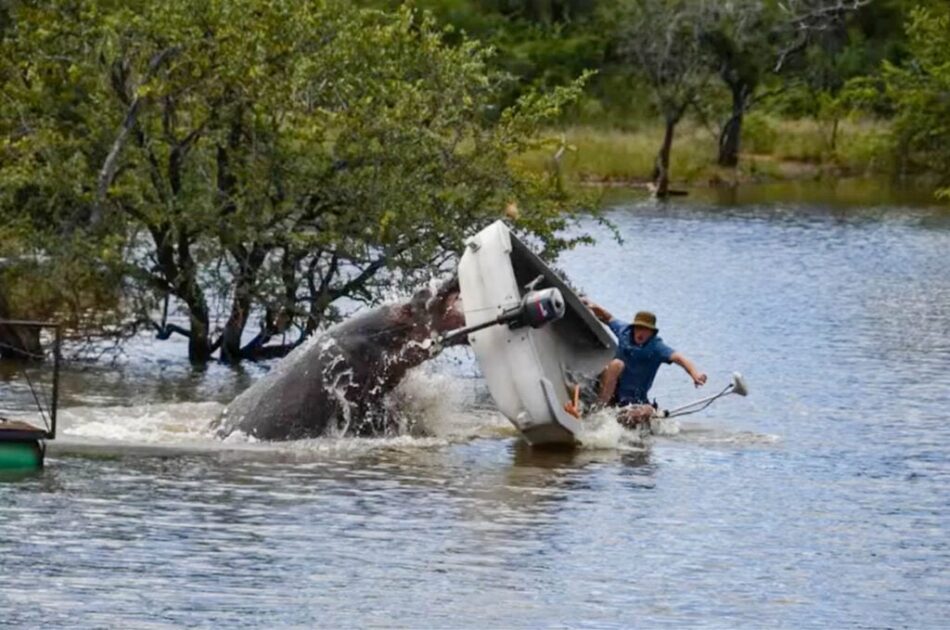
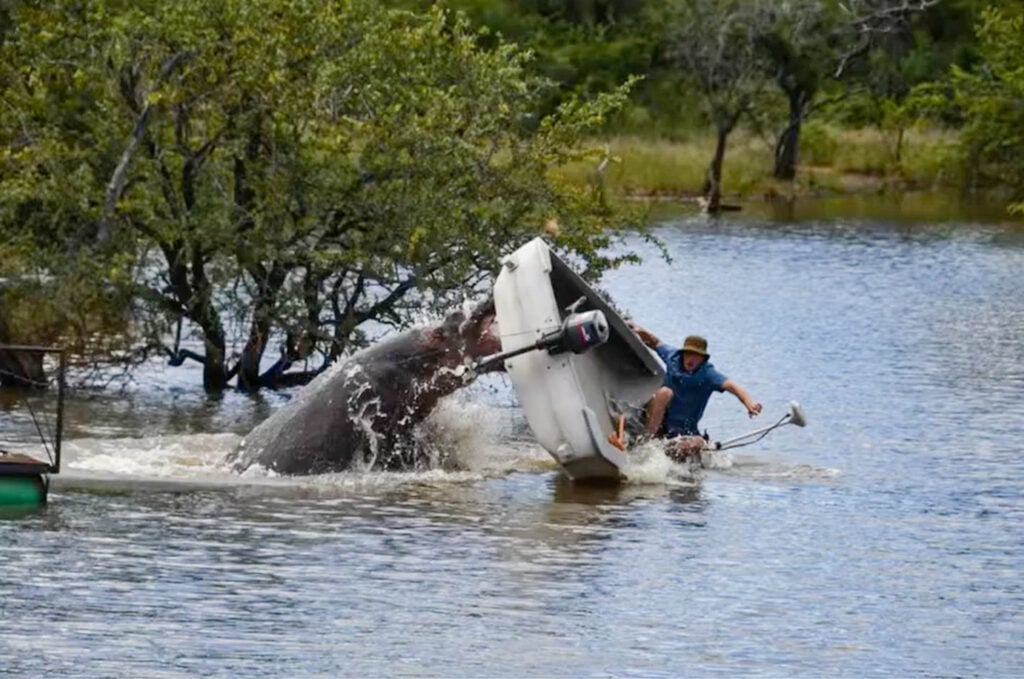
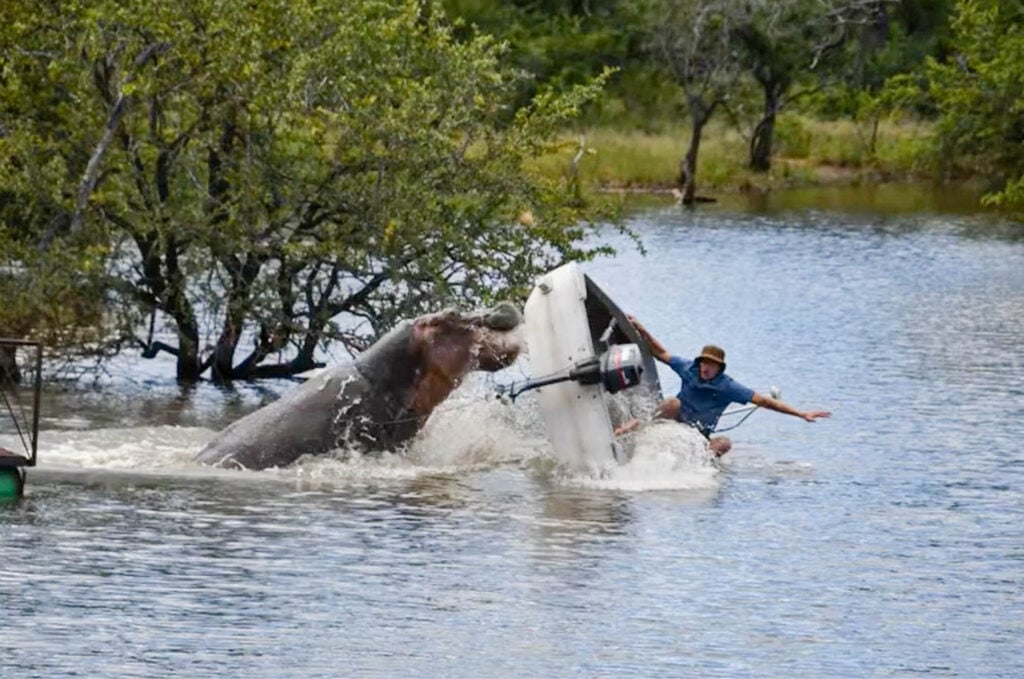
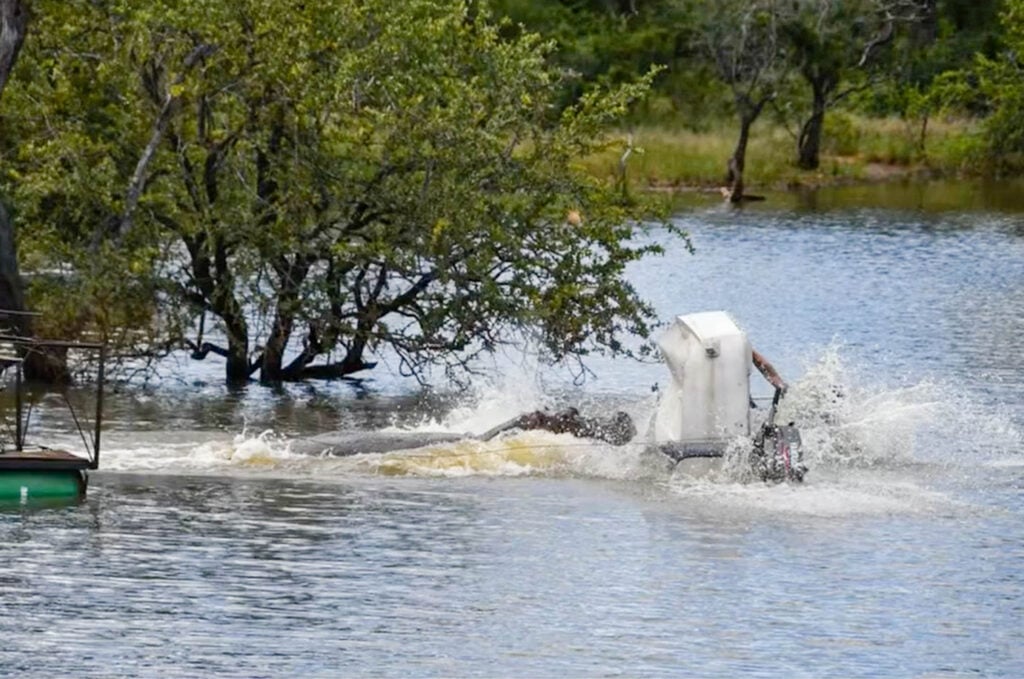
In a matter of seconds, the hippo launched from below. The ferry boat, not the reinforced vessel, was struck and flipped!
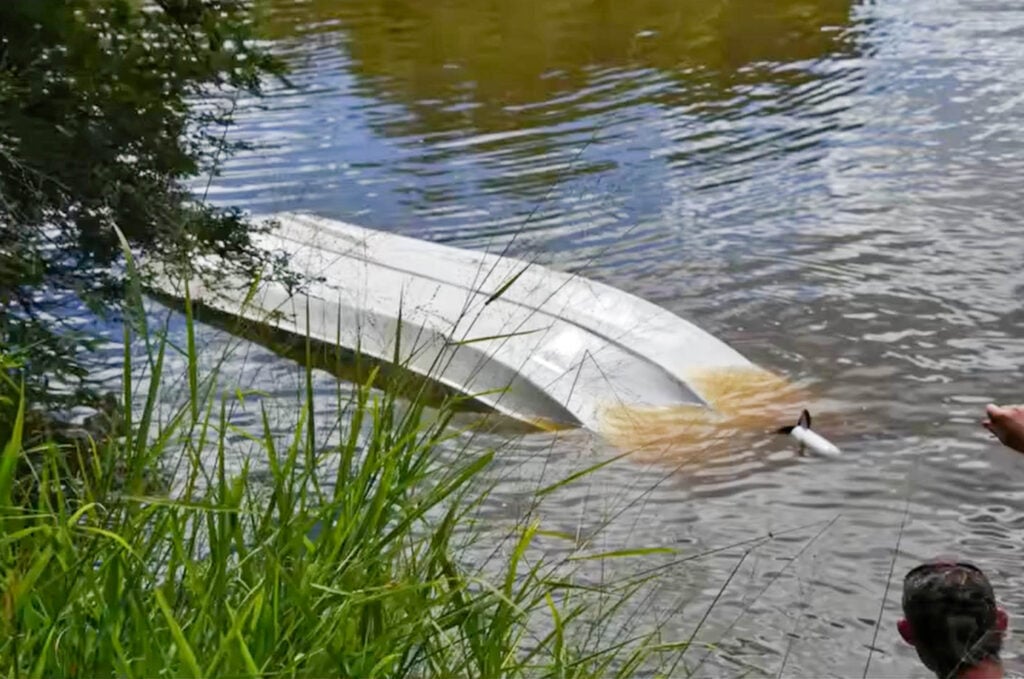
The impact capsized the boat, throwing one of the team members into the water.
A Narrow Escape
Fortunately, the team member resurfaced immediately and managed to climb onto the overturned hull. Miraculously, no serious injuries occurred, despite the sheer force of the impact and the dangerous conditions in the water.
The team remained coordinated throughout the ordeal, communicating clearly and acting quickly to regroup, assess the situation, and ensure that every member was accounted for and safe.
The Reality of Working with Hippos
Incidents like this are not taken lightly, but they are an inevitable part of wildlife management.
“These kinds of things happen a lot in our line of work… We’ve been almost chomped a few times, but it is really a dangerous line of work.”
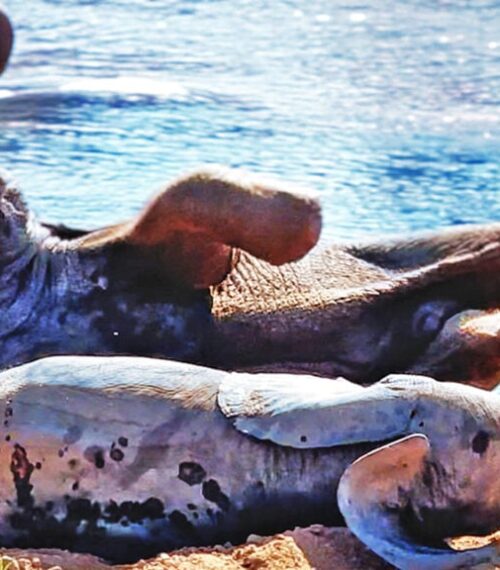
Hippos are widely regarded as one of Africa’s most dangerous large animals. While often appearing calm and sedentary, especially during the day, they are intensely territorial in water and fiercely protective of calves.
Their immense size, powerful jaws, and surprising speed make them formidable. A submerged hippo can move with astonishing force, and boats, even sturdy ones, are vulnerable if positioned poorly or caught off guard.
Modern Advancements
The team at ParaWild recounted that in the past, hippo relocations were typically conducted at night. Teams had to wait until the animals had left the water to graze about a kilometre or two from the shoreline, before attempting to dart them on land.
Get our Best Sightings as they Come in

If a darted hippo managed to reach the water before the sedative fully took effect, the outcome was often fatal, making this a very risky approach. Historically, mortality rates during captures were extremely high because sedated hippos would unfortunately drown.
Thanks to modern veterinary advancements, drug combinations have dramatically changed that reality. Today, hippos can be safely darted while still in the water.
The new sedatives place the hippo into a semi-conscious state that preserves its breathing reflex. This allows it to surface for air independently even while immobilized.
The advancement has significantly improved the safety of captures and is one of the reasons relocations can now be conducted during the day with a substantially reduced risk to the animal.
A Risk Worth Taking
While the footage of the capsized boat may feel dramatic, it ultimately highlights something far more significant: the essential, often unseen work that goes into responsible wildlife management. Relocating displaced animals, especially after floods or habitat disruption, protects both wildlife and surrounding communities.
It requires expertise, planning, courage, and a deep understanding of animal behaviour. Moments like this highlight not only the risks involved but also the dedication of the teams who step into unpredictable situations.
Because of the incredible work of ParaWild, animals can remain wild and safe in the landscapes they belong to.