

















Watch the Sighting:
A Ghost in the Grass
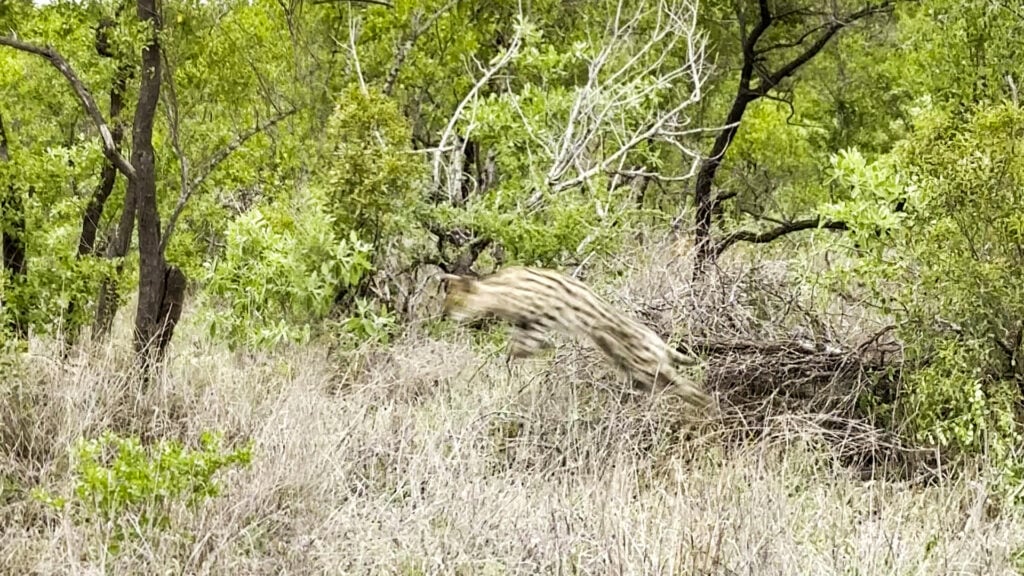
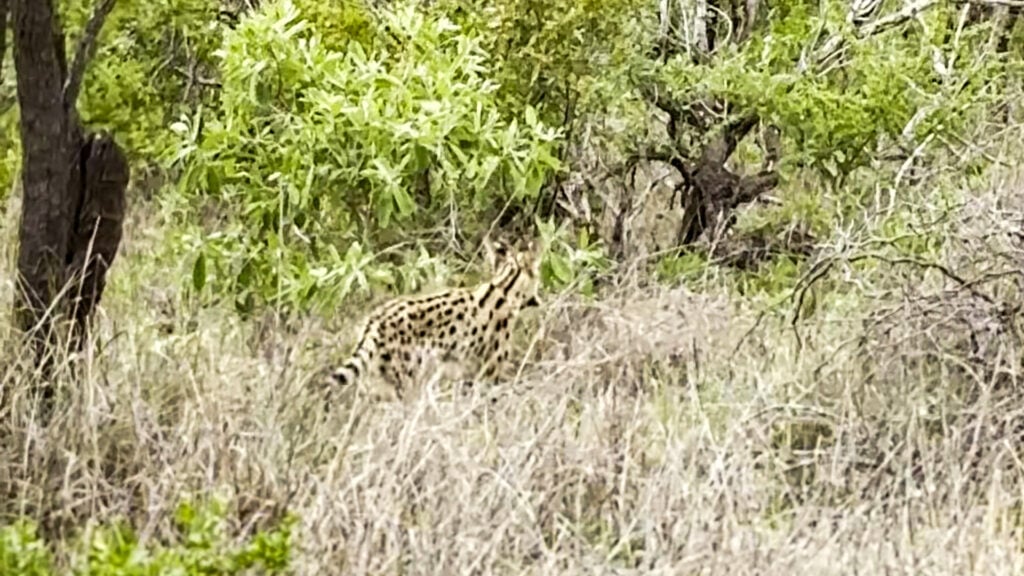
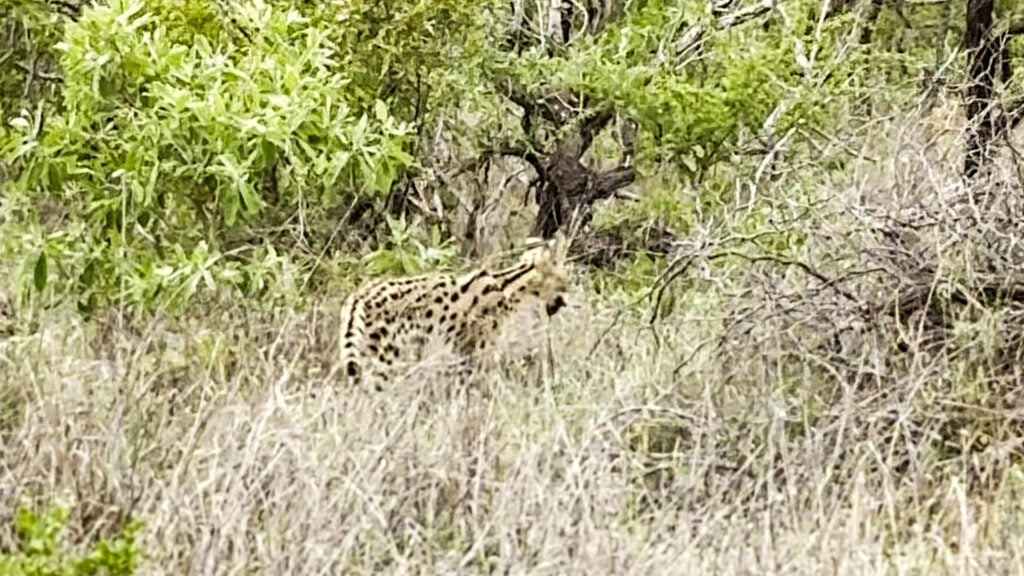
Filmed by safari-goer Mignon Schilz along the S140, the video opens on a scene so subtle it would be easy to miss. A serval was peeking out cautiously from the bushes, its spotted coat blending almost seamlessly with the surrounding grass.
The slender cat appeared far from relaxed, and its posture conveyed that a hunt was taking place. Its body was rigid, its ears pricked forward, and its eyes locked on something just a few meters ahead.
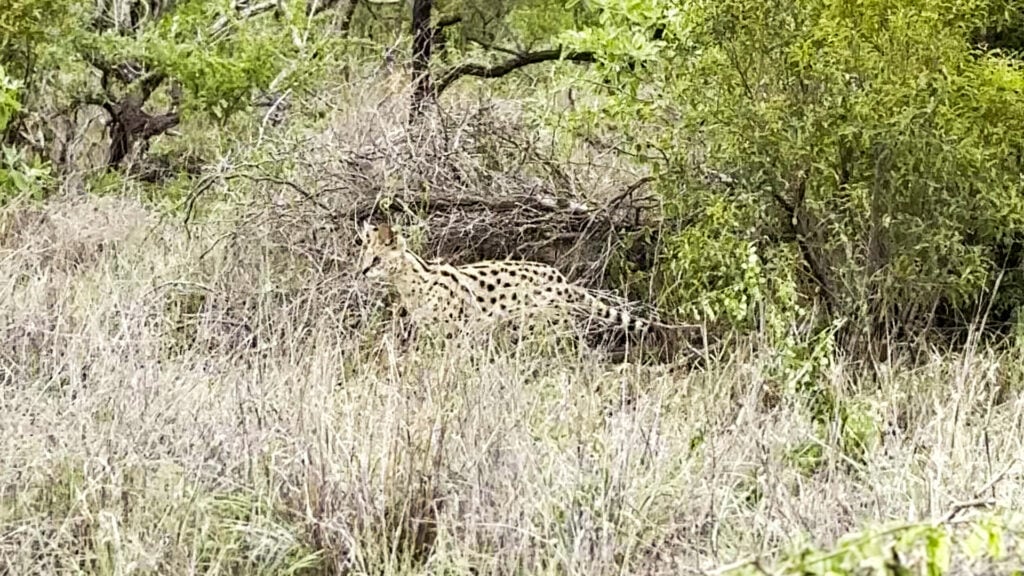
Unlike the explosive chases often seen with larger cats, serval hunts begin in near-stillness. The cat barely moves, allowing the grass and shadows to conceal its presence while it assesses the situation.
Every muscle of the serval seems coiled, storing energy for what was about to come.
The Perfect Pounce
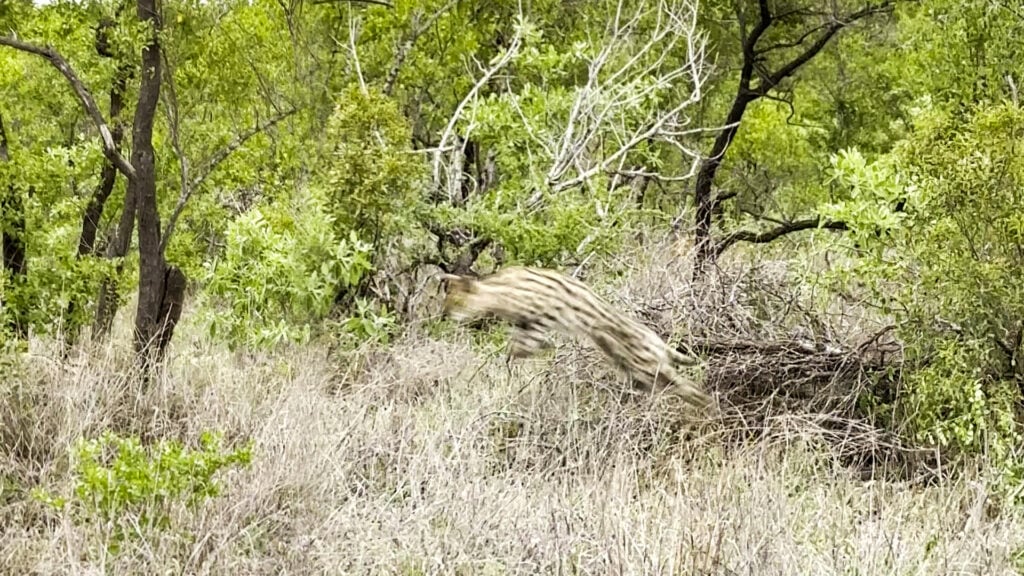
After several seconds of intense focus, the serval sprang into action! In a single, fluid motion, it launched into the air, tracing a near-perfect arc before crashing down precisely onto its target.
The pounce was so accurate that there was no visible struggle. For a brief moment, the serval disappeared behind low shrubs, hidden from view as it secured its prize.
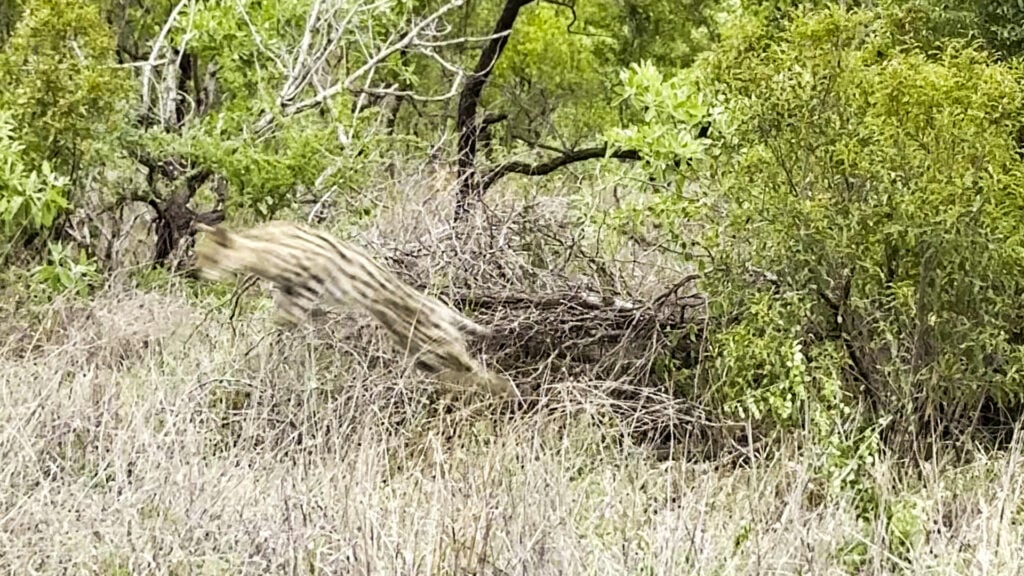
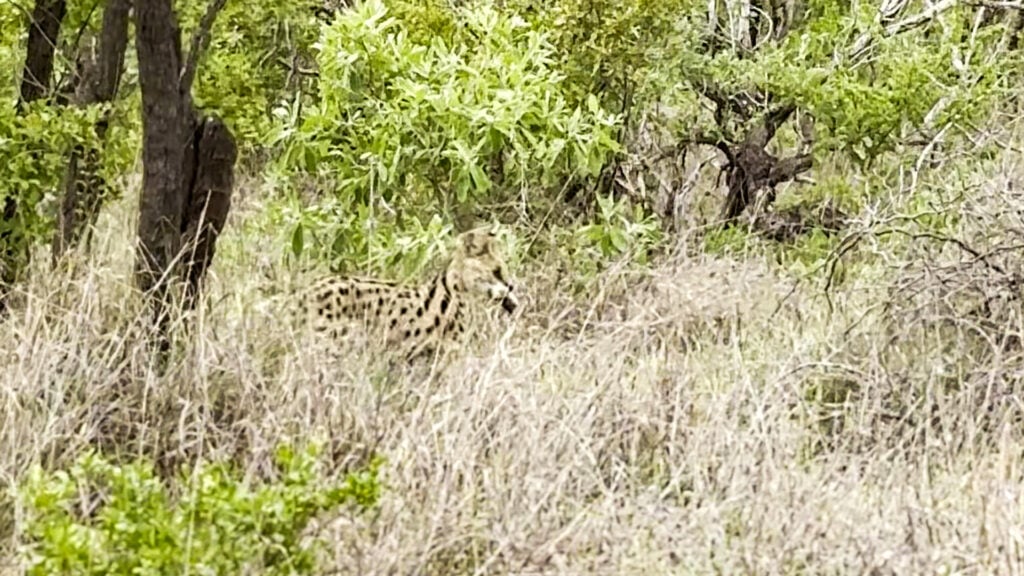
Moments later, it re-emerged with prey clenched firmly in its jaws and walked confidently into the surrounding bush. There was no hesitation or celebration, just the quiet efficiency of a predator that knew its job was done.
Why Servals Are Pouncing Specialists
Servals (Leptailurus serval) are uniquely adapted for this exact hunting style. With the longest legs relative to body size of any wild cat, servals are built for vertical leaps rather than high-speed chases.
They are capable of jumping over three meters into the air, allowing them to strike prey hiding in grass or even snatch birds mid-flight. Their oversized ears play an equally critical role.
Servals possess exceptional hearing, enabling them to detect faint movements of rodents beneath dense vegetation or even underground. Once a sound is located, the serval adjusts its body position slightly, calculating distance and angle before committing to the leap.
This method is astonishingly effective. Studies suggest that servals can achieve hunting success rates as high as 50–60%, far exceeding those of larger cats such as lions or leopards.
A Diet Built Around Precision
Servals primarily feed on small mammals, particularly rodents, but their diet can also include birds, reptiles, frogs, and insects. Their pounce-and-pin technique allows them to kill prey instantly by driving their forepaws downward with force, often breaking the spine or skull.
Get our Best Sightings as they Come in

Because servals rely on stealth rather than speed, they are most active during dawn and dusk, when light levels are low, and prey is active. Their hunting style is energy-efficient, requiring short bursts of effort rather than prolonged pursuits, an important advantage for a medium-sized predator.
A Rare and Rewarding Sight
Servals are notoriously elusive, so sightings like this one are particularly special. Their preference for tall grass and wetlands often keeps them hidden, even in areas where they are present.
Capturing a complete hunt offers a rare glimpse into the mechanics of one of Africa’s most specialized feline hunters.
In this brief but powerful moment on the S140, Mignon documented more than just a successful hunt. The footage showcases the elegance, intelligence, and evolutionary perfection behind the serval’s signature pounce, and serves as a reminder that sometimes the most impressive predators are not the largest, but the most precise.