
















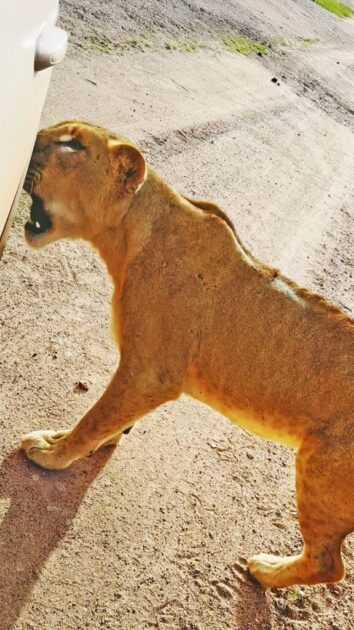

Deon Kelbrick, the owner of the car, managed to capture the moment with his cellphone’s video, saying that the lioness eventually succeeded in puncturing the tyre!
She kept at it, mouth wide open, until her teeth left an undeniable mark in the tyre’s rubber exterior.
Videos such as these showing lions biting tyres, sniffing doors, or touching vehicles with their mouths showcase how curious and strong these big cats can be!
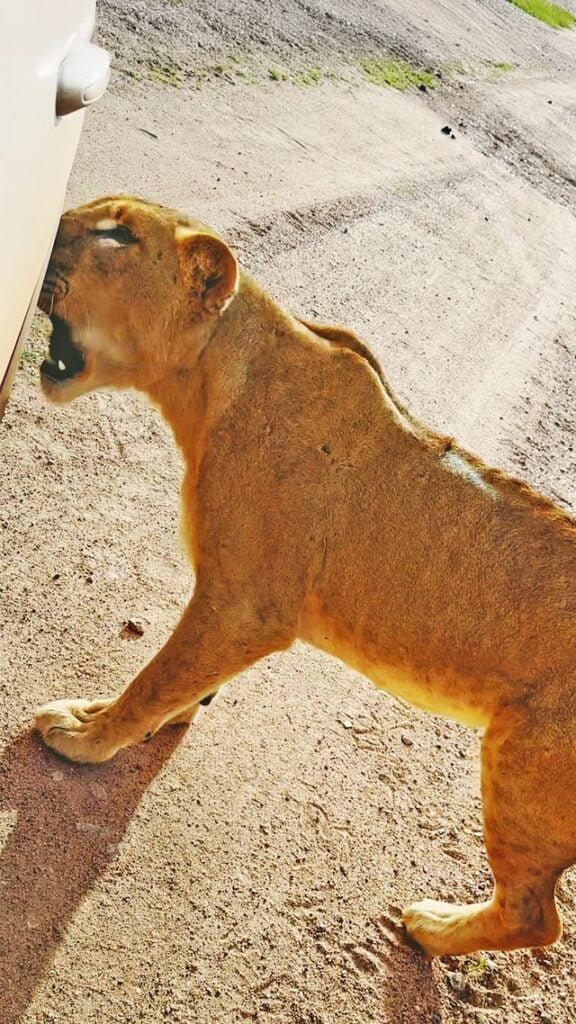
Lioness inspects car tyre
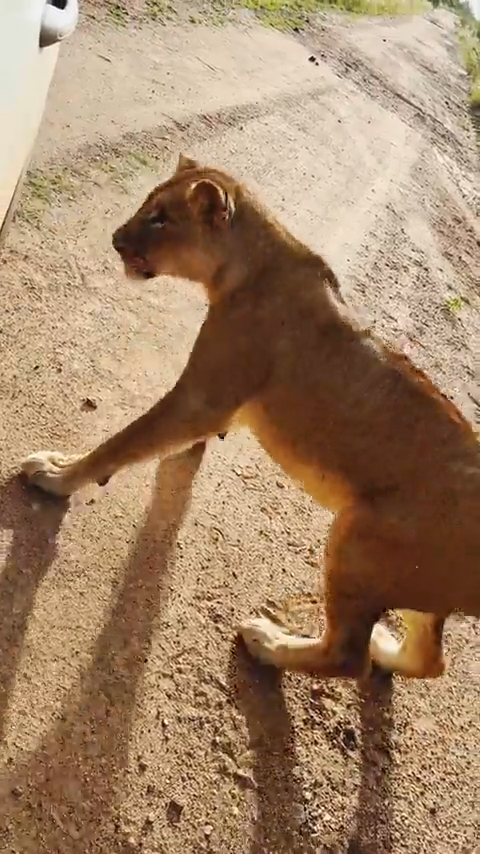
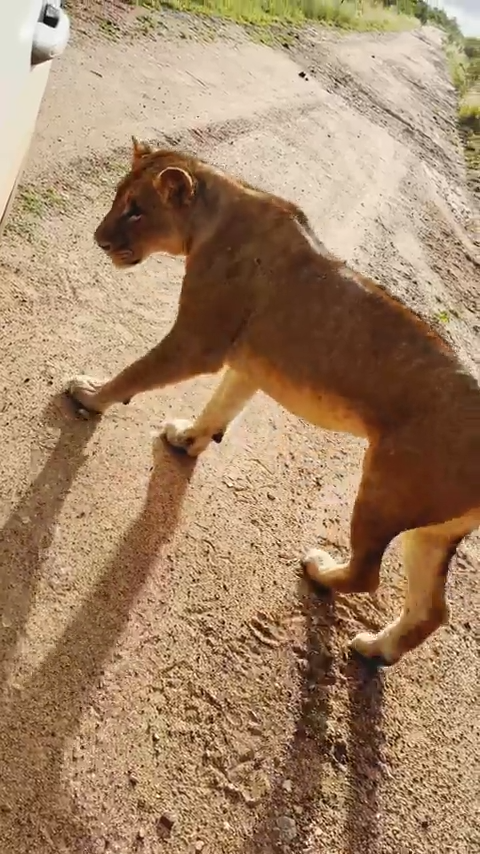
This lioness was definitely filled with curiosity as she walked up to the car. She inspected it and even tilted her head to the side as she tried to figure out what the car might be.
She then gingerly approached the tyre, reasoning this would be a good place to sink her teeth in.
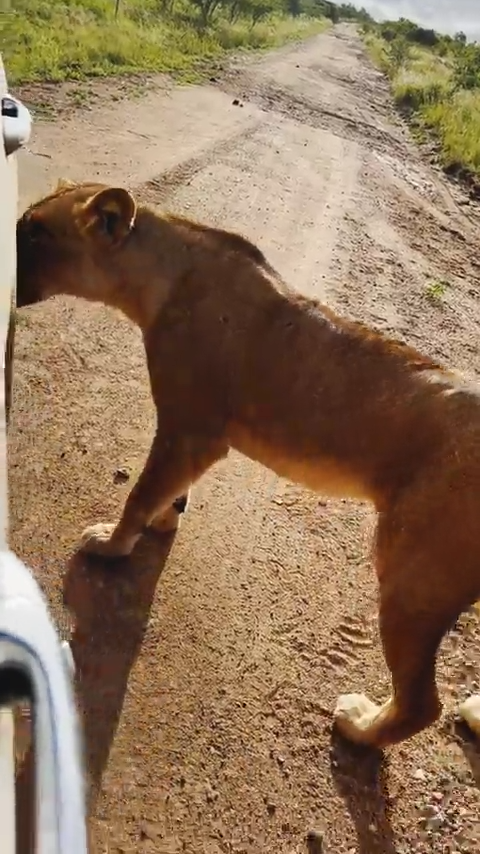
Tyre steals focus as lioness opens jaw to bite
She opened her mouth as wide as she could, and to Deon’s amusement – and horror – began to bite at the tyre.
Get our Best Sightings as they Come in

Lions are inherently curious. They will sometimes investigate unfamiliar objects like vehicles with mouths and paws, especially if they see other lions near cars or if vehicles are stationary.
This stationary vehicle was a sitting duck for a curious lioness such as this one.
Some lions have also been observed showing interest in cars that carry the scent of other lions, leading them to approach and interact with the vehicle.
South African National Parks (SANParks) has previously issued alerts about lions showing unusual behaviour around cars, including biting tyres and approaching vehicles. This is one of the reasons visitors to the reserve are strongly advised to keep windows closed and remain inside their cars at all times.
The lioness remained standing alongside the car, with her attention focused on the tyre.
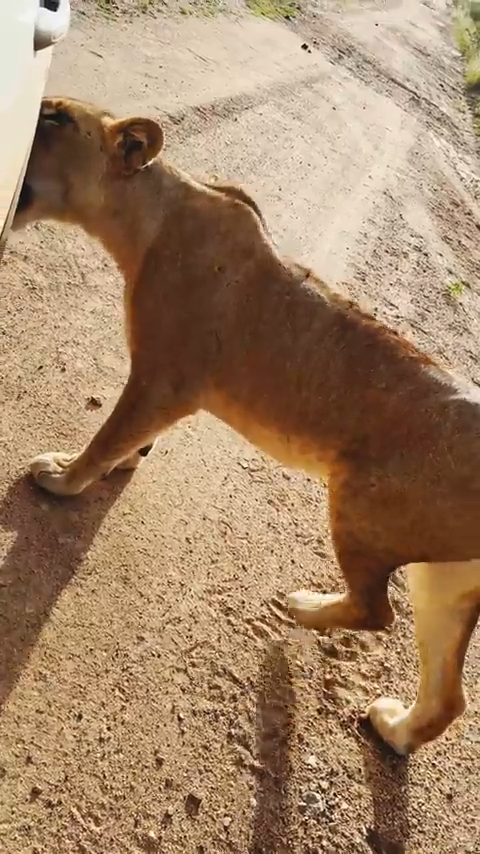
Lioness succeeds in puncturing tyre
Every now and then she took a step backwards and examined the car and the tyre.
She would then move in for another attempt at disarming this strange visitor to the bushveld. Her teeth proved sharp enough to puncture the tyre.
A lioness has 30 permanent teeth, fewer than humans (32), but far more specialised for hunting.
The canine teeth of a lioness are usually about 6 to 7cm long and are conical and slightly curved, designed to pierce and hold prey rather than chew. These canines are used to deliver the killing bite, usually to the throat to cause suffocation or to the muzzle.
Furthermore, a lioness’s bite force is estimated at around 650 PSI, which is strong enough to puncture thick hide, crush a windpipe, and even pierce rubber tyres, as was the case in this special sighting.
While not an everyday occurrence, incidents of lions biting car tyres in the Kruger National Park have been recorded and shared.
Deon’s experience is a reminder to game viewers that if you’re planning a visit to the park, to keep an eye out for your car’s tyres. Furthermore, curiosity isn’t something that is just reserved for cats… the ‘big cats’ can be curious too! This provides for some special viewing opportunities and some incredible sightings, such as this one!