












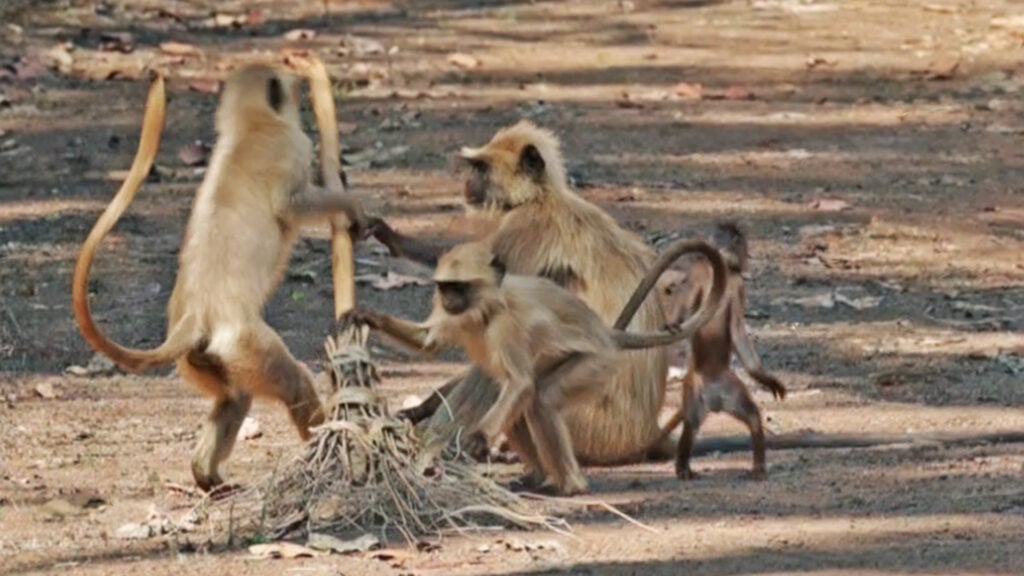

Rachel captured by video the delightful curiosity so characteristic of monkeys. A broom was nearby and members of the troop couldn’t help but to sidle over the broom to try and determine what the strange object was.
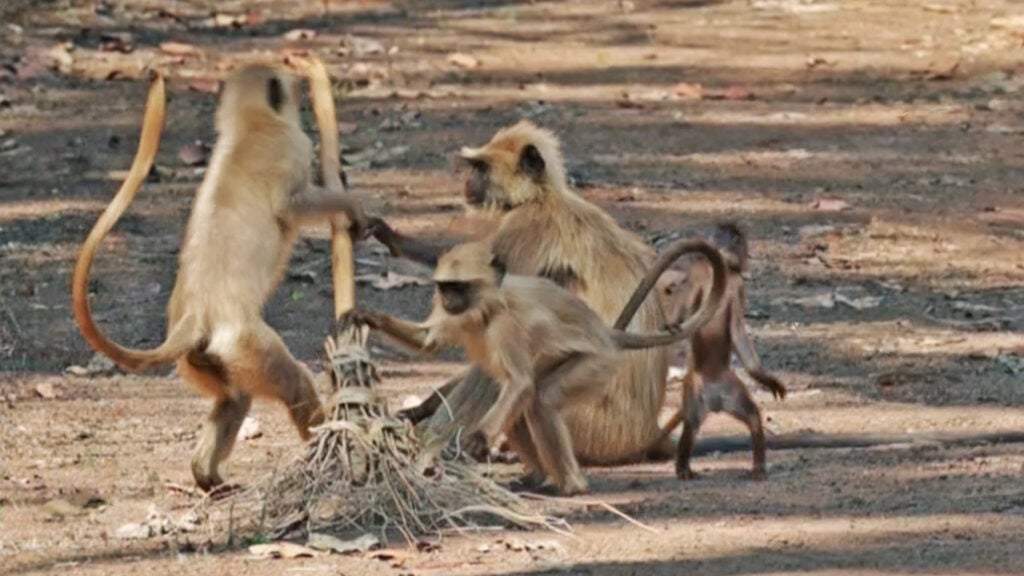
Langurs enthralled by broom’s presence
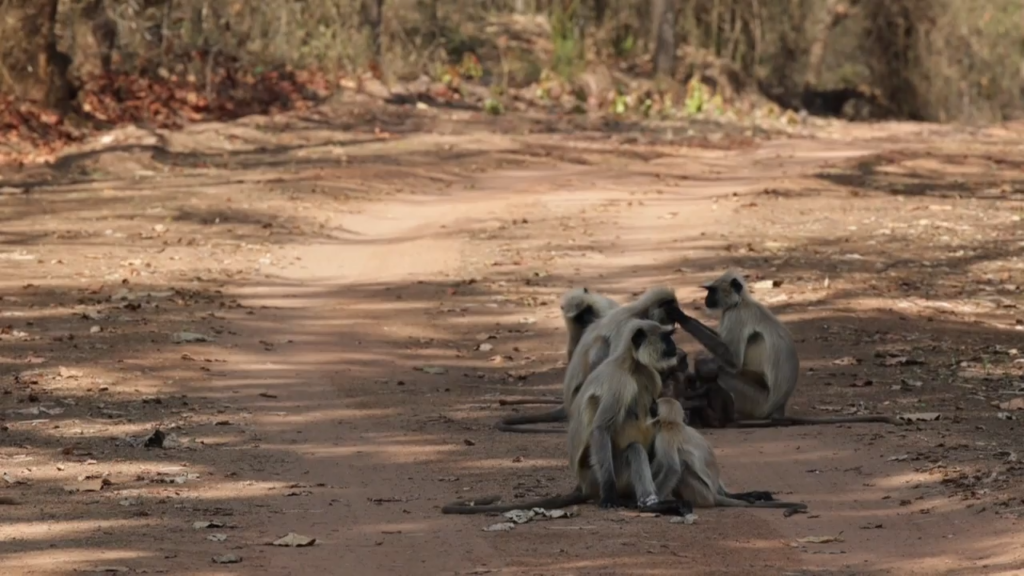
The langurs had been engaged in some troop grooming behaviour when their morning’s fur inspection was interrupted by the broom’s presence.
One by one they moved to get a closer look of the broom, prodding at it with their fingers and moving their faces closer to inspect the object.
It would seem that the smallest among them was also the most curious!
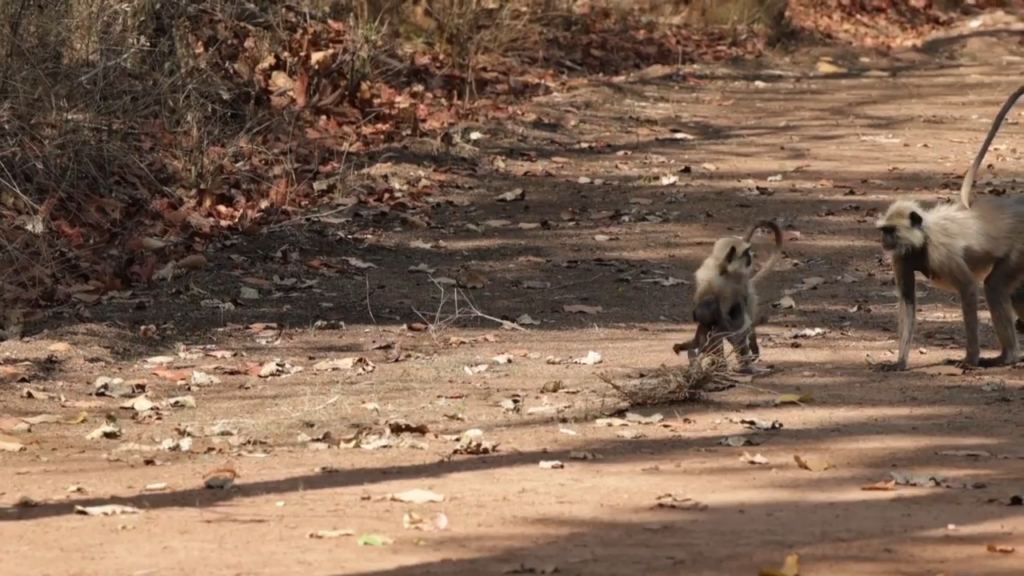
The broom was made of a simple rod with sticks and grass tied to one end. However, its simplicity didn’t make it less desirable to the monkeys.
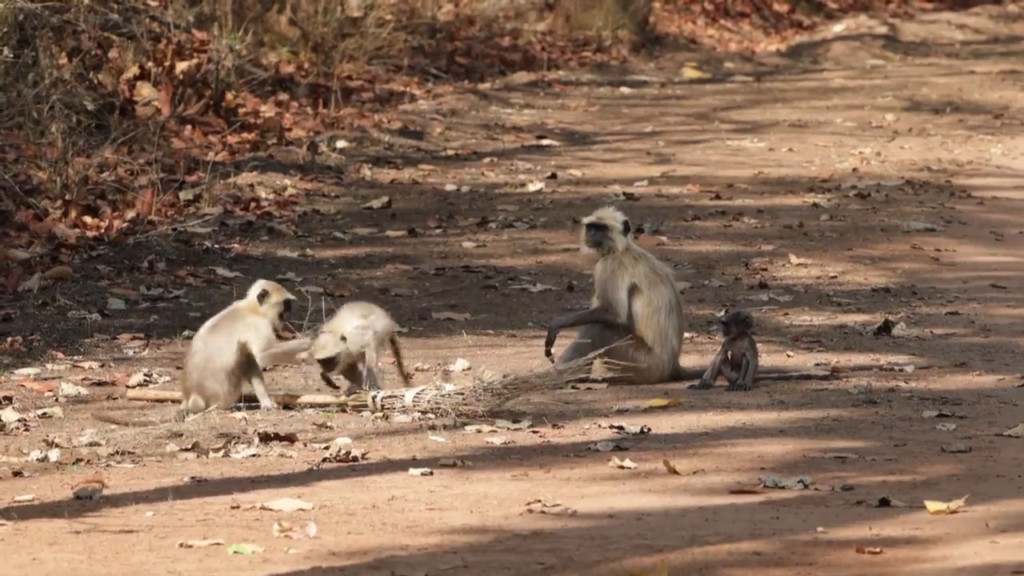
Langurs belong to a group of leaf-eating monkeys known for their long tails, black faces, and grey or brown fur. Many species exist across Asia, but the Hanuman langur is one of the most recognisable across the Indian subcontinent.
Get our Best Sightings as they Come in

These monkeys are deeply connected to human culture in India, where they are often regarded as sacred and allowed to roam freely around temples and towns. Because they spend time both in trees and on the ground, they frequently encounter human structures and objects, such as this broom.
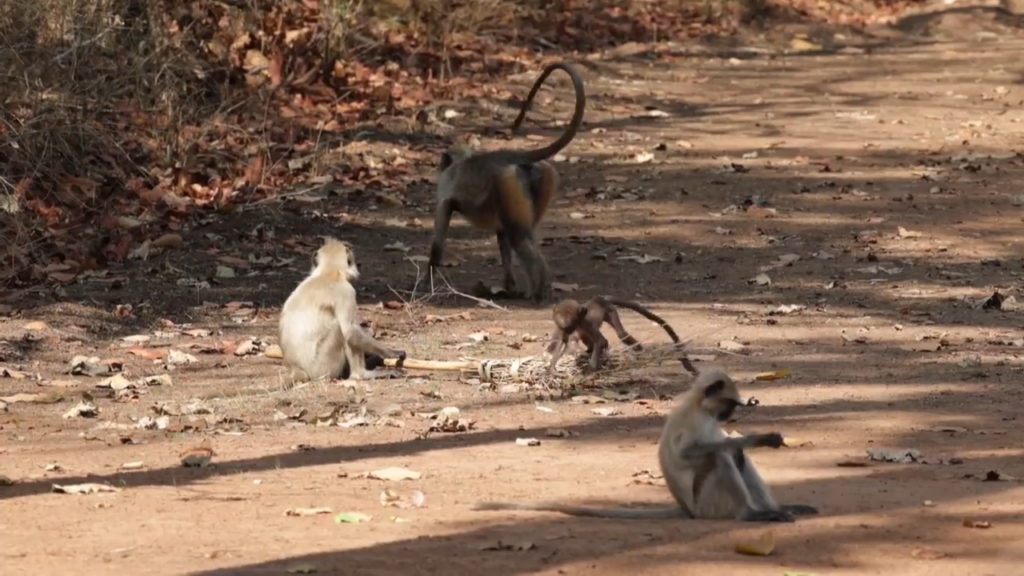
Troop members take turns to inspect broom
What was particularly humorous about his sighting was how troop members took turns to inspect the broom, with the unidentified object captivating the enire troop.
Langur society is complex and highly structured. Langurs usually live in troops ranging from about 20 to 30 individuals, though larger groups are also common.
These troops are often led by a dominant male, while females and young form the core social unit. Young langurs grow up surrounded by other juveniles, which encourages constant play and social learning.
Play behaviour often includes grabbing, wrestling, and exploring objects.
Understanding this playfulness of young troop members explains why the baby langur was the one most intrigued by the simple broom. Baby langurs might even treat a broom like a toy or climbing tool!
Most of the older members of the troop sat to the side and commenced grooming behaviour, having looked at the broom and determined it didn’t warrant their time or energy. They sat hard at work, inspecting one another’s fur, in a poignant setting.
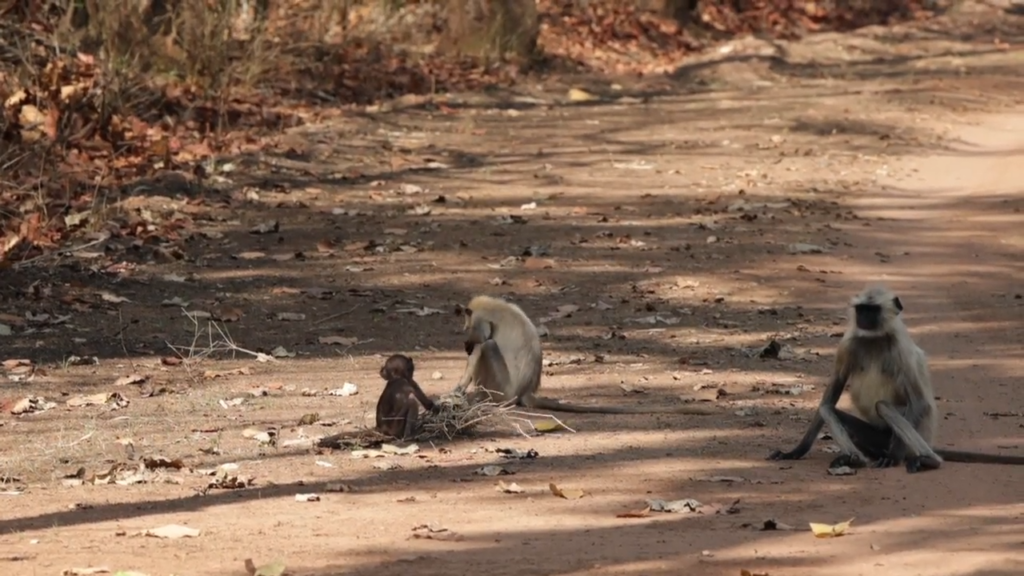
Baby langur returns for a second look at the broom
However, after Mom had checked over this baby langur’s fur, the little one couldn’t resist returning to the broom for a second look. Grooming could wait for the moment… there was an entire world to explore!
Sightings such as this one highlight the growing overlap between humans and wildlife in India. Urban expansion, agriculture, and deforestation are pushing animals closer to human settlements. Langurs, being highly adaptable and less shy around humans compared to some other primates, often become one of the most visible wildlife species in towns and villages.