
















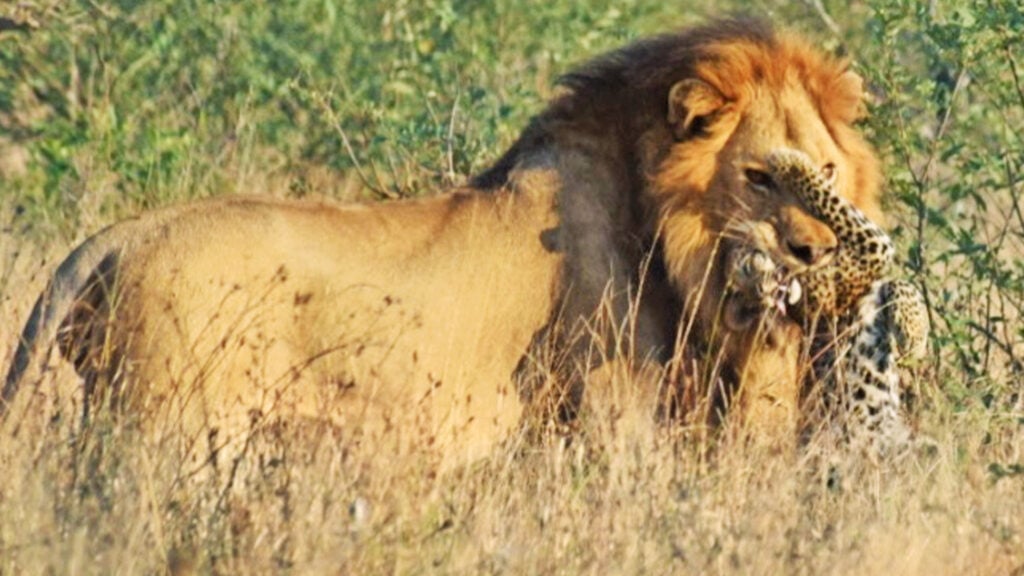

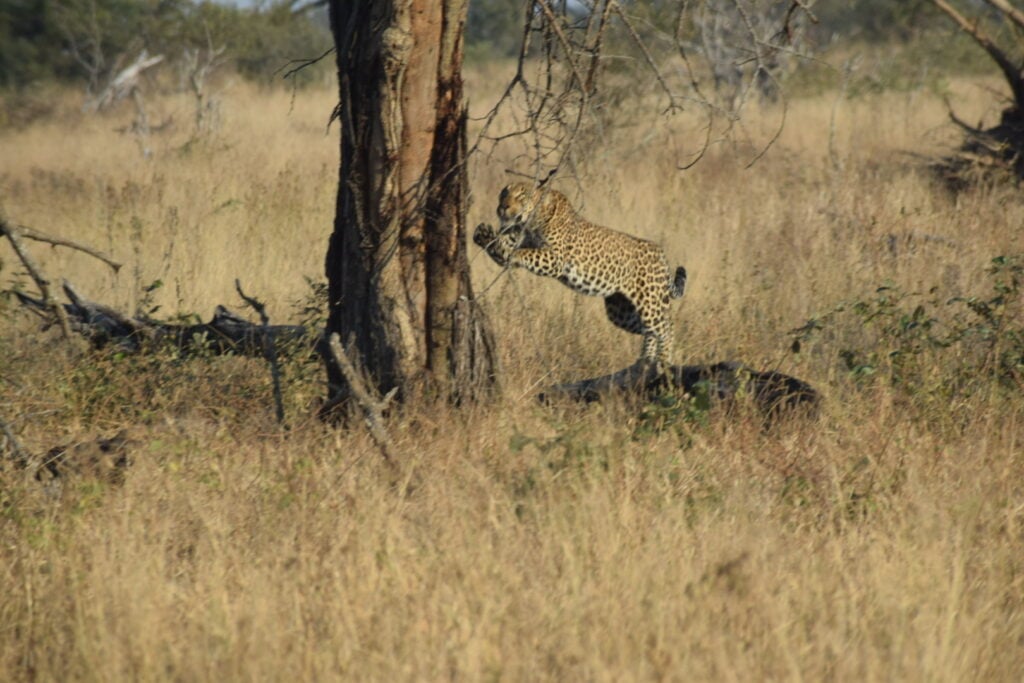
It all happened in the blink of an eye along the S25 in Kruger National Park. Greg Campbell had been filming when an adult leopard suddenly bolted up a nearby tree.
Watch the video here:
The movement was explosive and urgent, not the relaxed climb of a cat seeking shade or vantage, but the desperate scramble of an animal trying to escape. Then someone in the vehicle said what no one wanted to hear:
“He got a leopard.”
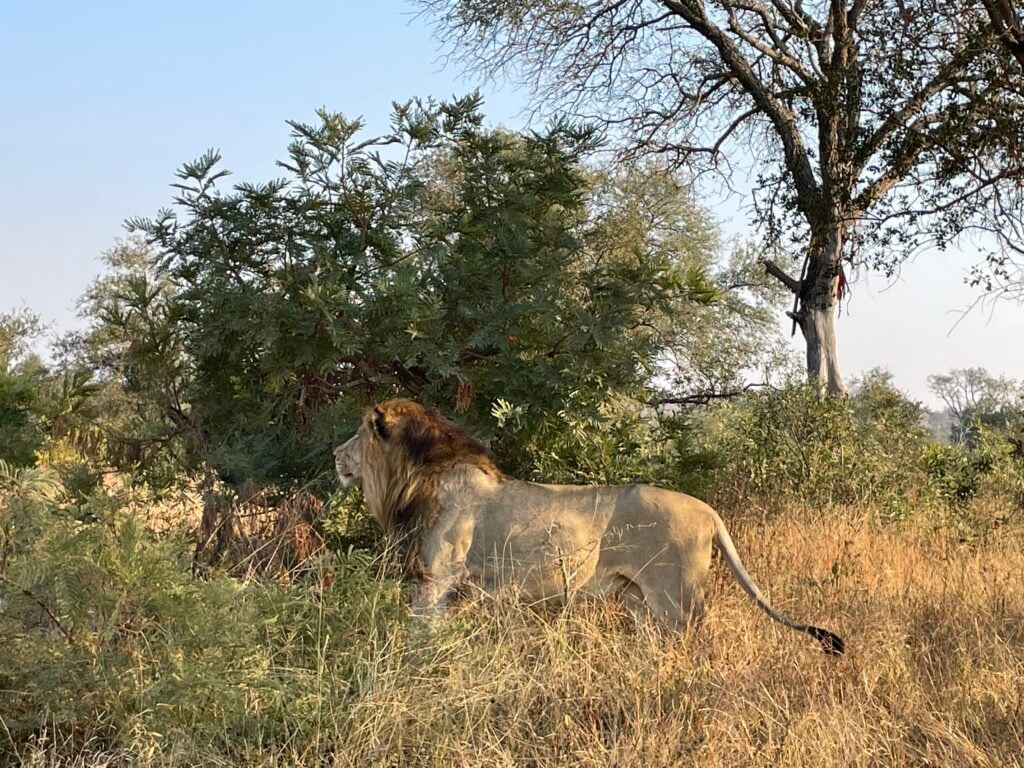
The camera panned across the tall grass, and there, well-camouflaged, was a large male lion. His golden coat blended seamlessly with the dry vegetation, making him nearly invisible at first glance, but his movements were unmistakable.
A Shocking and Heartbreaking Sight
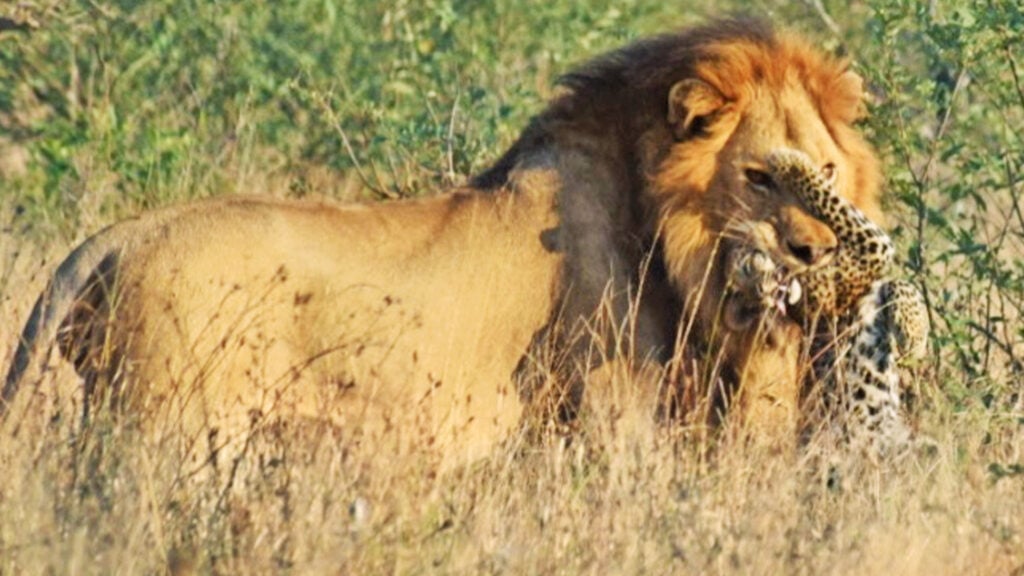
The lion was whipping his head from side to side, jaws clenched around something small. The motion was the violent kind predators use to break the neck of prey, and was deliberate and final.
When the camera shifted back to the leopard in the tree, the reality of the situation became painfully clear. The adult leopard clung to the branches, staring down intently.
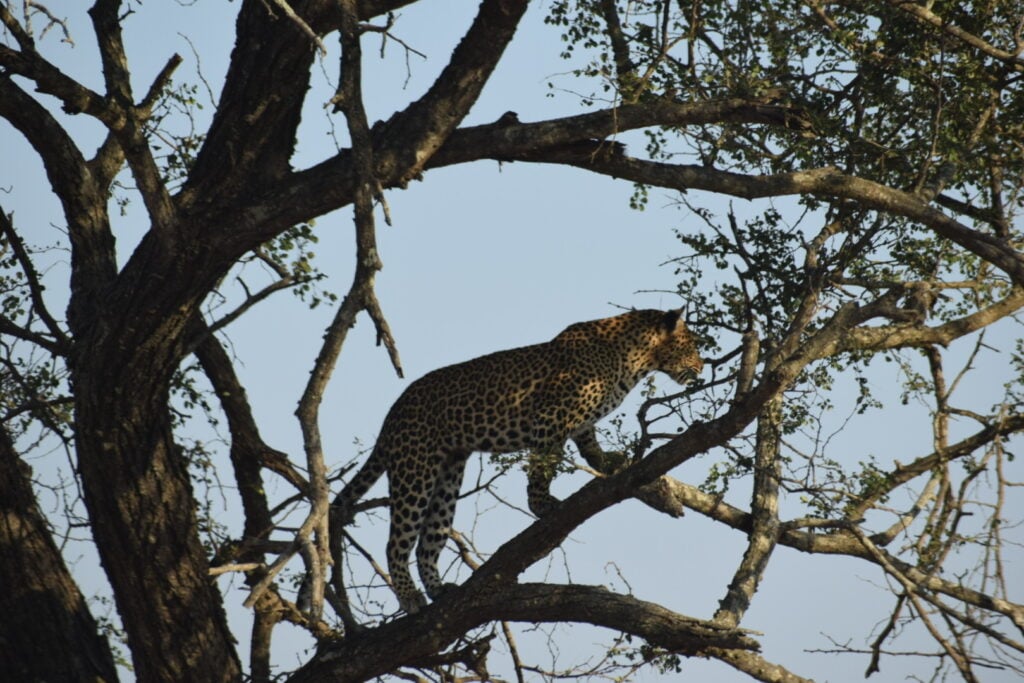
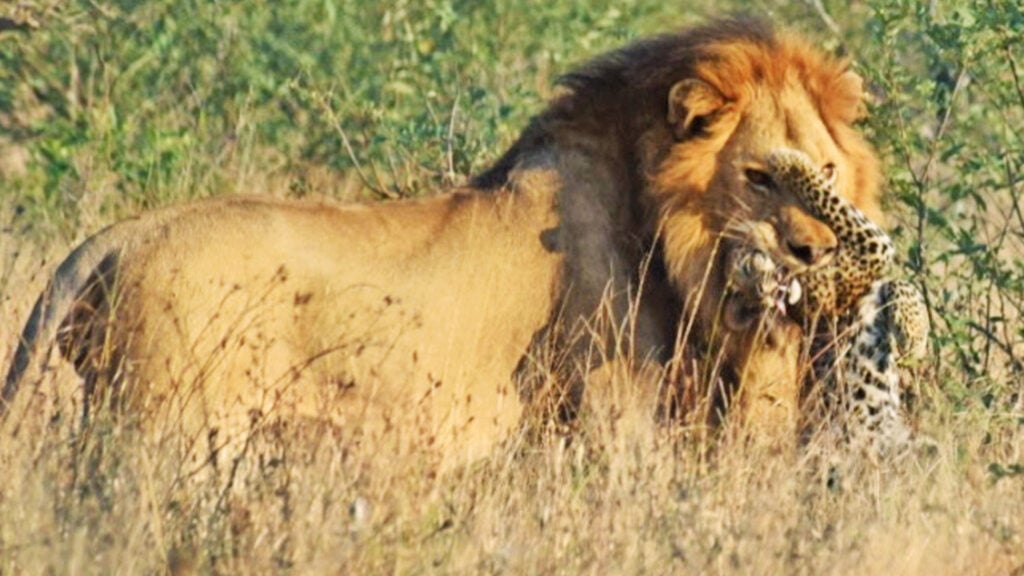
There was no growling or attempt to descend, just a fixed, helpless gaze toward the lion below. Moments later, the lion stood upright, and dangling from his jaws was a leopard cub.
The cub hung limp as the male lion turned and walked calmly into the bush, disappearing with the confidence of a secured kill.
Why Would a Lion Kill a Leopard Cub?
While difficult to witness, this behaviour is not unheard of. Lions and leopards are direct competitors, often sharing overlapping territories and targeting similar prey species.
In areas where space and food are limited, competition can become intense. Male lions in particular may kill the offspring of rival predators as a means of reducing future competition.
A leopard cub that survives to adulthood represents another skilled hunter in the ecosystem that may compete for prey and territory. By eliminating the cub, the lion effectively reduces long-term rivalry.
This behaviour is known as interspecific competition, and while harsh, it is part of the ecological balance between large carnivores.
Leopards are aware of this threat, so that is one reason they are such secretive animals. They often hide their cubs in dense thickets or rocky outcrops and move them frequently to avoid detection.
Despite these precautions, though, lions occasionally encounter vulnerable young.
A Silent Standoff
What made this sighting especially powerful was the adult leopard’s presence. Watching from the safety of the tree, it could do nothing.
Get our Best Sightings as they Come in

Leopards are strong and capable predators, but they are significantly smaller than male lions. Confronting a dominant male on the ground would almost certainly have resulted in death for the adult as well, so it stayed put.
In the bush, survival sometimes means restraint, even in the face of unimaginable loss.
The Reality of the Wild
For those watching from the vehicle, the moment was shocking and sobering. There was no drawn-out struggle, just a swift assertion of dominance and a quiet exit into the grass.
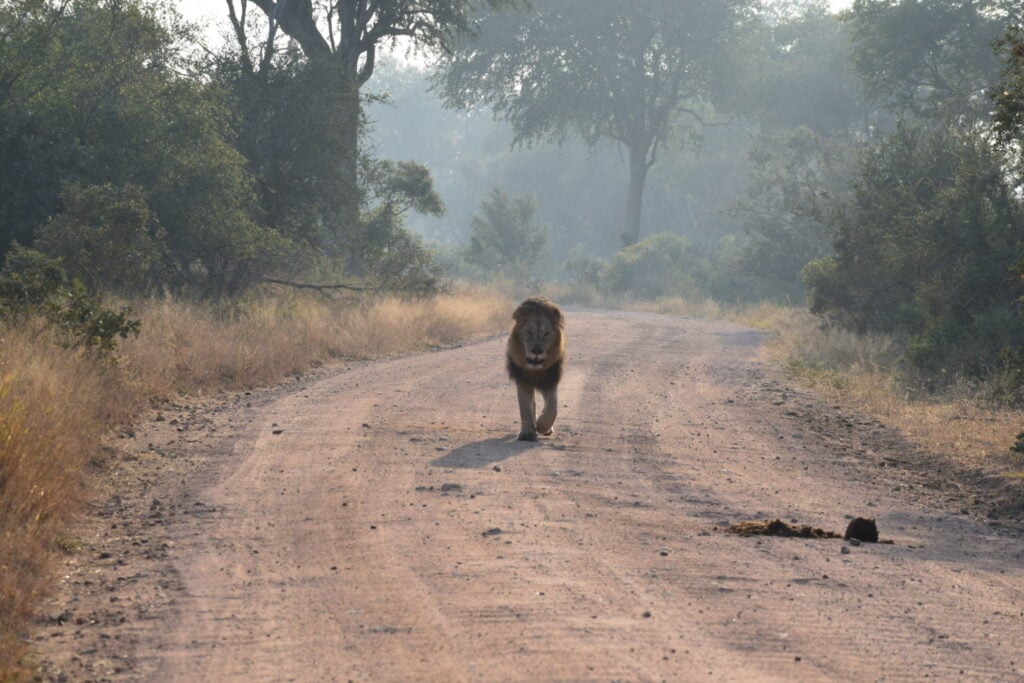
Encounters like this are reminders that Africa’s predators don’t only compete with prey, they compete with each other. On that stretch of road along the S25, the balance of power was unmistakable.