
















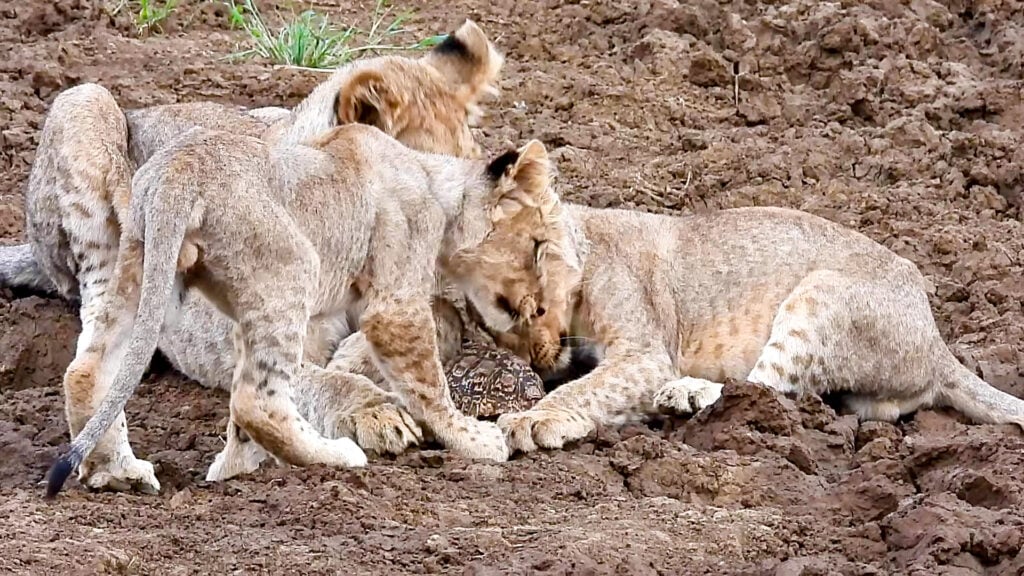

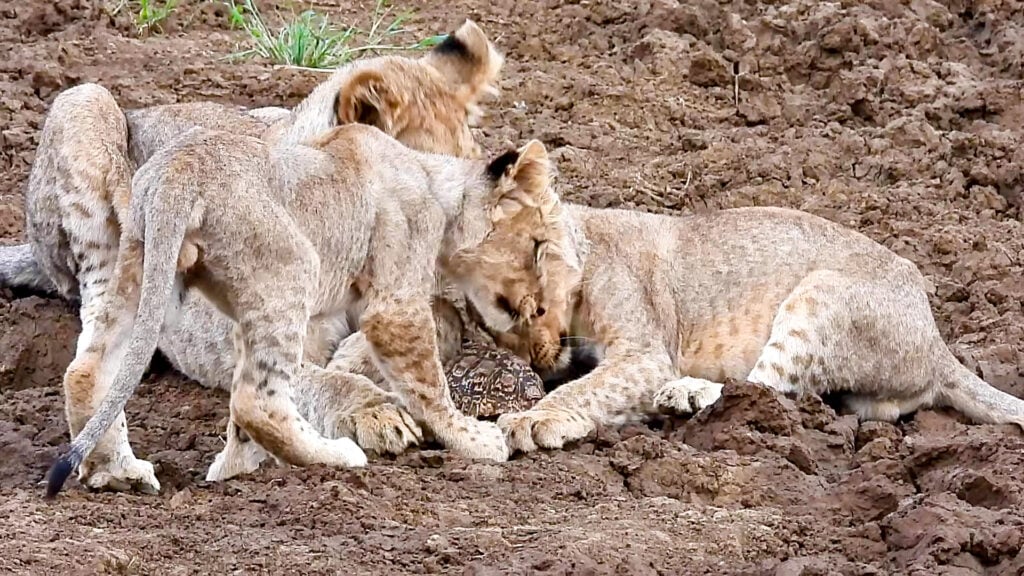
Margie Taylor submitted this short video clip to Latest Sightings. She filmed the fun while on a game drive in South Africa’s Madikwe Game Reserve.
Centre of attention
As we join the action in Margie’s video, we see three young lions. They focus their attention on an object that, at first glance, we cannot easily identify.
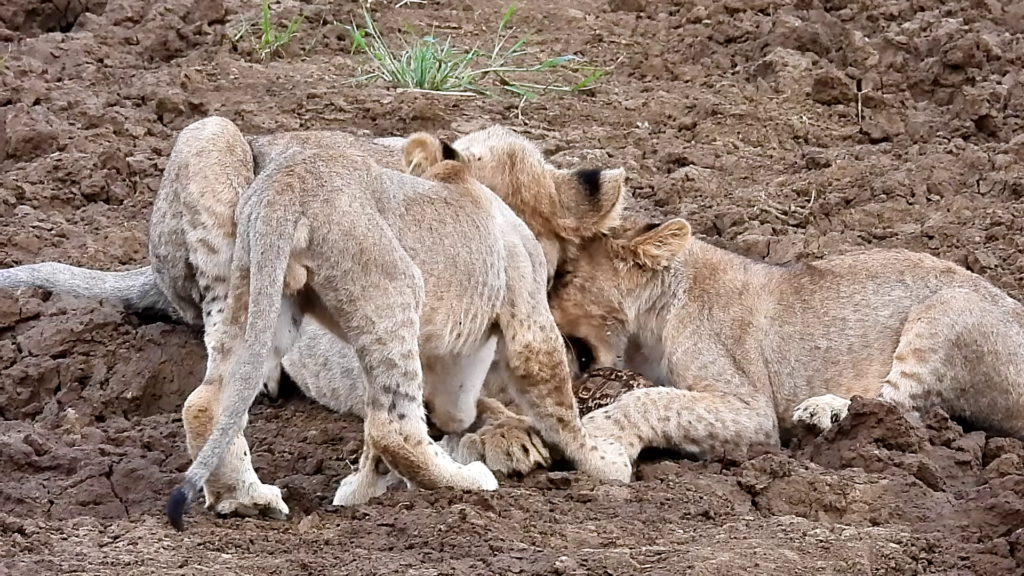
We can tell that the lions are cubs by the shadow markings visible on their legs. Research suggests these are remnants of a time when lions lived in dense jungles. As Africa got drier, they evolved to dominate the savannah grasslands.
Object identified
Subsequently, one of the cubs puts his nose to the object. Now we can see that it is the shell of a leopard tortoise, a common species found throughout eastern and southern Africa.

What is not apparent in the video is whether it is a live tortoise or just an empty shell. A combination of living bone and keratin, the same material as our fingernails, forms tortoise shells.
It’s not that interesting
Like all young animals, the cubs are curious about the strange discovery they’ve made. They jostle for position as they sniff at it.
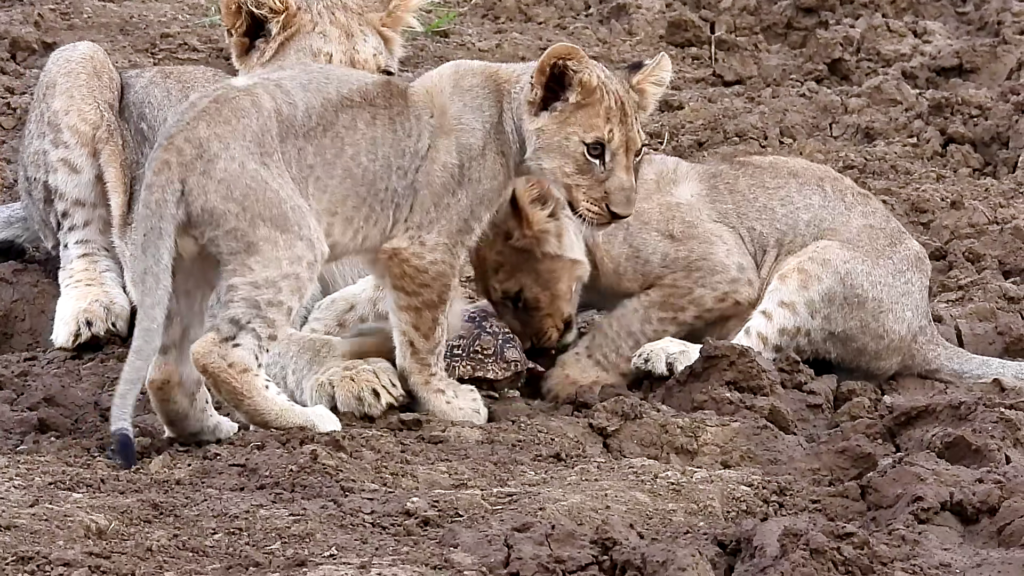
However, after a brief sniff, the cub nearest the camera appears to lose interest. Either that or he knows his siblings aren’t in the mood to share. These sorts of social dynamics will shape each cub’s place in their pride later in life.
Different age groups
As the nearest cub heads off, we get a better look at the third cub (on the left). You’ll notice that it is considerably bigger and therefore likely from a different mother than the other two.
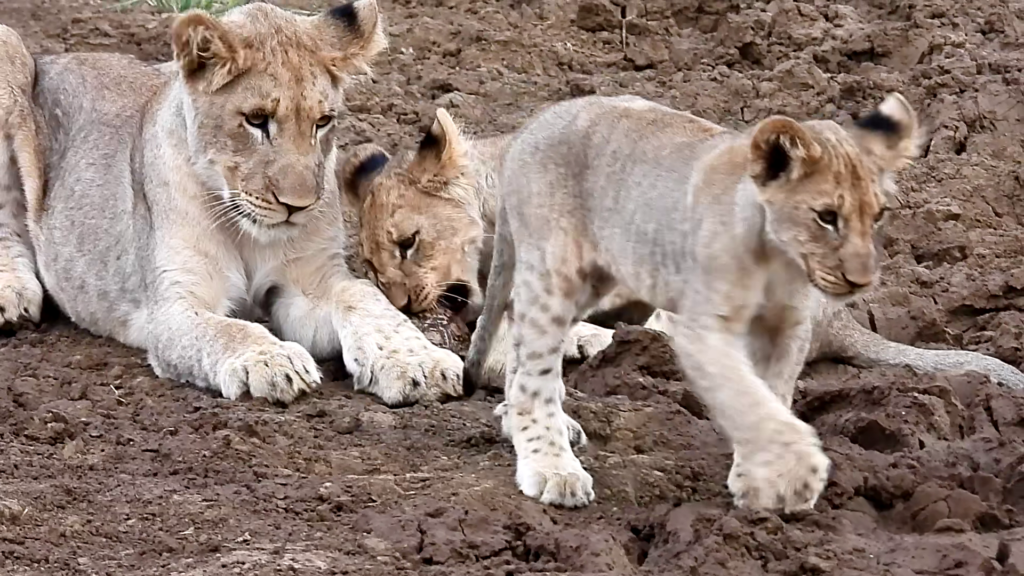
After being introduced to the pride at about 6 weeks old, all the cubs will grow up together. As such, they form strong bonds that may last their lifetime. These are vital to ensure cohesion within the pride.
You’ll also note that the older cub seems less interested in the tortoise shell. This may come down to it having more experience and not being easily entertained. Typical teenager.
Get our Best Sightings as they Come in

All mine
Consequently, with its littermate departed and the teenager no longer interested, the remaining cub has the shell all to itself.
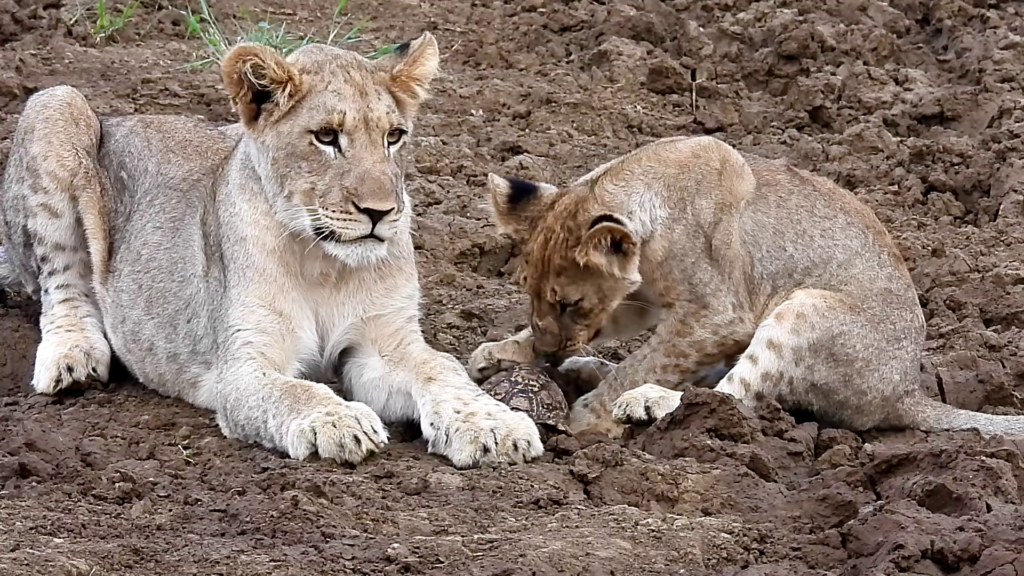
All of the cub’s attention is focused on learning more about this new object. Having sniffed it thoroughly, it then prods at it with its paw. The cub could well be confused by the fact that while the shell smells like an animal, it behaves like a rock.
If in doubt, chew it out
When the cubs’ senses of smell and touch fail to yield any clues, the cub turns to a third sense: taste. Securing the carapace with its front paws and tries biting it.
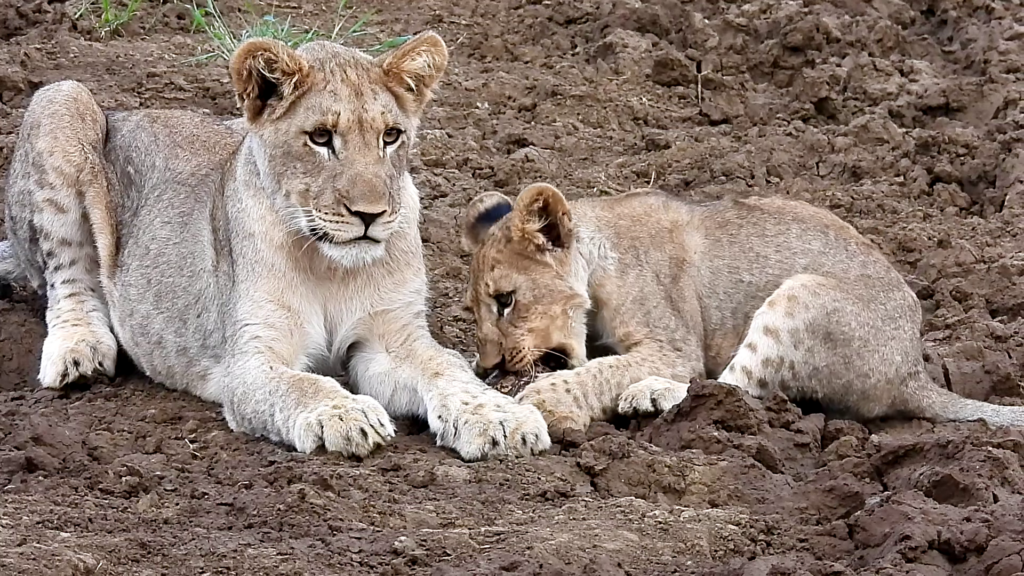
However, a combination of the shell’s diameter and the cub’s limited gape sees its canines slip off the shell’s smooth, hard surface.
This is exactly as Nature intended. After all, a tortoise’s shell is its primary defence against predators.
Consequently, as the video draws to an end, the cub appears to be losing interest. Even so, we see the cub looking for its brother, ready to continue exploring their fascinating world.