









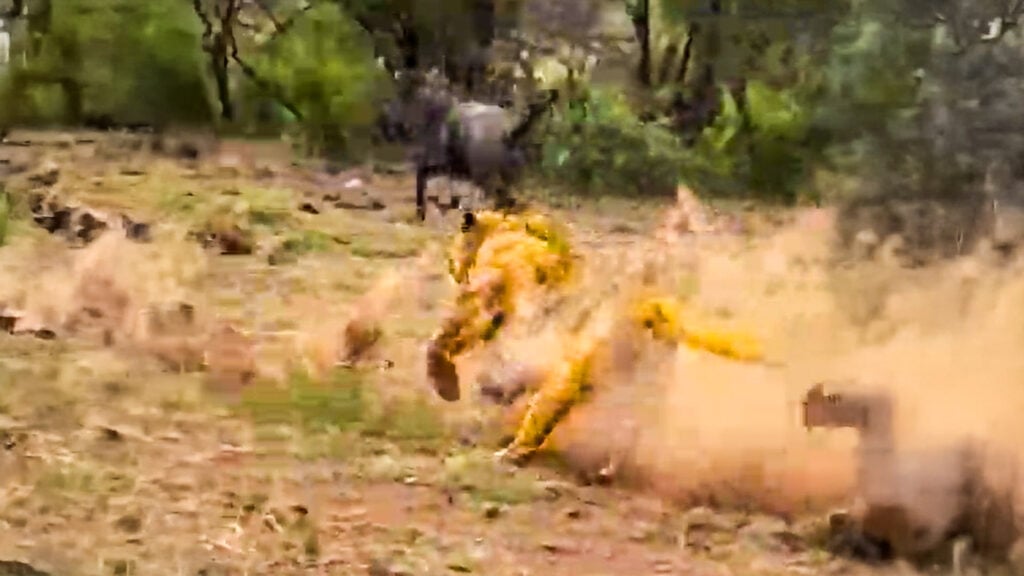

The lioness pursued the wildebeest with relentless determination, making for an incredible sighting.
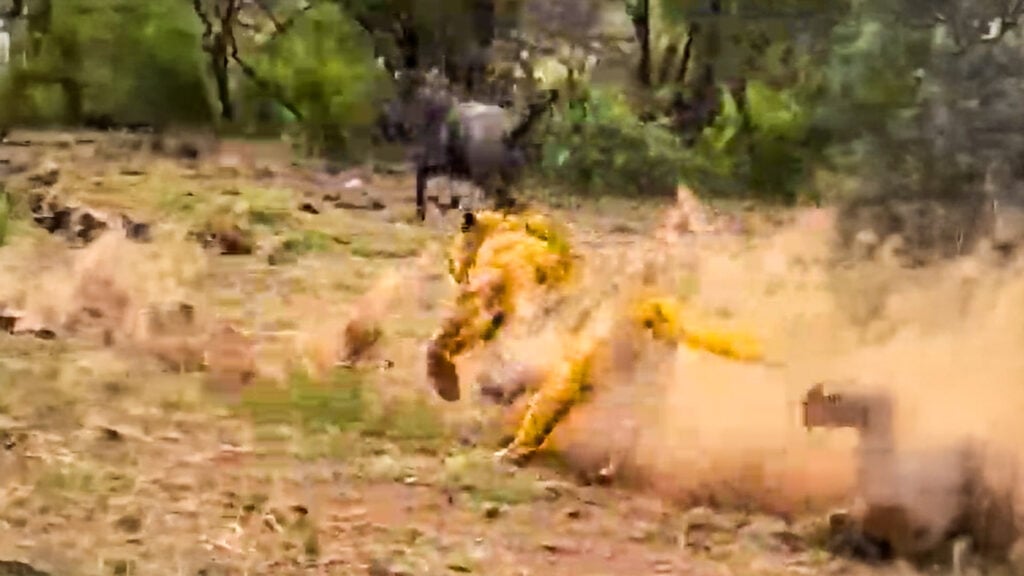
Lioness in hot pursuit of wildebeest
Wildebeest are common prey for lions. This is because they often move in large herds and as such, are accessible targets.
Lions will usually hunt in groups called prides. They will use teamwork to isolate a weaker or younger wildebeest from the herd. They will then rely on stealth and patience, stalking quietly through the grass to get as close as possible before launching a sudden, powerful chase.
In this instance, a single lioness was in hot pursuit of the wildebeest, chasing hot on its heels in a fast and furious attempt to bring it down.
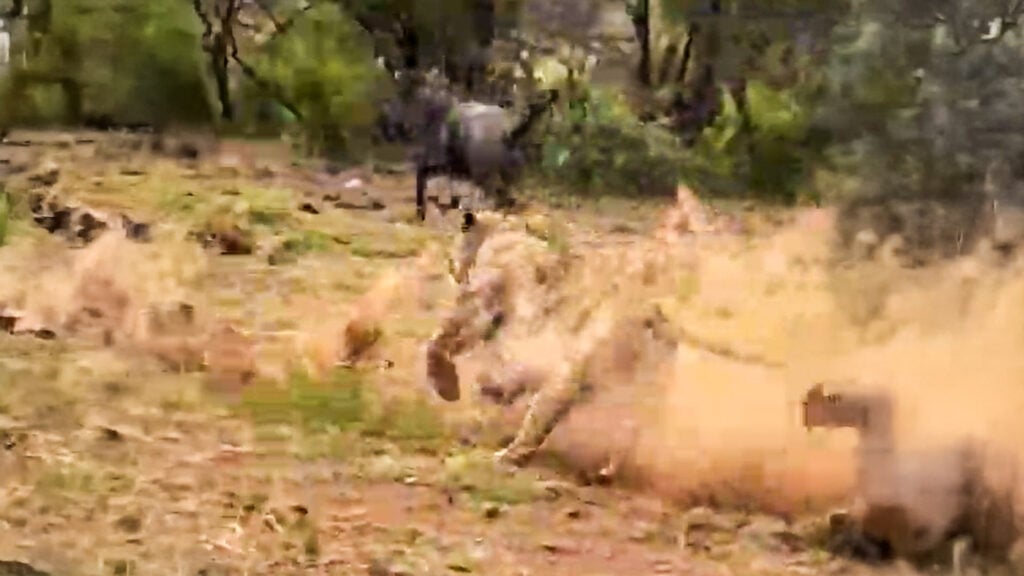
When a lion charges, a wildebeest will try to evade it by running fast and making sharp turns. This wildebeest turned abruptly when it came to a line of bushes. It ran swiftly behind the bushes, kicking up dust in its wake.
The body of the wildebeest is built for endurance rather than speed. A wildebeest can run up to 80 km/h in short bursts however relies more on stamina and group movement to avoid predators.
This lioness was a strong sprinter with powerful muscles and precision moves, continued in hot pursuit of her targeted prey.
In chasing prey, a lion can run up to 60 to 70 km/h in short bursts, however, for lions, it’s about more than just speed. Lions also use timing, angles, and endurance to secure a kill.
The lioness kept her eyes locked on her target, closing the gap with focused determination.
Get our Best Sightings as they Come in

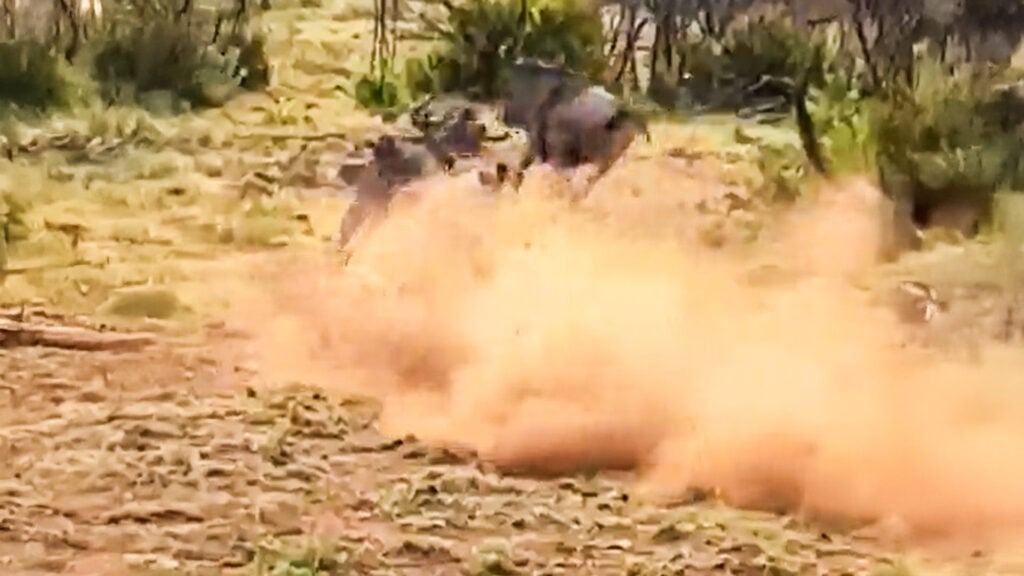
She had honed hunting skills, and leapt at the wildebeest with absolute precision, latching onto its hindquartres.
The skirmish created a dust of red sand and much noise and confusion.
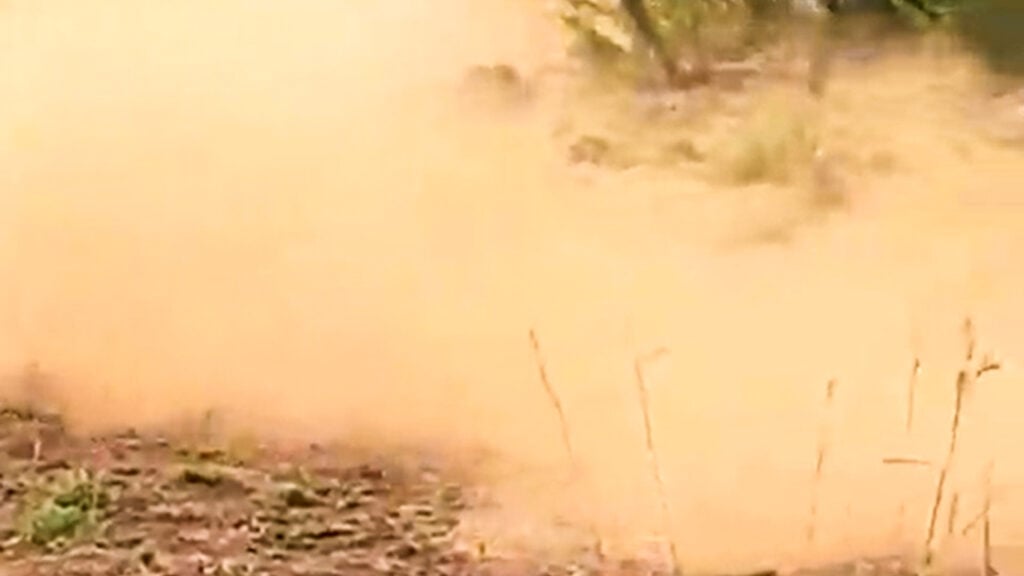
Through the dust it become apparent that the lioness had enjoyed success.
While the wildebeest was seen running behind the bushy outgrowth, it didn’t reemerge. The lion had brought it down.
She had hunted alone but she was not alone. The other members of her pride were nearby.
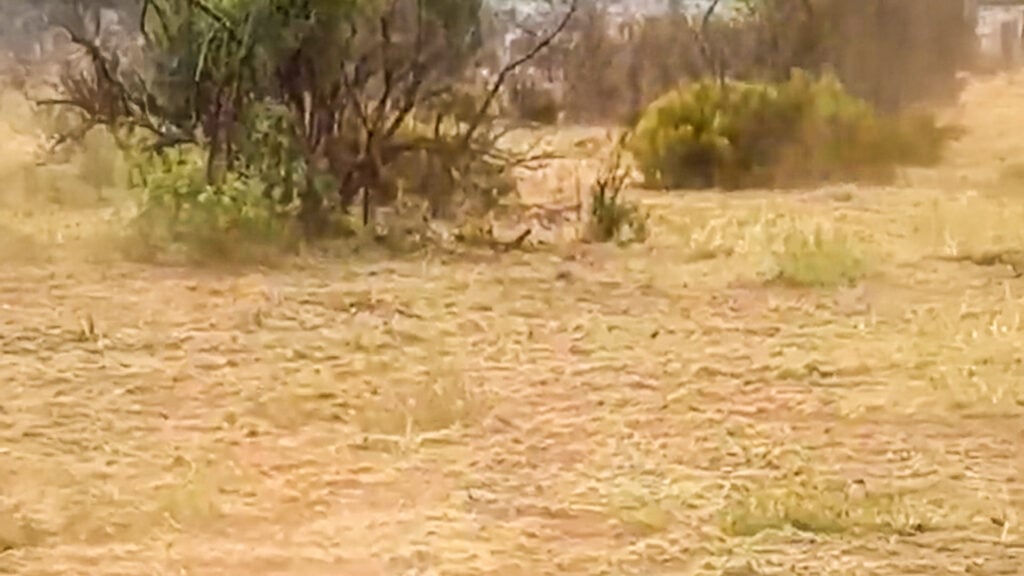
The dust settled and relative calm returned to the bushveld. The wildebeest and the lioness lay hidden from view.
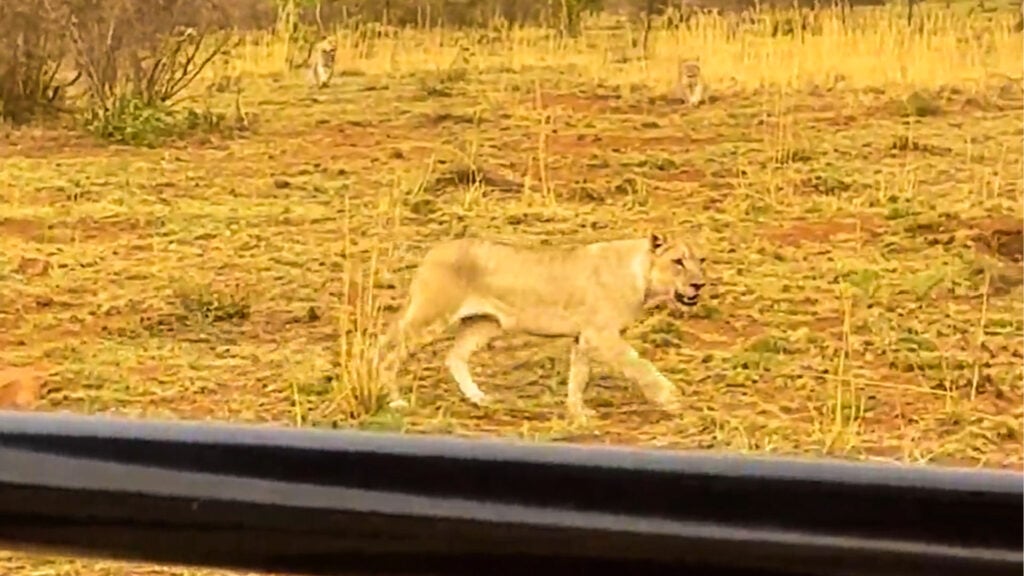
The other lionesses in the pride seemed aware that a victorious kill had been made. They came running towards where the lioness and her wildebeest kill were, strong lionesses ready to feast.
This was not just one lions’ victory, but the victory of the entire pride.
Once a wildebeest has been killed, feeding then begins. It’s not a gentle affair.
Lions tear into the belly of the wildebeest first, going for the softest and most nutritious organs like the liver, kidneys, and heart. As the meal continues, the pride rips into muscle, bones, and skin. The sounds are loud. There are growls, the crunching of bones, and squabbles over the best parts.
After feeding, lions often rest nearby with their bellies swollen. They may stay with the carcass for hours or even days, depending on how much meat remains and how safe the area is from hyenas, vultures, or other predators.