














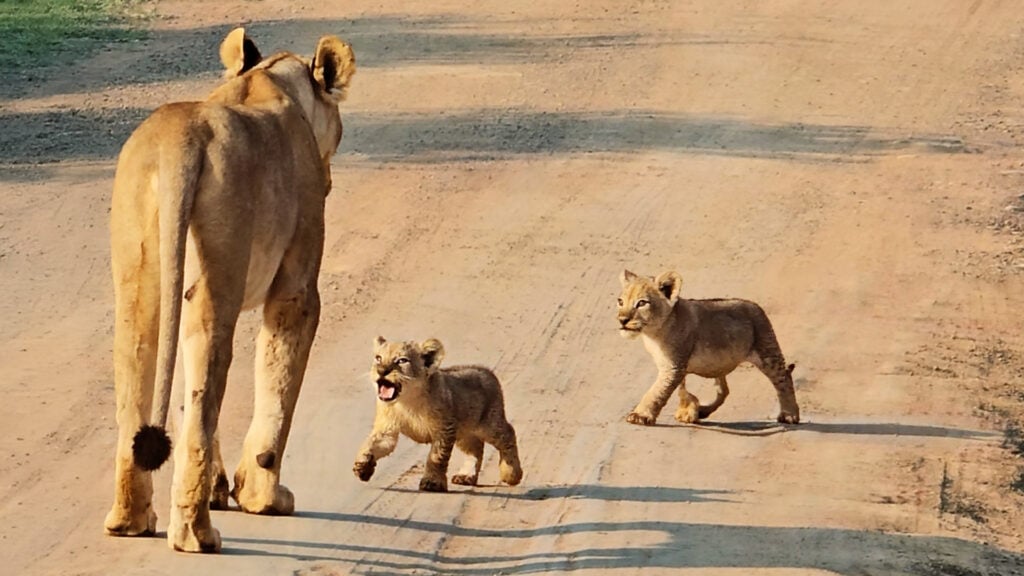
Deon Strydom submitted this rewarding video to Latest Sightings. He filmed it while on a game drive in South Africa’s Pilanesberg National Park.
When pregnant lionesses are ready to give birth, they leave their prides and find a secluded spot to do so. Then, for the next few weeks, she will keep them hidden for their safety.
However, to eat, they have to leave their precious offspring while they go hunting. As we see in this video, finding them when she returns is not always straightforward.
A mother returns
While we don’t know how long the lioness had been away, we join the action as the mother lion walks through the long grass.
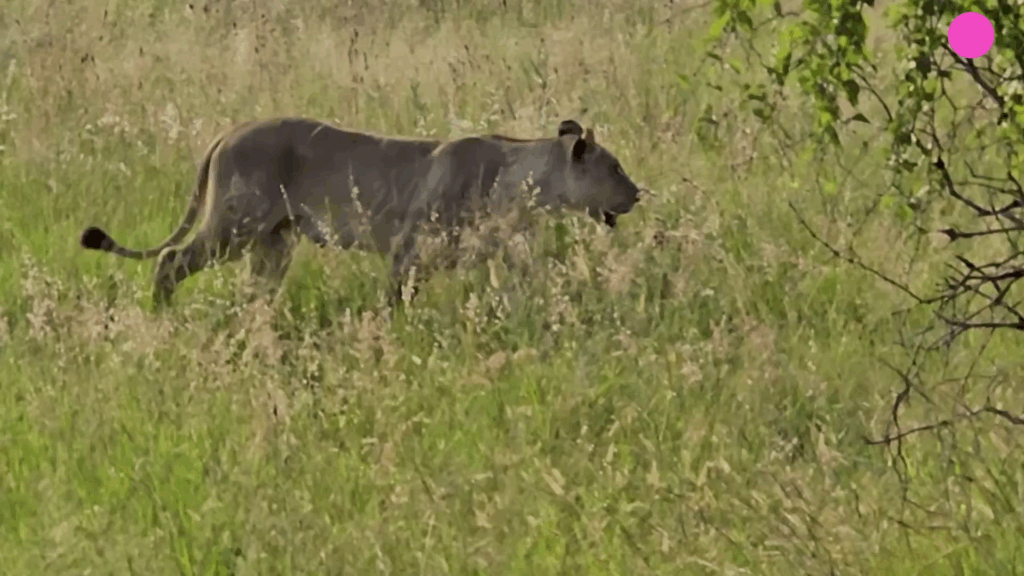
Sensing that she is nearing the hiding place where she left her cubs, she starts emitting a soft, moaning vocalisation. This sound is a contact call, which the lioness uses to summon her cubs when visibility is low.
Stop and listen
As she proceeds, she stops at intervals, hoping to hear a response from her little ones.

When she doesn’t get a reply, she continues her search. As you can imagine, it’s an especially vulnerable moment for the cubs, who face the very real risk of being discovered by other predators.
Eventually, she gets a reply from her constant calling and stops. However, in the long grass, she initially struggles to pinpoint the direction their mewling call is coming from.

By now, the quickening pace of their own cries makes it clear that they’re growing increasingly anxious to be reunited. And probably looking forward to a good meal of nutritious milk.
Out in the open
Despite hearing one another, the mother and her cubs have yet to see one another. However, when the lioness comes out onto the road, their chances of seeing one another improve significantly.

The lioness stops, alternately calling and listening as her increasingly frantic cubs navigate their way through the long grass towards her.
Get our Best Sightings as they Come in

Reunited at last
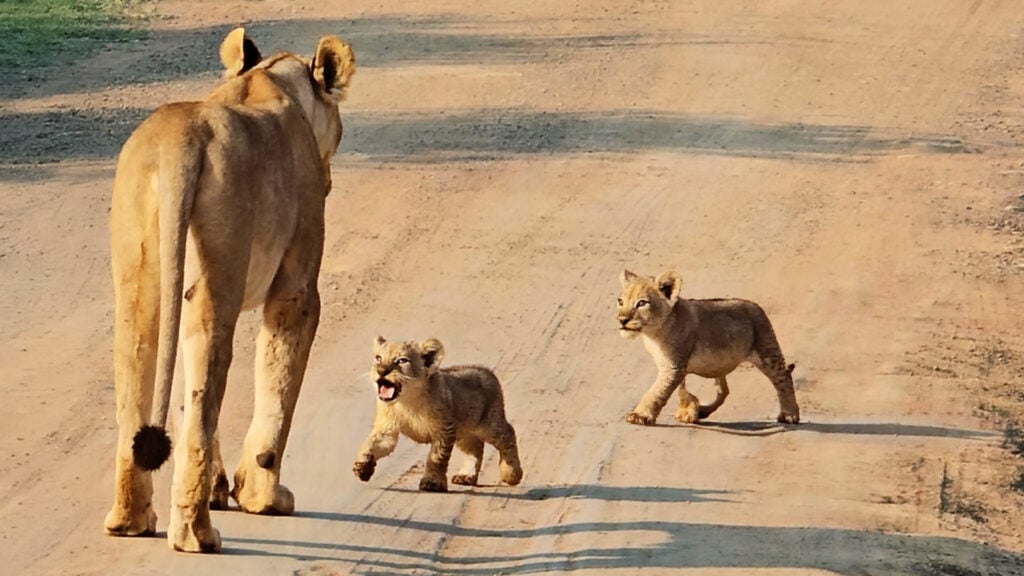
Eventually, their persistence, along with Deon and his companions’, pays off when one of the cubs steps out from the roadside vegetation.

Finally rewarded with the sight of their mum, the cubs seem to berate her for leaving them. Either that, or they’re squealing to be fed.

But it seems the lioness has other things on her mind. No sooner have her cubs laid eyes on her than she does a about-turn. Breakfast will have to wait.

To keep her cubs safe, lionesses will frequently move them in an effort to avoid discovery. In Pilanesberg National Park, only one in eight cubs survives their first two years.
Safe with mum
We are rewarded with a lovely sight of the family reunited, as they move off. No doubt she will take them to a shady spot where she can rest while they suckle.
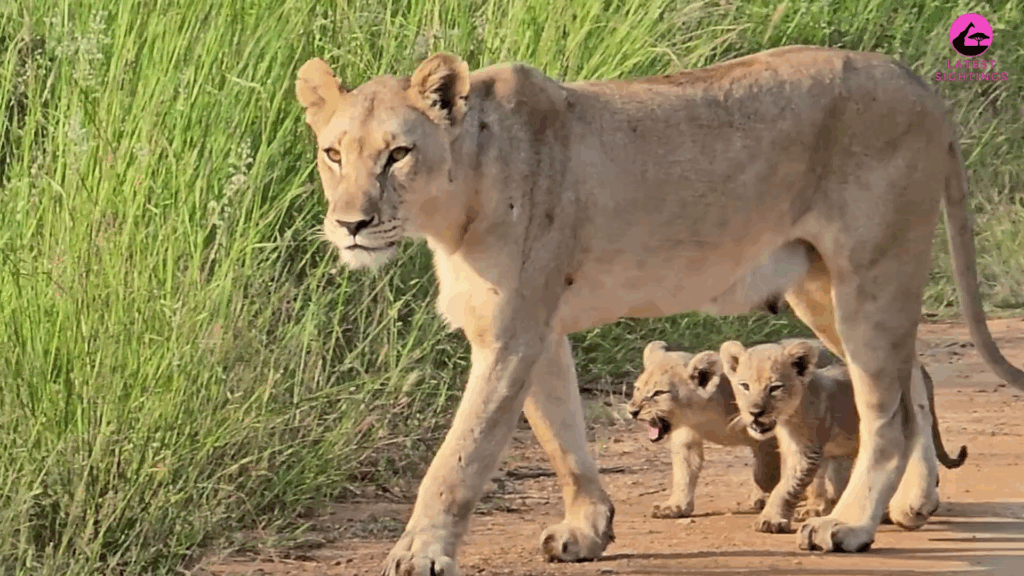
The cubs seem to be approaching the age at which they will be introduced to the rest of the pride. This typically happens when they are between six and eight weeks old.
Once this happens, they learn to socialise with their kin, one of the most important phases in their early development. We’re sure you’ll join us in wishing them well on the journey ahead.