

















Impalas are, without doubt, the most numerous antelope in Africa’s many national parks and private game reserves.
Safety in numbers
In the summer, herds gather together, sometimes numbering in their hundreds. The reason for this is to enhance their individual safety through sheer weight of numbers. Consequently, their new offspring can gather in nursery herds.
For them, uniformity is a superpower. So, when an individual is born an albino, it is not uncommon for it to cause a stir in the tight-knit community.
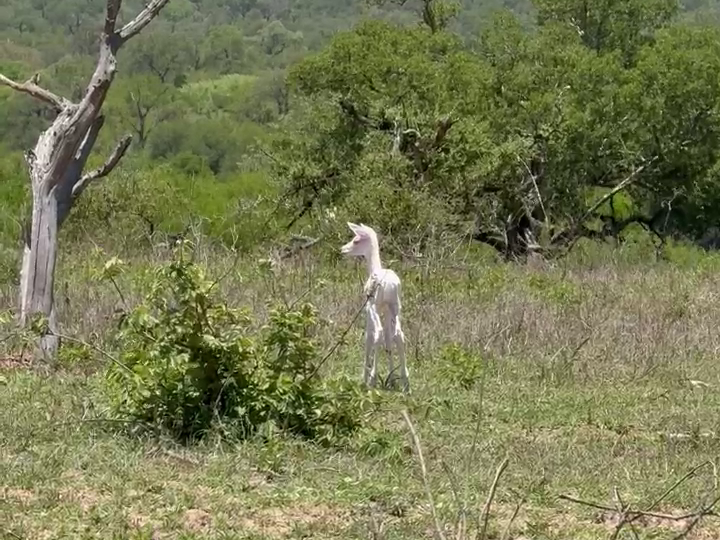
And, it was just such an individual that we find in this footage. As the video rolls, we see a lone impala lamb looking rather lost.
As you can imagine, the calf is very vulnerable. Not only does its small size make it an easy target for predators, but its snow-white colour makes it easy to spot.
Are you my Mama?
Moments later, a kudu cow gallops past. Needless to say, this is not what the lamb should be looking for.
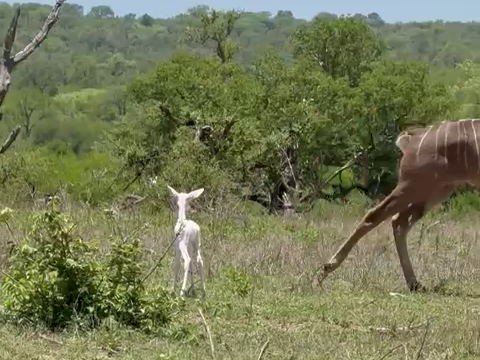
However, in its desperation for companionship and nourishment, the calf follows after the much larger antelope.
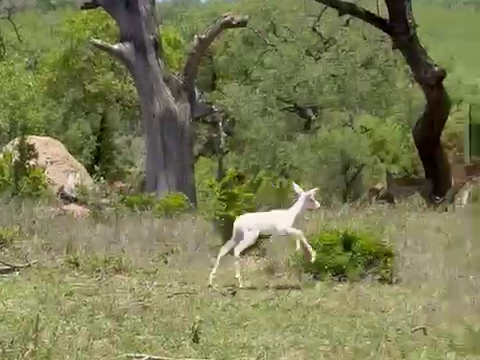
However, the kudu has no interest in adopting the lamb and quickly leaves it behind.
This looks more like it
In the next clip, we get a sense of hope when we see the albino lamb approaching a group of regularly coloured impala.
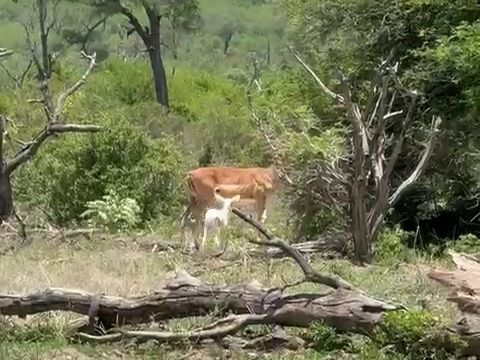
Subsequently, the lamb seems to realise it is among its own kind. The only problem is that it can’t find its own mother. As a result, we then see it approaching a ewe that has a lamb of its own accompanying it.
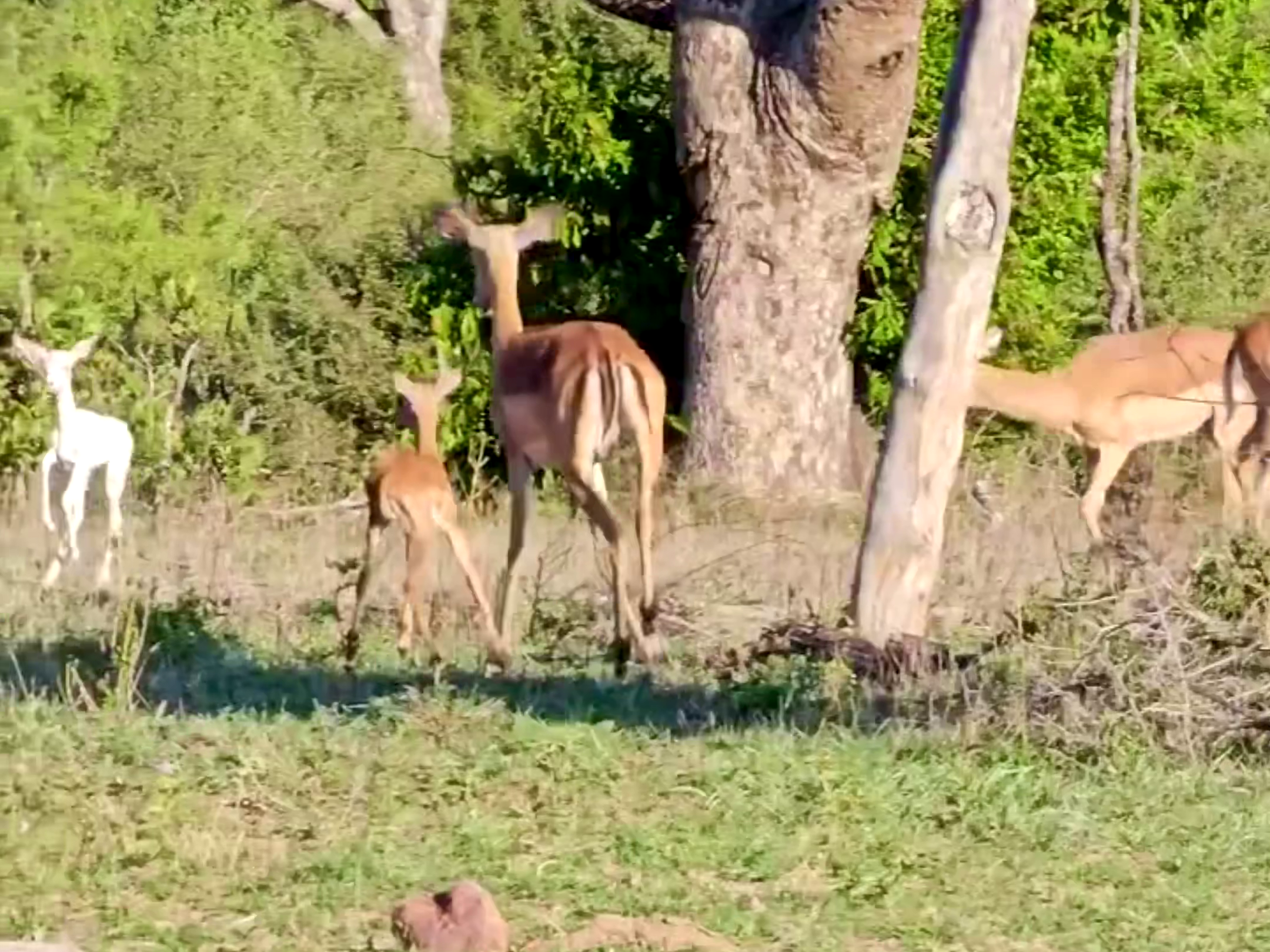
However, either its unusual colouring or the fact that the ewe already has her own lamb causes her to reject the albino’s approach.
Blatant aggression
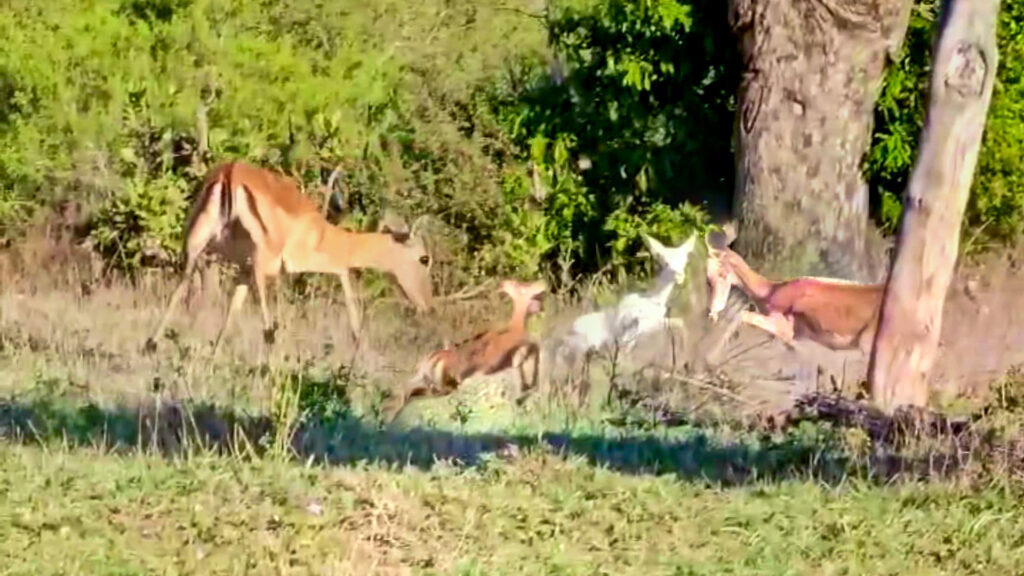
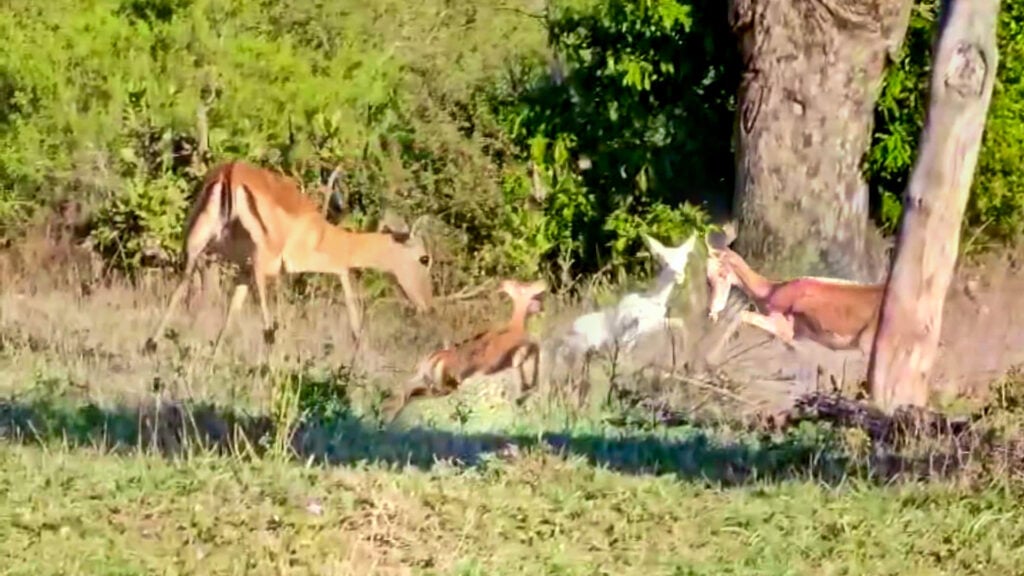
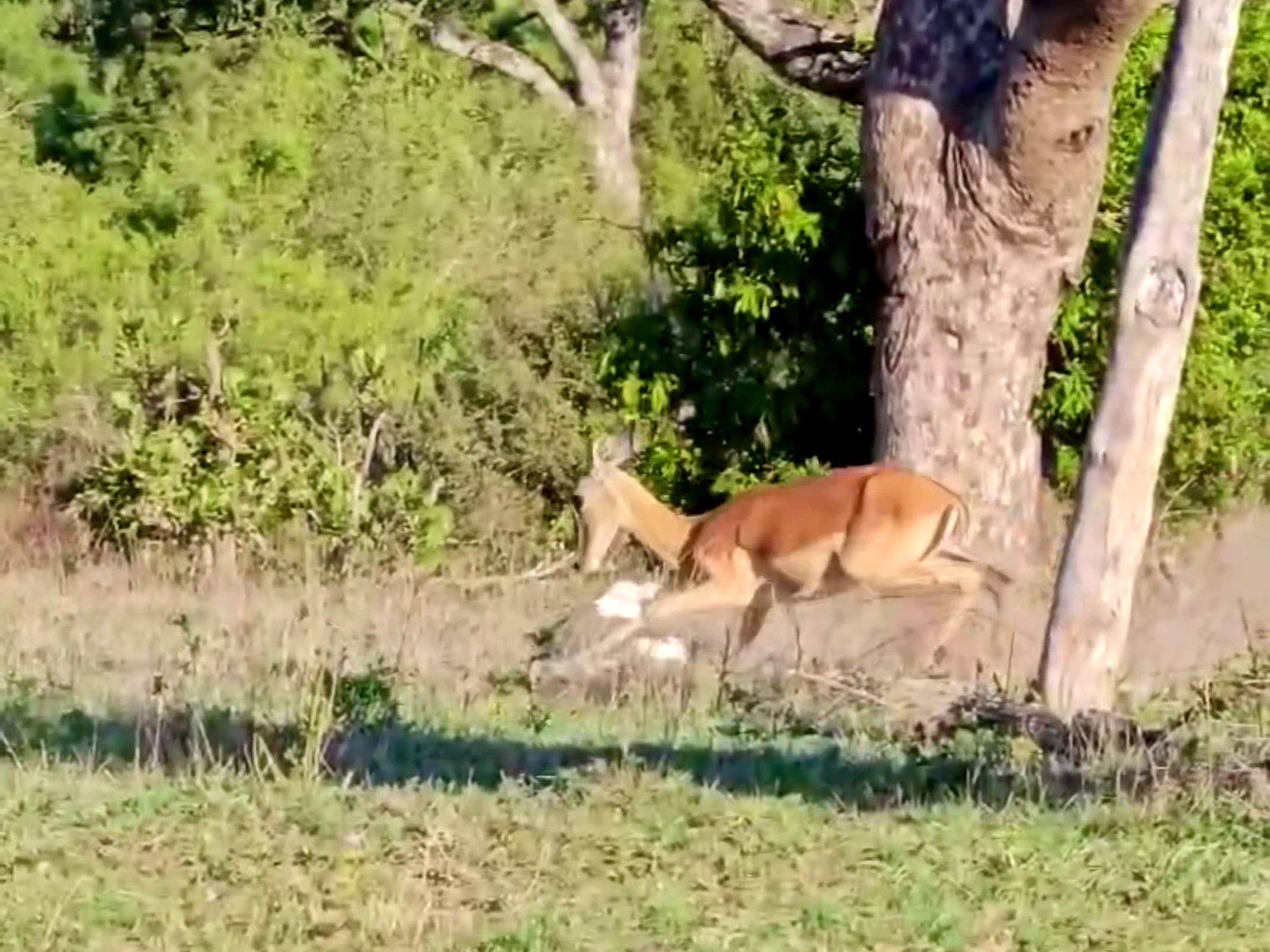
Instead, the ewe responds with blatant aggression, charging at the tiny lamb and knocking it to the ground.
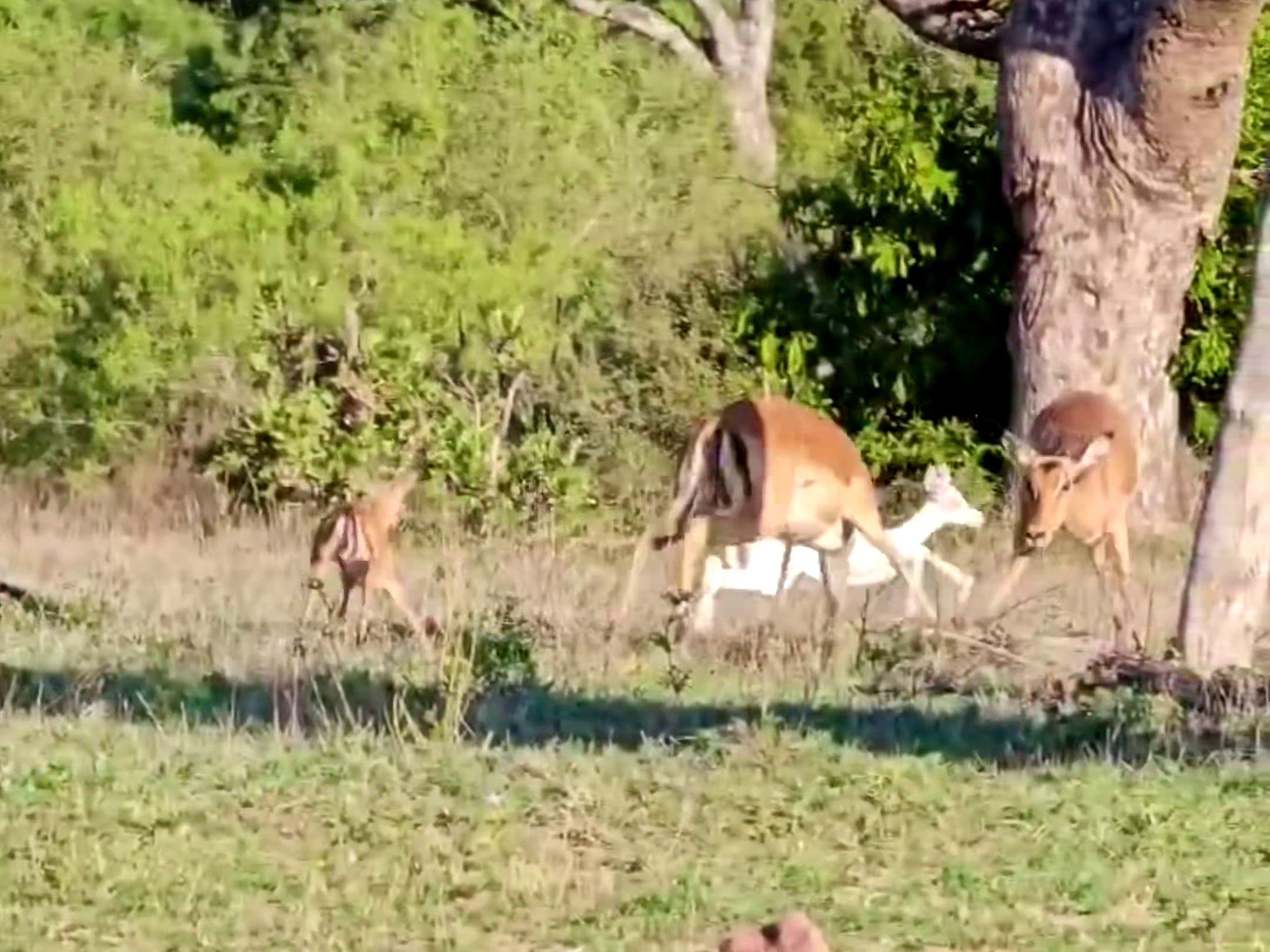
Then, it appears as if she attempts to trample and injure the bewildered calf.
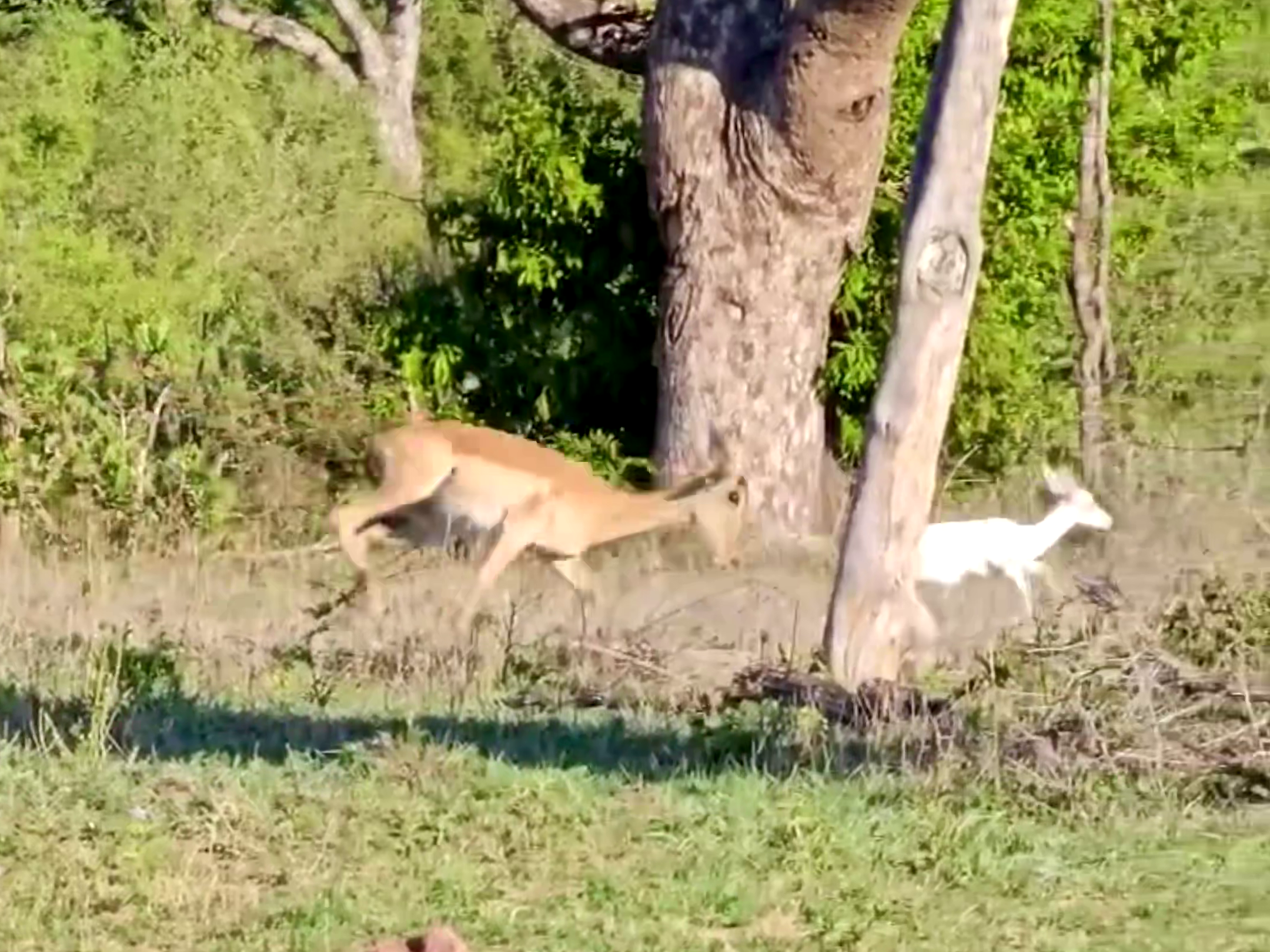
Adding to its woes, the ewe then chases the poor lamb away, making it clear it is not welcome.
Get our Best Sightings as they Come in

A new approach
In the next scene, we see the lamb chasing after another ewe. Will it be accepted or will it be rejected once again? We can only hope.
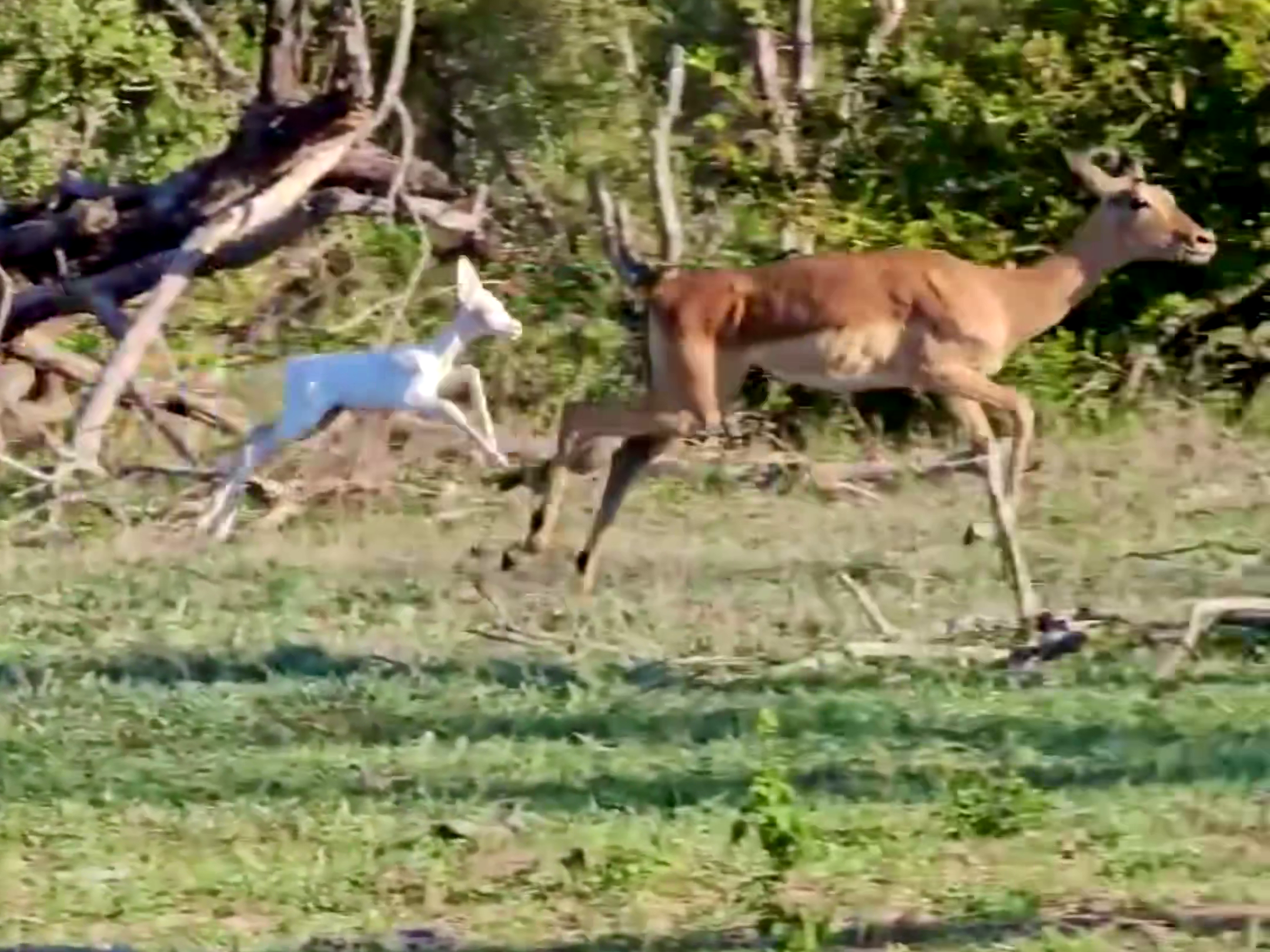
To our relief, and no doubt that of the lamb, in the next sequence, the lamb is seen suckling from the female.
Mothers and calves seem to recognise one another by their unique scents, and we can assume that this has been the case here.
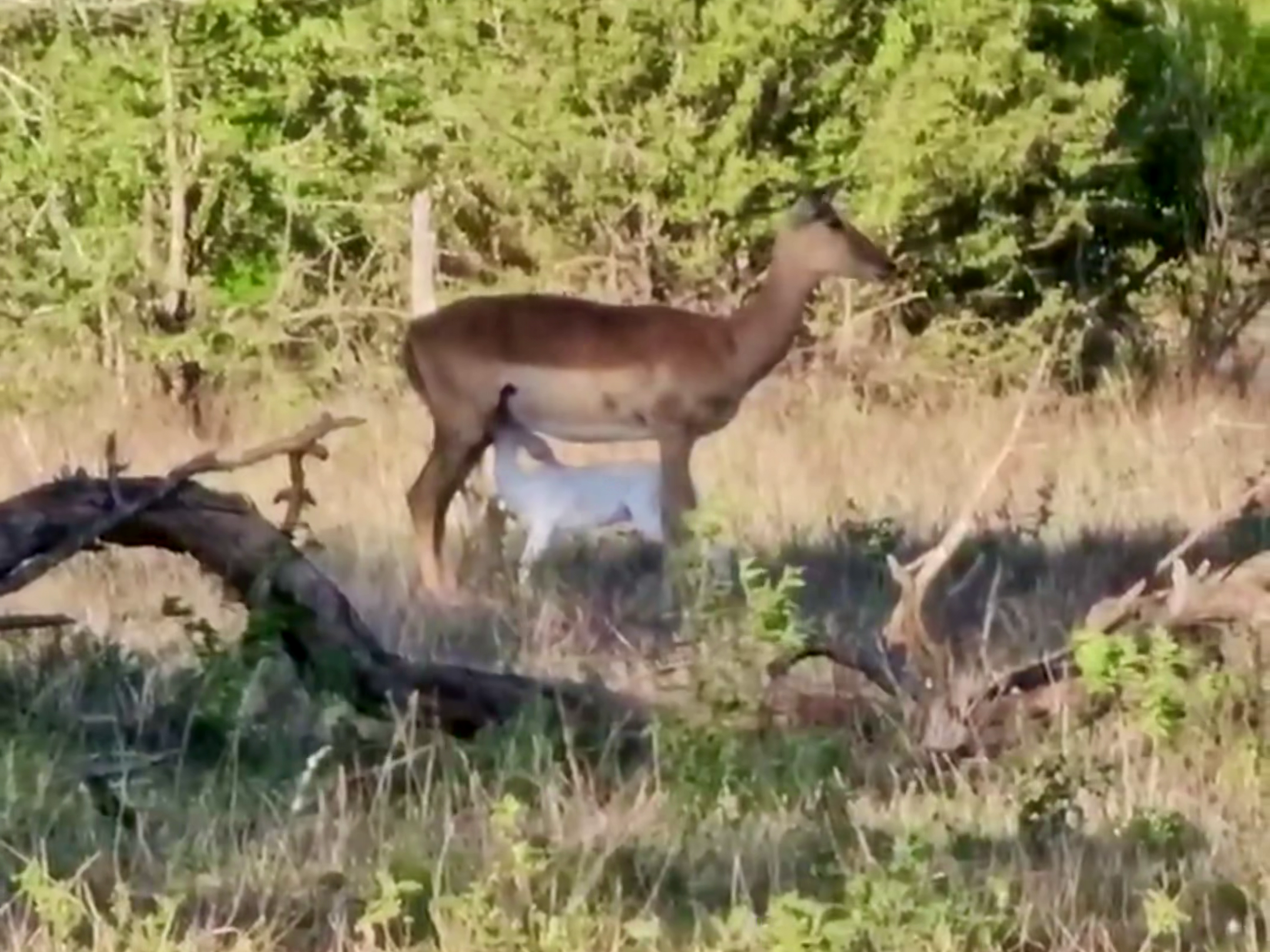
Baby impalas suckle for between 4 to 6 months, so it is wonderful to see the lamb enjoying a much-needed feed.
After all that running around, it was then time for a little rest…
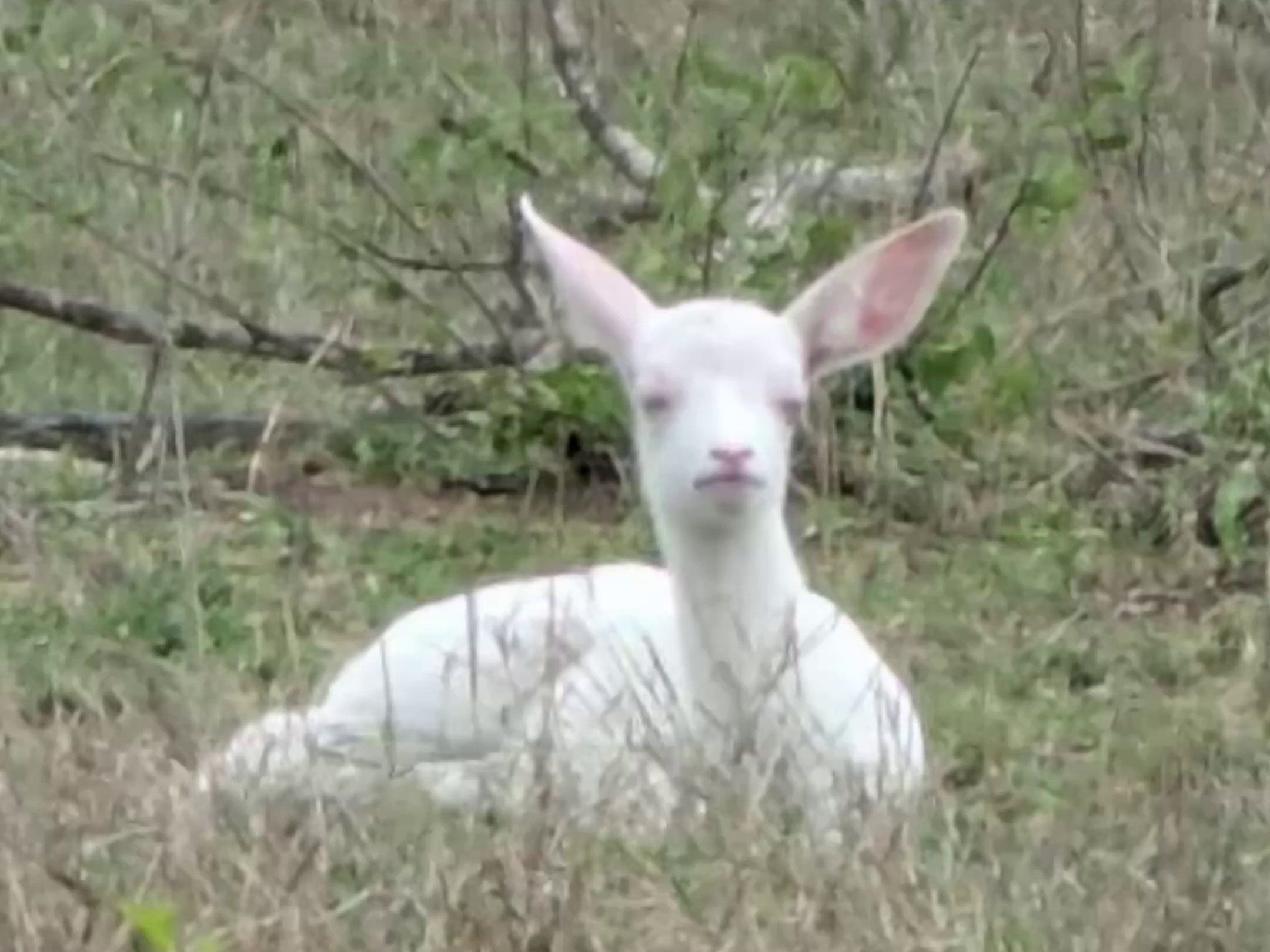
As happy as we are that the lamb has reunited with its mother, realistically, its chances of surviving to adulthood are slim. White lambs are frequently rejected, are prone to skin ailments, and, as mentioned, are easier for predators to spot.
A happy ending. For now.
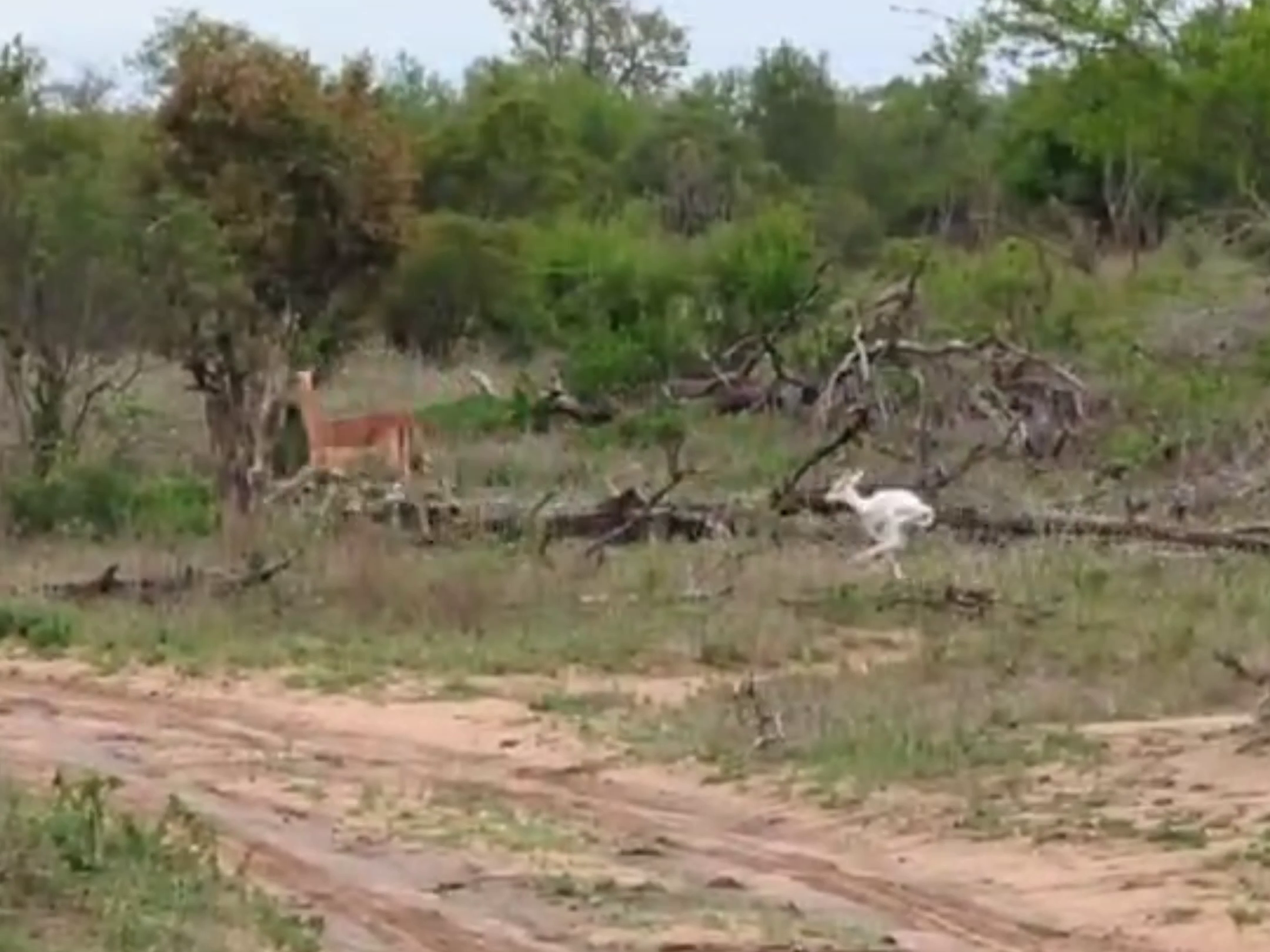
Nevertheless, as the footage concludes, the lamb was last seen dutifully following its mother. We wish it well against enormous odds.