














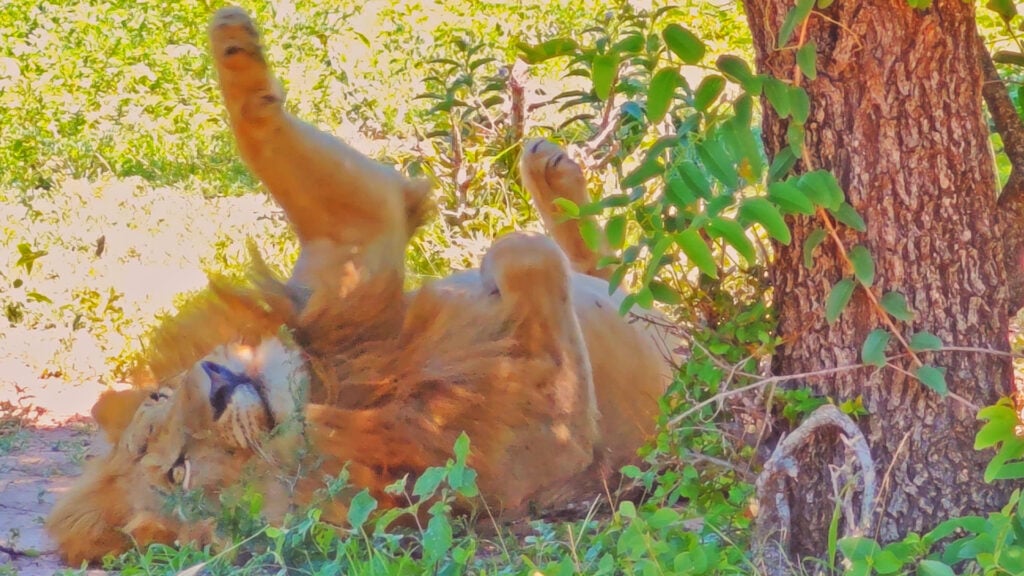
The Lion King Gets Defeated by a Fly
Shade Turns into a Swat-Fest
Field guide Excellent Nicolas Hlatshwayo was guiding along the S21 when he spotted a classic bushveld scene: a massive male lion sprawled in the
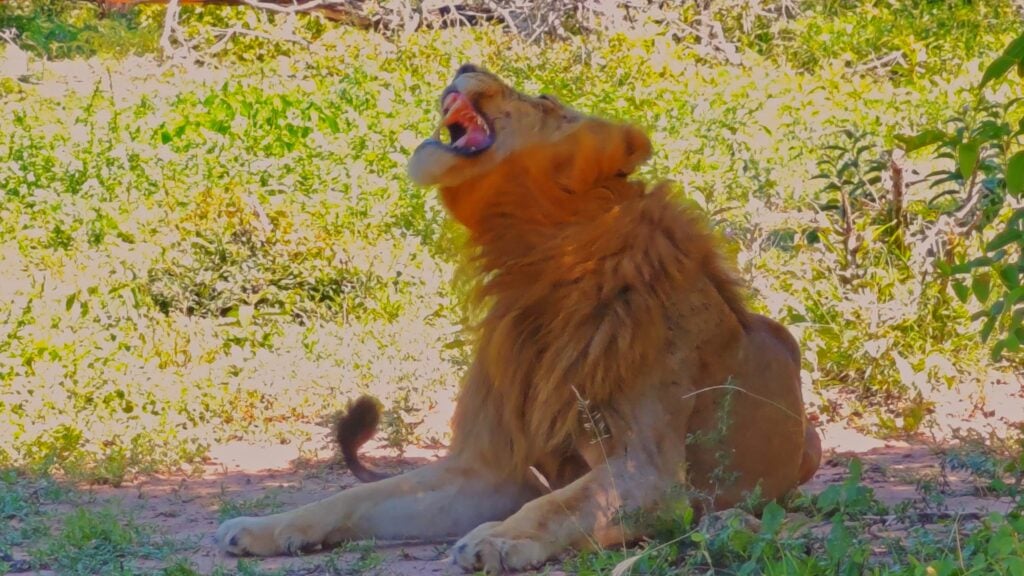
shade, looking every bit the apex predator at rest. But peace didn’t last.
A persistent swarm of flies descended, zeroing in on his eyes, nose, and ears with relentless precision. What followed was pure comedy gold.
Every Trick in the Paw Book
The lion first gave a lazy head shake, hoping the breeze would do the work. As the buzzing intensified, the lion ramped up his defence.
Watch the Sighting:
He swiped a giant paw at the air, missing spectacularly as the flies darted just out of reach. Next came the chomp, his jaws snapped with surprising speed, only to close on empty space.
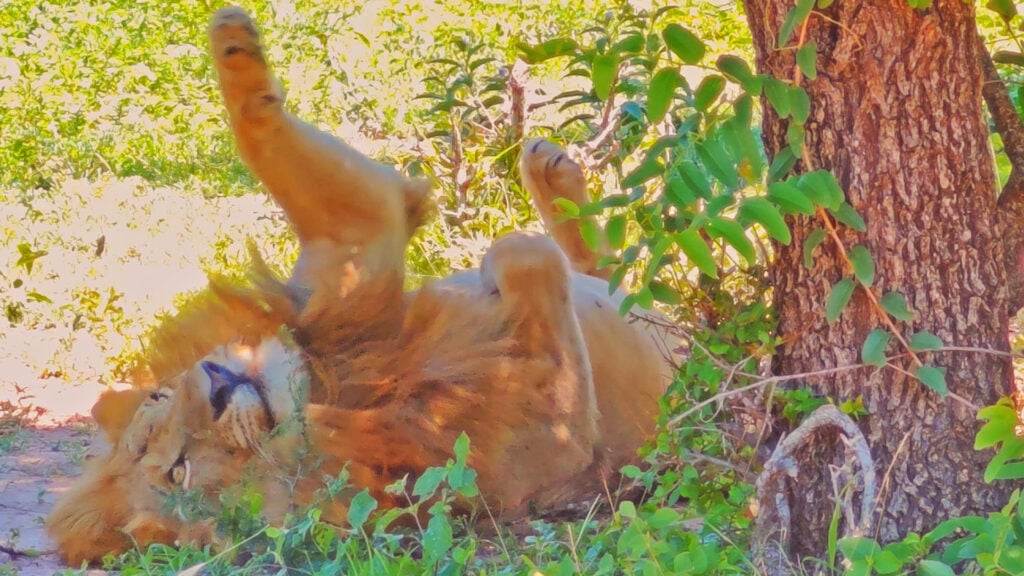
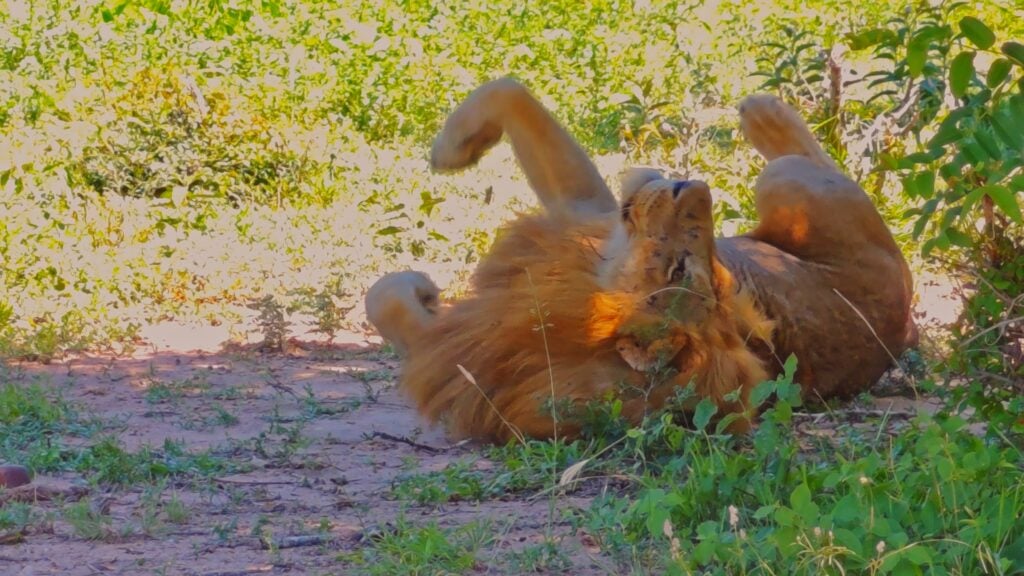
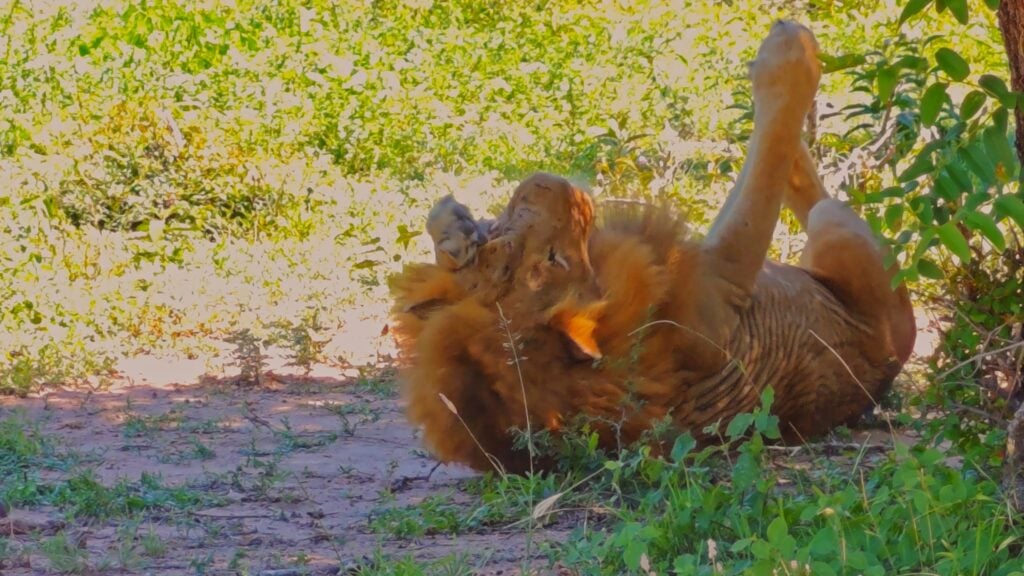
Rolling onto his side, then his back, he twisted and writhed in the dirt, kicking his legs like an oversized puppy chasing a phantom itch. Viewers can’t help but laugh at this massive carnivore, conqueror of herds, reduced to flailing against insects smaller than a grape.
Why Flies Pick on Lions
Flies aren’t random harassers; they’re drawn to the lion’s moist eyes, nostrils, and mouth, as they are prime spots for feeding on tears, mucus, and saliva. In the heat of the African bush, these hotspots become fly magnets, especially around dusk or after a dusty trot.
Species like tabanids (horseflies) and stomoxys (stable flies) thrive here, piercing skin for blood meals that fuel their reproduction. For lions, it’s a minor annoyance, but one that tests even their patience.
If the flies are relentless enough, they can upset lions’ rest cycles and force them to relocate more often.
Lions vs. Insects: An Evolutionary Standoff
This fly fiasco highlights a quirky predator-prey dynamic flipped on its head. Lions have evolved thick hides and powerful swats to fend off bigger threats, but flies exploit microscopic vulnerabilities.
Because of their size and speed, they are able to land on sensitive membranes before claws can connect. Big cats end up spending a lot of their down time grooming or swatting at insects.
In coalitions or prides, dominant males can tolerate it stoically to hold prime real estate, but other cats may fidget more, revealing stress through tail flicks and ear twitches. It’s a reminder that no animal rules unchallenged; even “The Lion King” bows to nature’s smallest enforcers.
The Role of Parasites in the Bush
Beyond laughs, these interactions highlight parasites’ ecological role. Flies transmit diseases, which weaken wildlife and livestock alike.
Get our Best Sightings as they Come in

In the Kruger, where lions roam vast home ranges, constant insect pressure influences movement patterns.
Cats tend to avoid peak fly hours and stick to denser thickets or riverine forests. Wet seasons amplify swarms, linking weather, behaviour, and survival.
A Lesson in Humility from the King
Eventually, the lion gave up and flopped onto its back with a huff, flies still circling triumphantly. For Excellent and his guests, it was a light-hearted gem and proof that the bush delivers joy in unexpected packages.
The encounter also spotlights how lions shrug off such trivial battles, so they can reserve their real fights for rivals or feasts. Next time you spot a swatting lion, remember it’s nature’s way of keeping even legends humble.