

















Watch the video here:
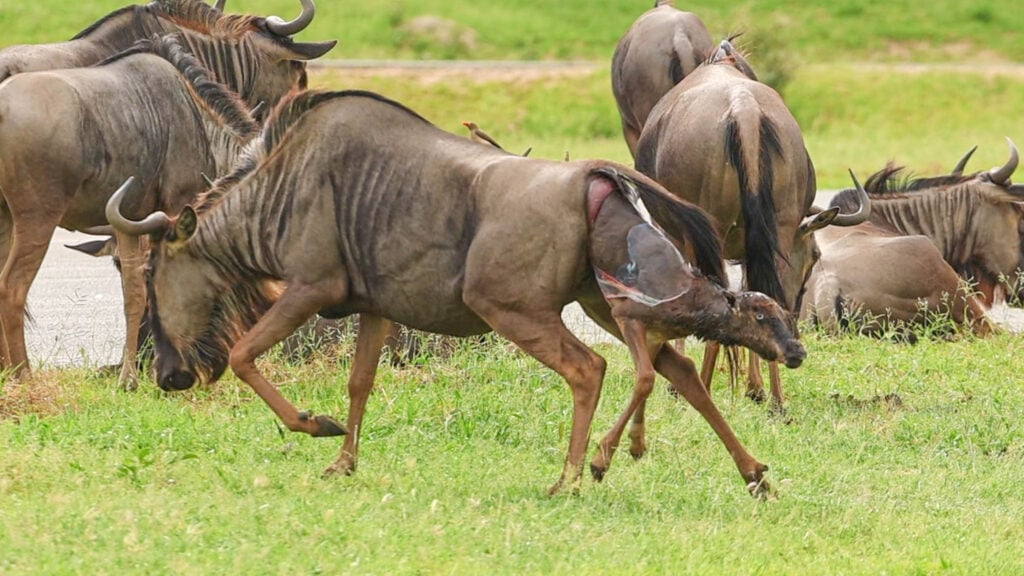
When a guide stopped next to a herd of wildebeest, little did he realise the miracle he was about to witness. When he realised what a special moment was unfolding, he trained his camera on the action for us all to enjoy.
David den Hartog submitted this footage to Latest Sightings. He and his guests witnessed this incredible moment while on a game drive at MalaMala Game Reserve in South Africa.
In labour
As we join the action in David’s video, we see something few have the privilege to witness. A female wildebeest lies on her side in the process of giving birth. Exhausted, we see her chest heave as she summons her energy.
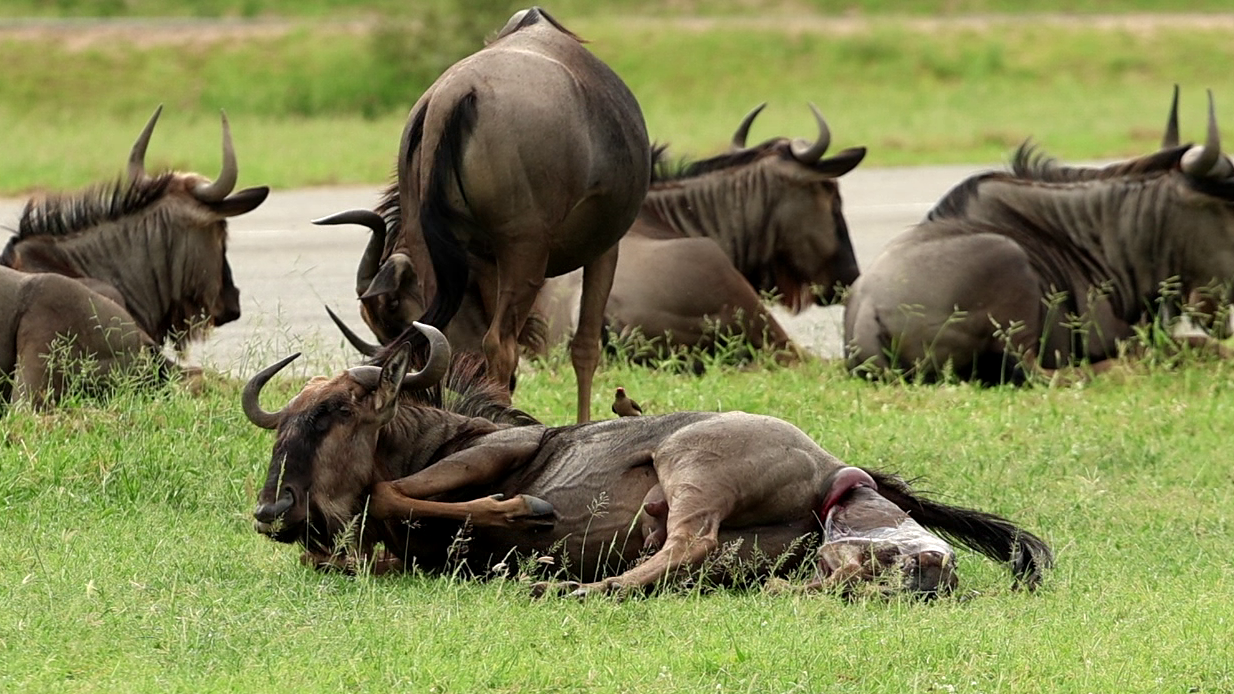
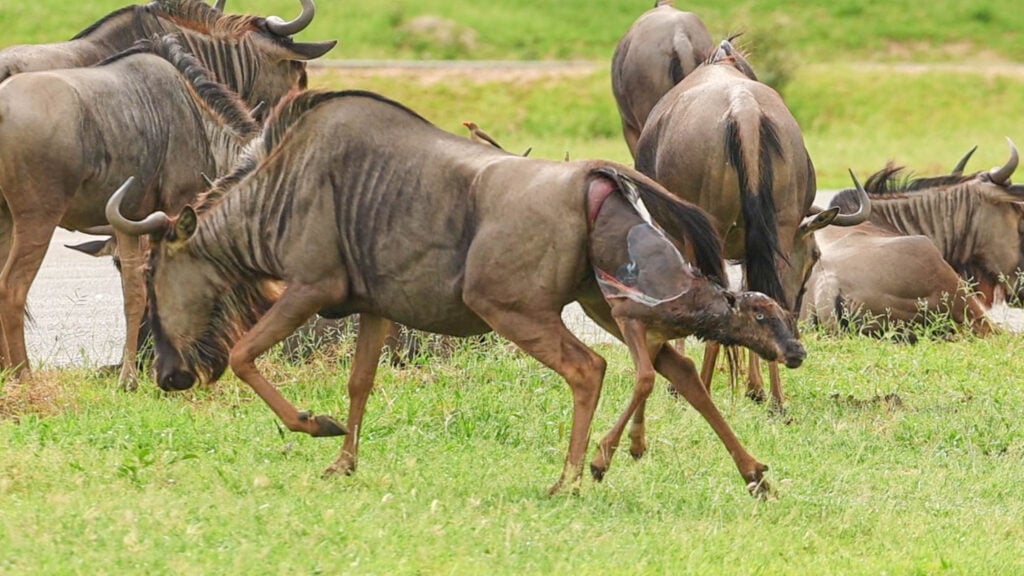
Her calf is partially out, with its amniotic sac still draped over its body. Meanwhile, the rest of the herd in the background appears entirely uninterested.
Partially emerged
A few moments later, the cow gets to her feet, determined to finish what has started. As she does, we see the calf has emerged headfirst up to its hips.
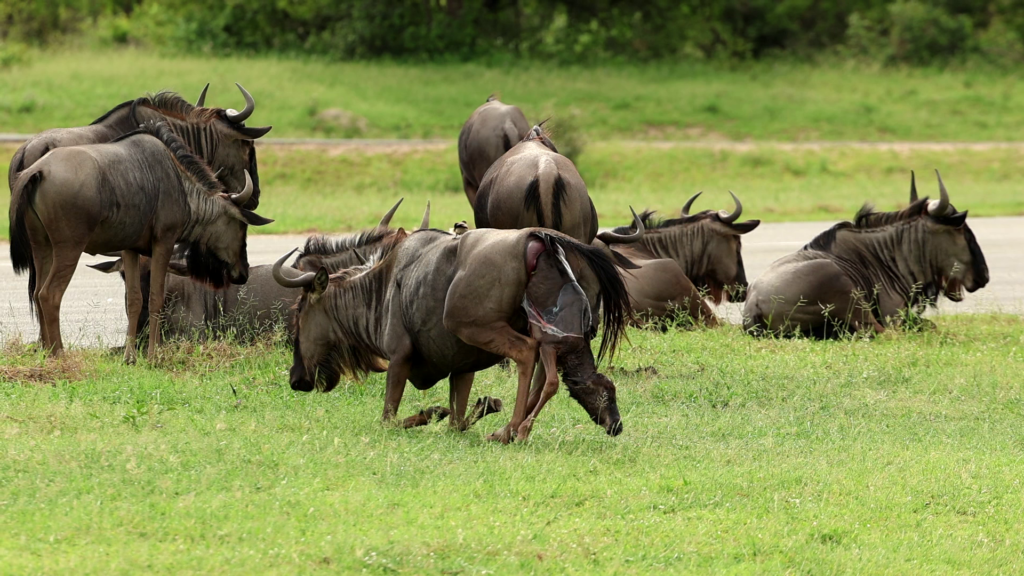
Thankfully, this is the ideal way to be born. Calves that are born with their hind legs emerging first run the risk of dying in the process.
Stuck
However, as she gets to her feet, it looks like something might be wrong. With the largest part of its body out, calves typically emerge quickly from this point.
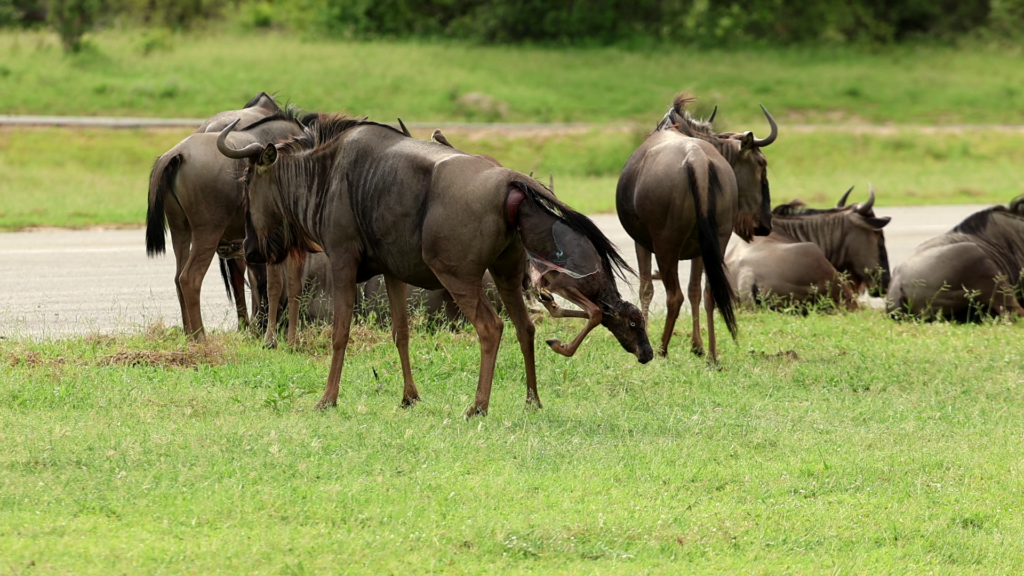
That said, the calf is very much alive and seemingly eager to get moving. As its front hooves touch the ground, it almost looks like it is trying to run out of its mother’s body.
Signs of life
To David’s delight, we also hear the first sound the calf will ever make as it strains to be born. While this is happening, the cow stands almost completely still. It is hard to fathom what might be going through her mind.
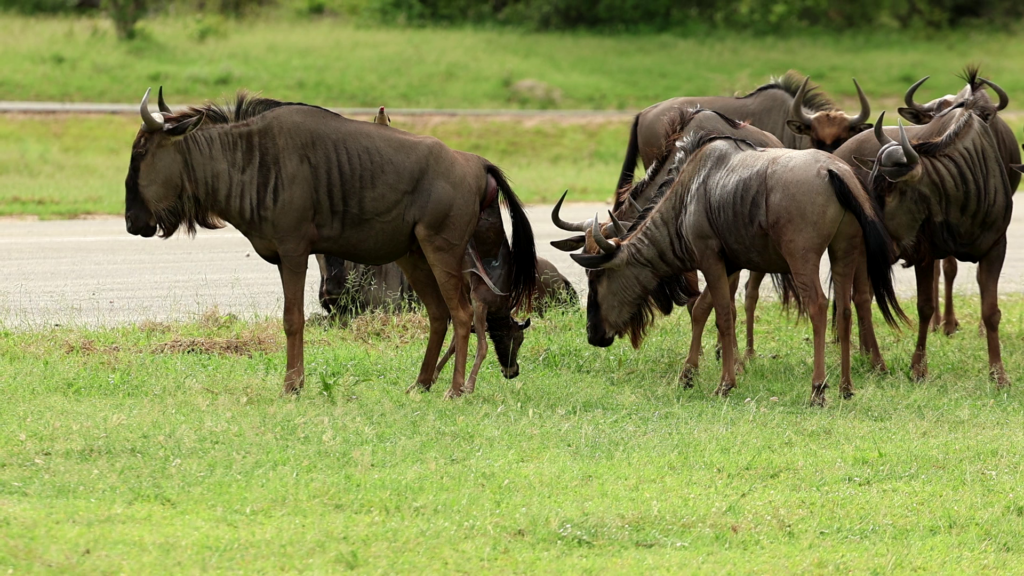
Stirred by the commotion, the rest of the herd gets to its feet. While some show no interest, a couple come closer to see what is going on.
Born with a bump
Suddenly, whatever had been preventing the calf from exiting gives way. Consequently, the calf slides out in a gush of amniotic fluid, dropping to the ground behind the cow.
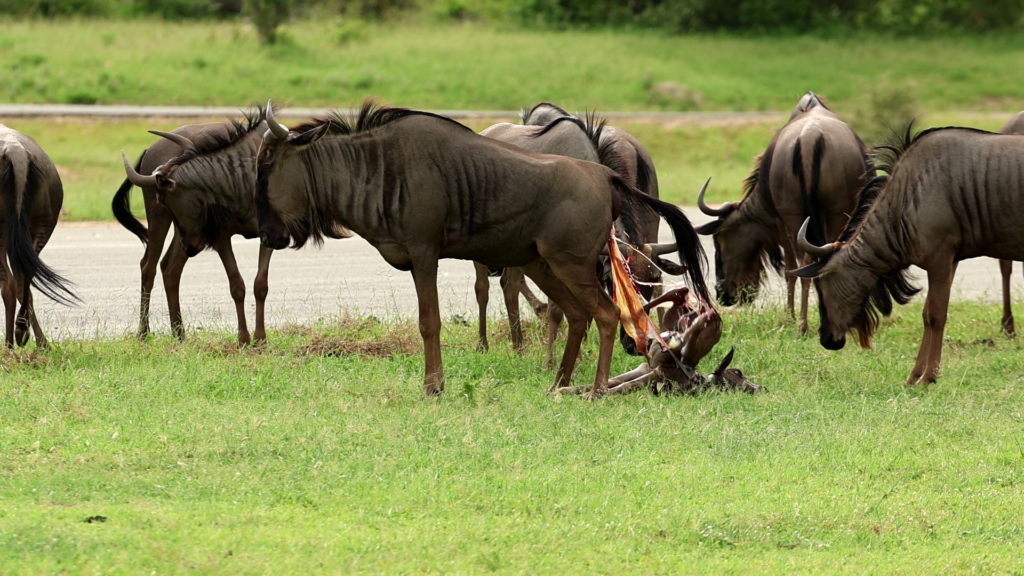
It’s touching to see how the wildebeest behind the cow watches with such apparent fascination. The drop to Earth will help expel any fluids from the calf’s lungs, allowing it to breathe freely at last.
First meeting
Subsequently, the spectator seems to lose interest and rejoins the herd. This allows Mum the opportunity to turn and greet her newborn for the first time.
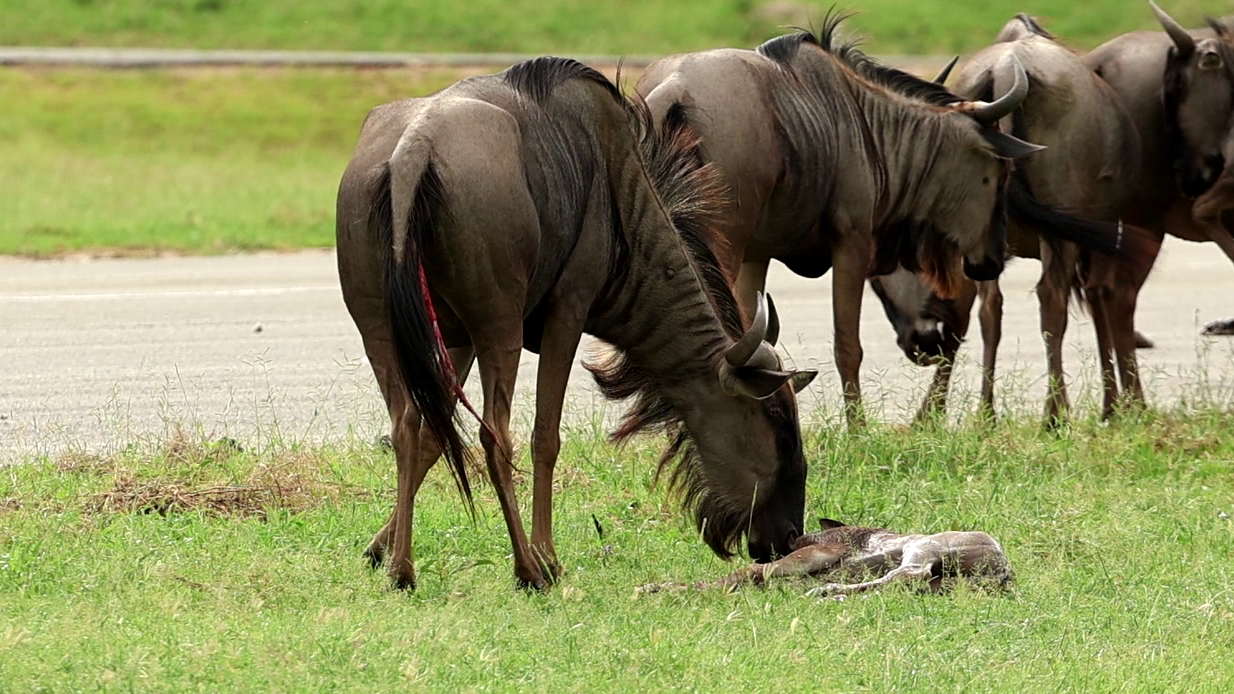
Meanwhile, the calf can be seen breathing heavily on the ground, exhausted by the rigours of being born. However, there is no time to waste. Predators may be lurking nearby, so it’s time to face its next big challenge.
Get our Best Sightings as they Come in

Get up and go
Closely watched by its mother, the calf makes the first of several attempts to get to its feet. Typically, wildebeest calves can stand within ten minutes and walk or even run with the herd after fifteen.
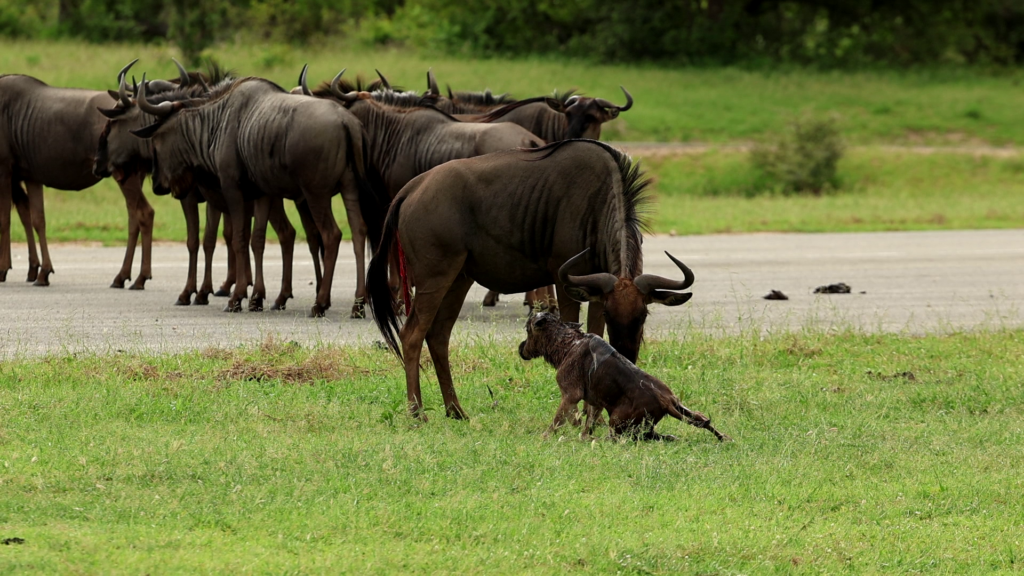
Amazing as this is, it takes around three days for them to build up the strength and stamina to keep up with the herd. Consequently, this is a very precarious period in its life.
Rise to the occasion
As the herd waits nearby, the calf slowly gets to grips with its long, spindly legs.
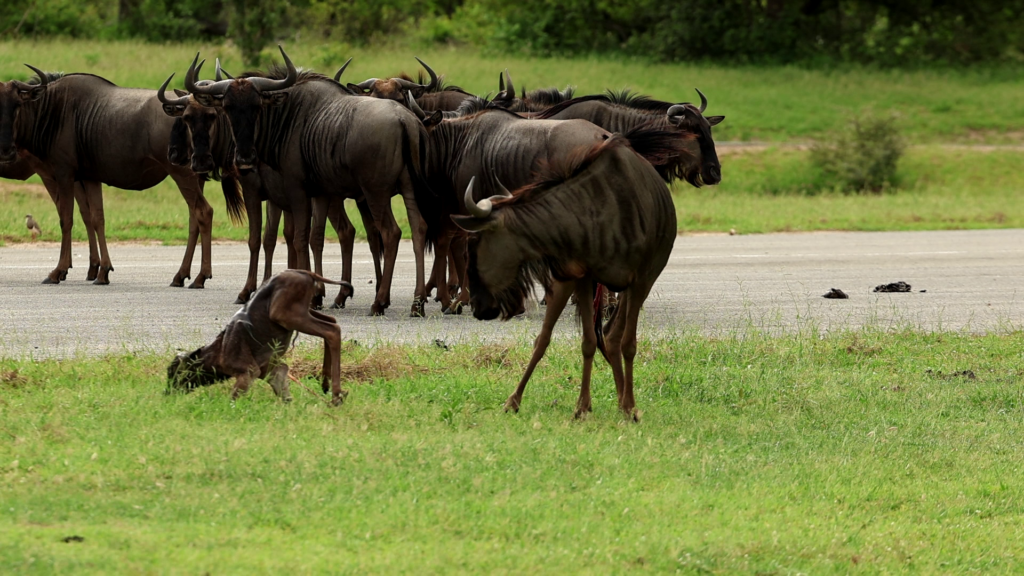
Then, less than ten minutes after being born, it manages to stay upright and take its first awkward steps to Mum’s side.
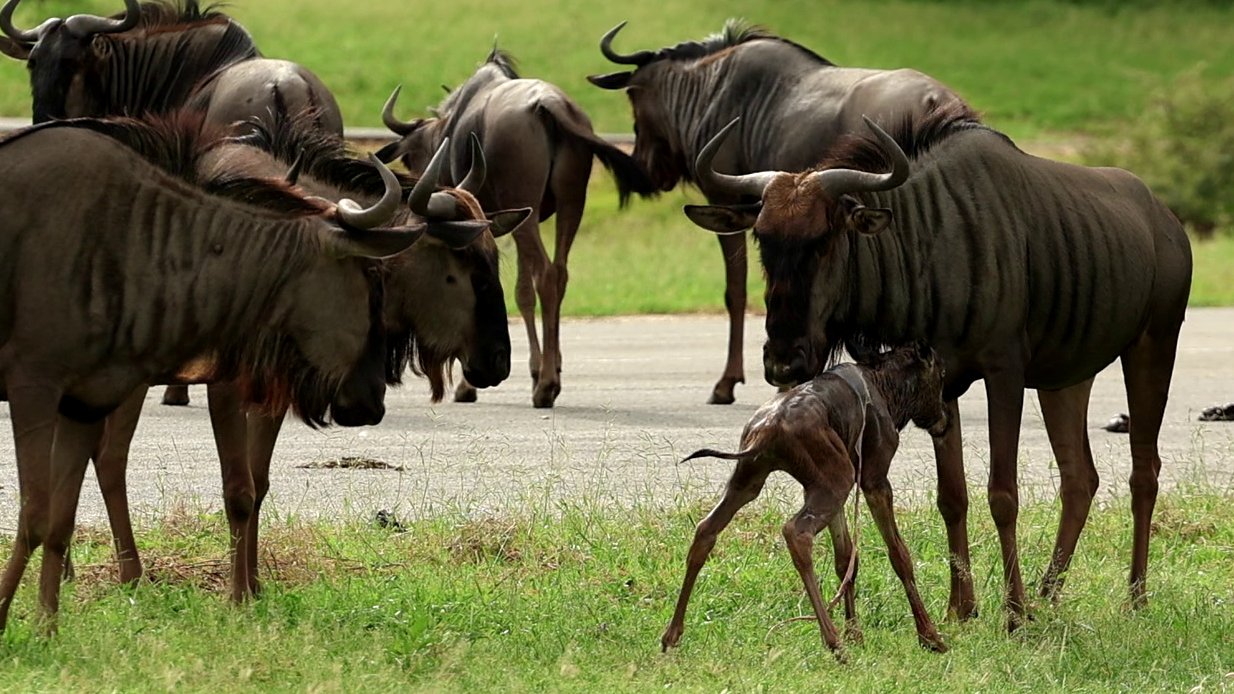
Seeing that it has reached this all-important milestone, the herd doesn’t hang around. Instinctively, they know they must leave the birth site, which may attract predators.
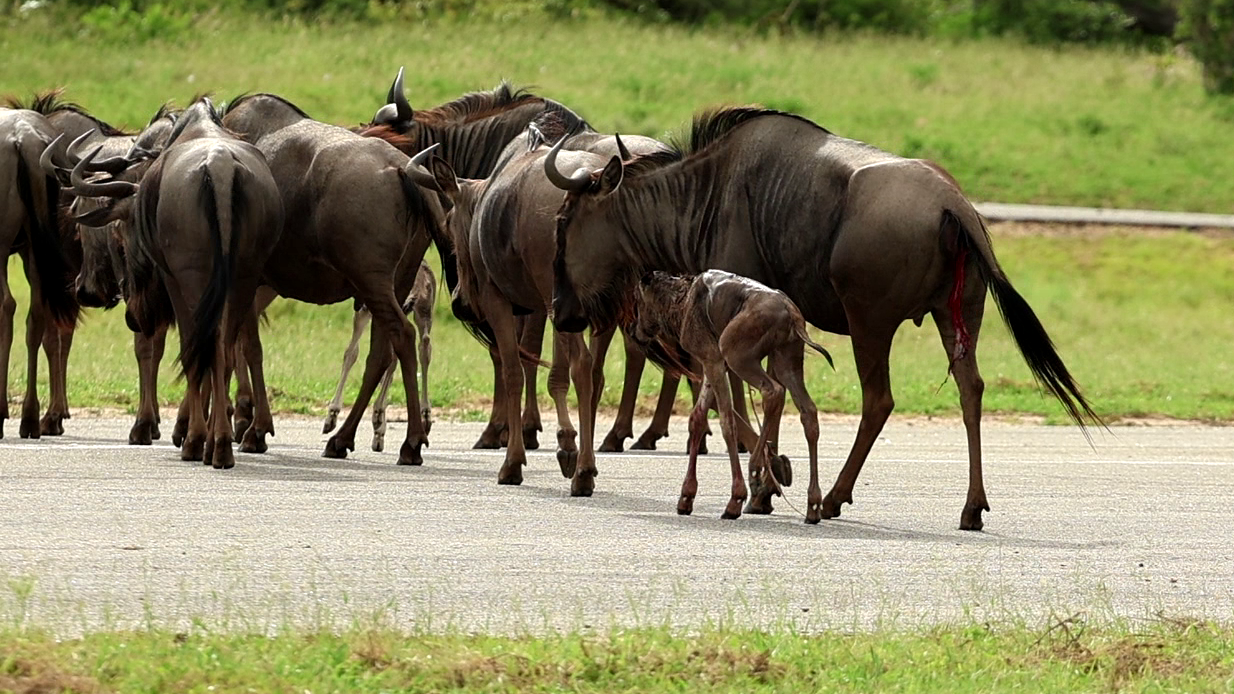
Subsequently, the video ends as the herd moves on, leaving David and his guests in awe of the spectacle they’ve been so fortunate to witness. Good luck, little guy!