
This video of a leopard attacking a pangolin was filmed by Joren de Jager. Miraculously, the pangolin survived.
Nighttime provides perfect cover for strategic ambush
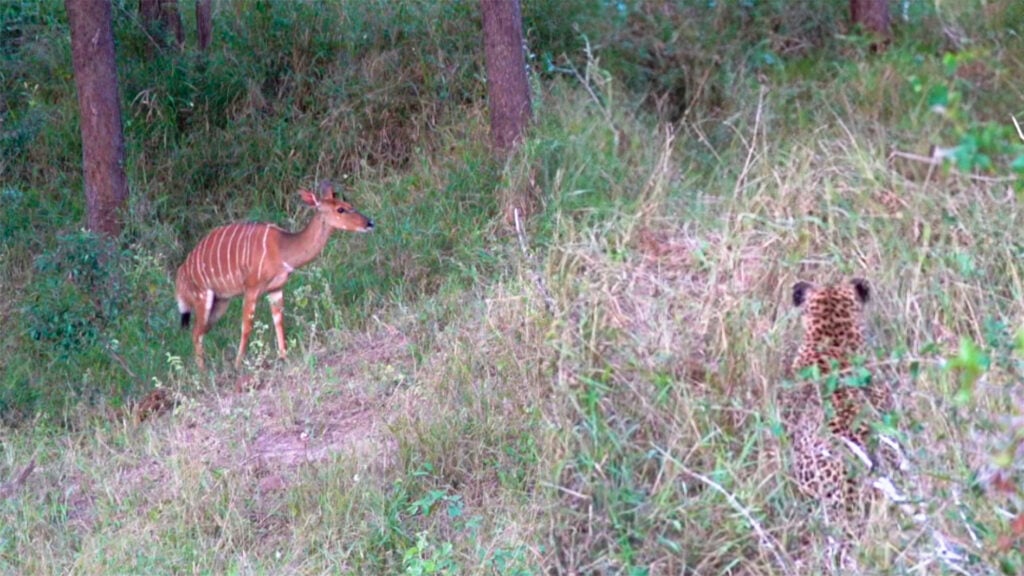
The leopard had stalked the pangolin under the cover of night. It had silently moved through the grass, its eyes fixed on a slow-moving pangolin.
Leopards are solitary and stealthy hunters. They rely more on patience and surprise than speed. They usually hunt at night or during the cooler hours of dawn and dusk, using their spotted coats to blend seamlessly into the surrounding vegetation.
A leopard will often stalk its prey silently for several minutes, moving low to the ground and using bushes, rocks, or terrain as cover. Once within striking distance, it will explode into a quick and powerful pounce.
Leopard launches surprise ambush on pangolin
With a sudden burst of speed, the leopard pounced onto the pangolin. It aimed to pin the armoured creature before it could react.
Joren was extremely privileged to witness such a spectacular sighting. Seeing a leopard pounce on a pangolin is extremely rare. Both animals are elusive and mostly nocturnal, making such encounters difficult to witness in the wild.
Get our Best Sightings as they Come in
Pangolins are solitary and shy creatures which spend much of their time hidden in burrows or foraging quietly at night.
Leopards are stealthy hunters which typically focus on more accessible prey like impalas, monkeys, or small mammals.
Sightings of such events are so uncommon that when they are captured on camera, they often draw international attention from wildlife researchers and documentary filmmakers.
Pangolin responds quickly to attack
However, the leopard was not about to have its way so easily. Sensing danger, the pangolin quickly curled into a tight, near-impenetrable ball. The leopard pawed at it, biting at the tough scales.
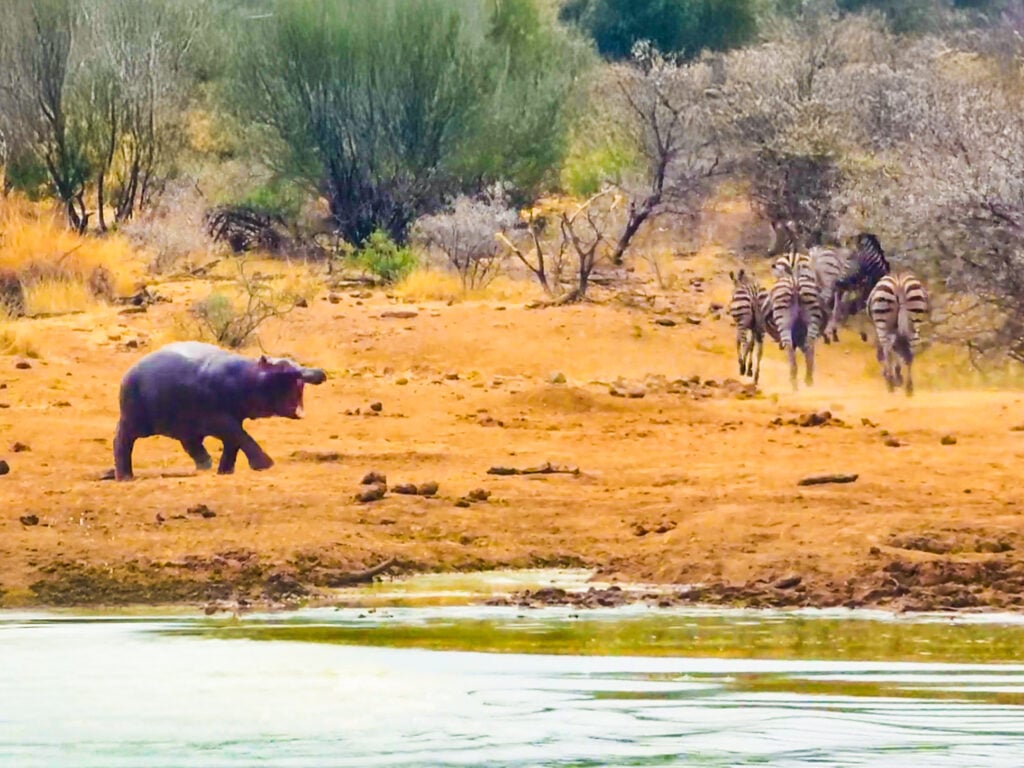
It even tried to roll the pangolin open, frustrated by its inability to reach the soft underbelly.
What ensued was a tense moment of wrestling. The leopard did everything it could to penetrate the pangolin’s tough armour.
Pangolin escapes surprise ambush
However, taking advantage of the pangolin proved to be fairly difficult and the leopard eventually grew tired and distracted. It stood to its feet and started to move away.
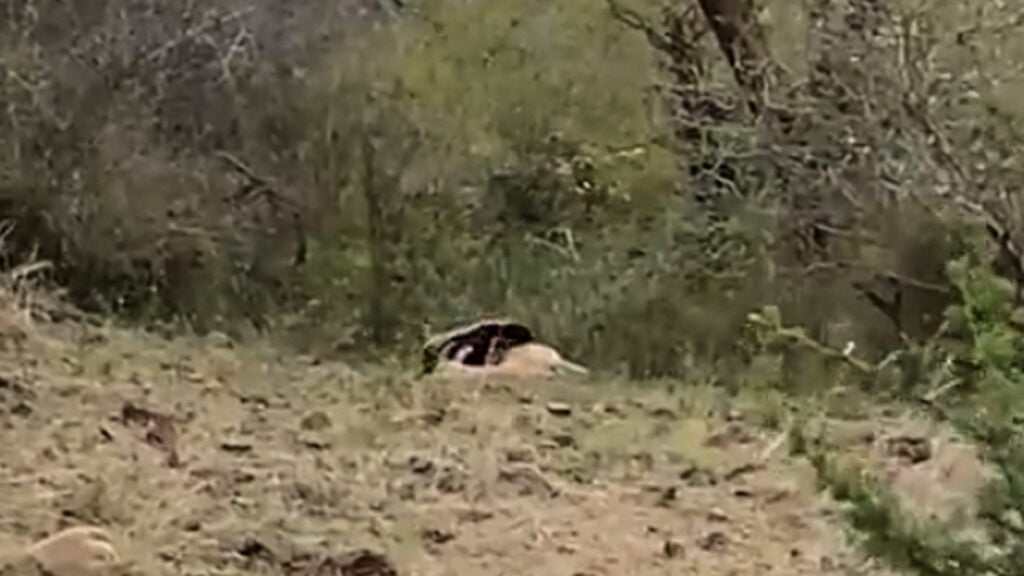
Taking advantage of the moment, the pangolin uncoiled and scuttled away, disappearing into the shadows and underbrush.
Pangolin armour proves to be the perfect defense
The pangolin’s ancient armour proved to be the perfect defense.
Pangolin armour is made of tough, overlapping keratin scales. This is the same protein found in human fingernails and rhino horns. The structure of its armour is one of the most unique and effective natural defense systems in the animal kingdom.
Its scales cover almost the entire body except for the belly and inner limbs.
When threatened, a pangolin will curl into a tight ball as this one did. It will tuck its vulnerable parts inside and present only its hard, razor-sharp scales to the predator.
If the predator persists, the pangolin can lash out with its tail, using the edges of its scales like blades. The scales are so strong that even big cats like like this leopard struggle to bite through them.
A leopard versus a pangolin is a striking example of strength and agility meeting one of nature’s most effective defensive designs.
Hyperactive Baby Hippo Scares Everyone In The Waterhole
This amusing video was sent to Latest Sightings by Isa Carter. She filmed it at a water hole in South Africa’s Kruger National Park.
I’m bored!
It’s often said that an “only child” can be a challenge, especially for friends and neighbours. And, judging by the events in this video, the same is true in the animal kingdom.
As Isa’s video begins, we see a lone hippo calf standing on the banks of its water hole. In the background, a herd of zebras await their turn to come down for a drink.
Amusing itself
It would seem that it has no one to socialise with. Nevertheless, as it runs around, it appears quite content to burn off the excess energy of youth on it’s own.
After charging around on the water’s edge for a while, it decides to return to the water, seemingly delighted at the big splash it makes.
For a chubby calf, it is surprisingly light-footed. As it takes to the water, it continues to amuse Isa and her companions with its antics. Quite what the rest of the onlookers think is open to debate.
Its mother, seen in the foreground above, seems content to watch the calf at play. Like any harried mum, she is probably enjoying a moment alone.
Thirsty zebras
Meanwhile, when the rambunctious calf took to the water, the zebras headed down to the water to slake their thirst. However, when the calf notices them, it cocks its ears in interest.
Potential playmates?
Consequently, it would seem that the calf saw the new arrivals as potential playmates. Subsequently, the over-enthusiastic calf set off towards the zebras with all the joys of youth.
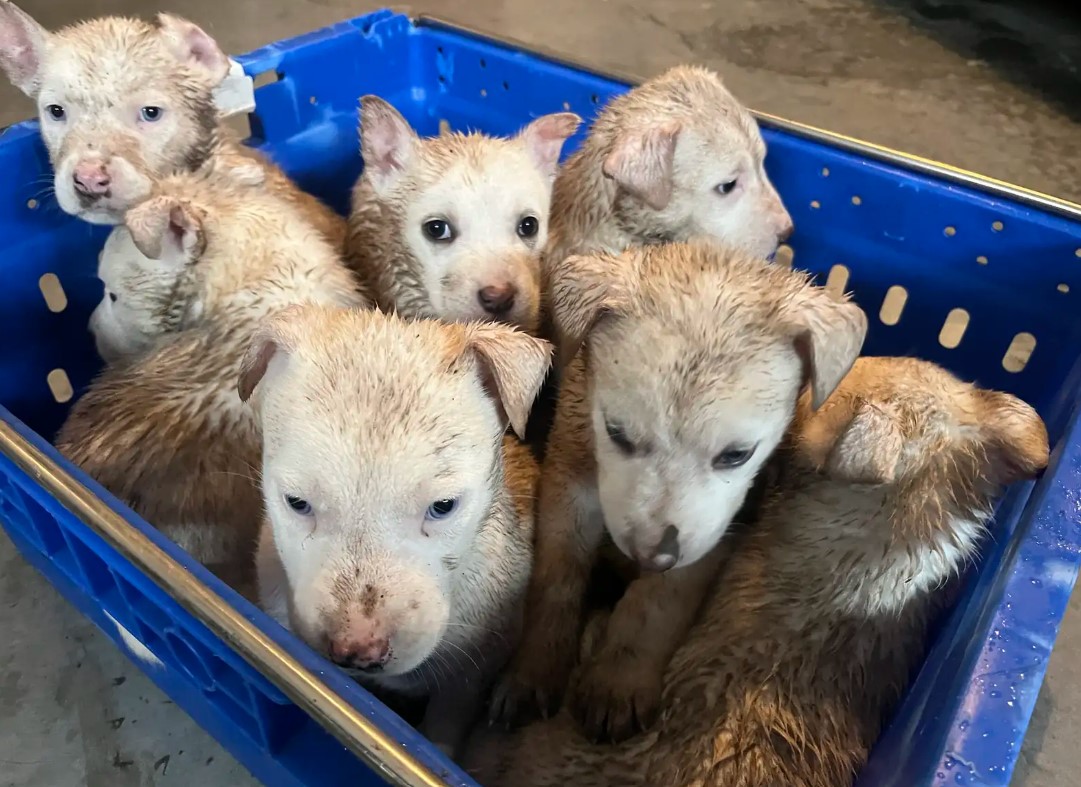
Unfortunately for the little hippo, his barrelling approach was a bit much for the skittish zebras. In response, they turned and trotted away from the water’s edge.
By the time he emerged from the water, the zebras had retreated to the nearby treeline. Evidently, the hippos’ behaviour was a bit much when all they wanted was a quiet drink.
Get our Best Sightings as they Come in
Abundant energy
Nonetheless, their disappearance did little to dampen the calf’s enthusiasm. He had energy to spare and was going to burn it off one way or the other. Even if it meant playing with elephant dung…
As Isa’s video draws to an end, the little hippo, undeterred, continued to charge up and down on the lakeshore.
And, despite his protestations of innocent fun, the zebras in the background remained unwilling to join in the fun.
Playful practice
As amusing as the young hippo’s behaviour is, it actually serves an important part of its early development. Playtime for young animals is the time when they will learn the various skills necessary for long-term survival.
Hippos are highly territorial creatures, particularly in their aquatic homes. As such, while the calf may not be doing so intentionally, it is employing various behaviours that in later life will help it assert its territorial dominance.
These include charging towards intruders, patrolling the domain, and gaping jaw displays. Of course, at this stage in its life, it is all in the spirit of play.
However, later in life, these skills may mean the difference between life and death. Whatever the outcome, for us as observers, they’re both fascinating and fun to observe.
Be the first to comment on this article!