
Regular contributor and MalaMala ranger Mike Kirkman sent this video to Latest Sightings. He filmed it while on a night game drive in South Africa’s Sabi Sands Game Reserve.
Young python
The video begins with a sight not often seen by visitors to the bushveld. Illuminated by a powerful spotlight, a young snake is seen crawling along on the ground.
Rangers use spotlights to reveal the interesting lives of nocturnal creatures
The snake is a juvenile Southern African rock python. It is only a fraction of the size it may grow to, with adults reaching lengths of up to 5 metres.
Seen from above
Unbeknownst to the snake, it is being watched from above. A large spotted genet (Genetta tigrina) has spotted the python from its vantage point in a tree.
There are two species of genet found in South Africa. This is the large spotted variety, identifiable by a black tail tip.
Genets are small nocturnal predators that spend much of their lives in trees. Of concern to the python, they love to eat snakes.
Time to take a closer look
As the snake continues unaware past the genet’s tree, the spotted predator decides it’s time to take a closer look.
Using its sharp claws, the genet descends the tree trunk headfirst. You can just see it to the left of the arrow in the above image.
Caution required
Once on the ground, the genet carefully approaches the python’s tail. As a predator, it is always wise to exercise caution, as any injury could impede its ability to hunt.
For its part, the snake seems completely unaware of the genet or the danger it is in. Instead, it continues crawling slowly.
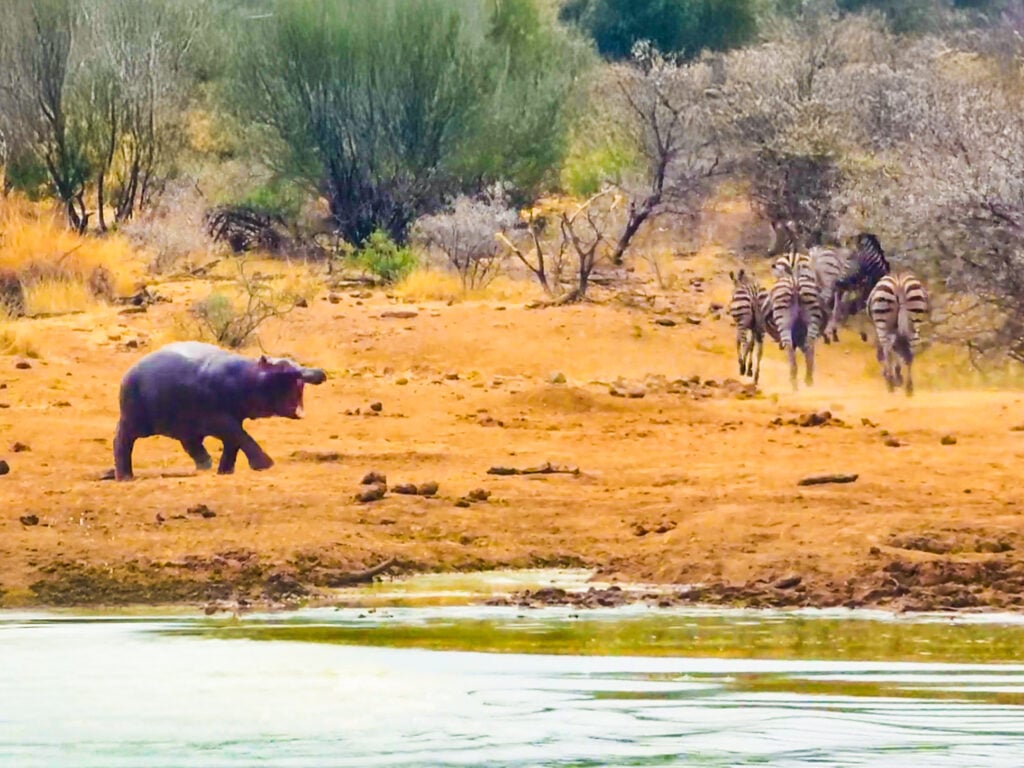
Even at this small size, the genet is probably too large for the snake to consume. Pythons are non-venomous, and although they can deliver an ugly bite, it is otherwise defenceless against the genet.
Patient predator
Taking its time, the genet gets within sniffing distance of the python’s tail. But the python’s continued movement seems to bother it.
Subsequently, having decided that it might have better luck with a different approach, the genet circles past the snake.
Get our Best Sightings as they Come in
Foes face-to-face
Consequently, as the genet approaches the snake’s head, the python finally comes to a halt. In the darkness, it is likely that it became aware of the genet by sensing it with its heat-sensing pit organs.
These organs detect infrared radiation, allowing them to detect warm-blooded prey in complete darkness.
As you can see above, the genet remains cautious. With its head raised, it waits to see the snake’s next move. The snake begins to show signs of agitation as its tail lashes back and forth.
As Mike comments, small pythons are notoriously feisty and quick to bite.
Mounting tension
Watching the snake intently, the genet appears to get increasingly nervous. Having lost the element of surprise, its chances of a successful attack without repercussions are diminishing by the second.
After a short stand-off, it is the genet who flinches first. To avoid injury, it makes the sensible decision to not bite off more than it can chew.
At the end of the video, the genet scampers off into the darkness, leaving the python in peace at last.
Hyperactive Baby Hippo Scares Everyone In The Waterhole
This amusing video was sent to Latest Sightings by Isa Carter. She filmed it at a water hole in South Africa’s Kruger National Park.
I’m bored!
It’s often said that an “only child” can be a challenge, especially for friends and neighbours. And, judging by the events in this video, the same is true in the animal kingdom.
As Isa’s video begins, we see a lone hippo calf standing on the banks of its water hole. In the background, a herd of zebras await their turn to come down for a drink.
Amusing itself
It would seem that it has no one to socialise with. Nevertheless, as it runs around, it appears quite content to burn off the excess energy of youth on it’s own.
After charging around on the water’s edge for a while, it decides to return to the water, seemingly delighted at the big splash it makes.
For a chubby calf, it is surprisingly light-footed. As it takes to the water, it continues to amuse Isa and her companions with its antics. Quite what the rest of the onlookers think is open to debate.
Its mother, seen in the foreground above, seems content to watch the calf at play. Like any harried mum, she is probably enjoying a moment alone.
Thirsty zebras
Meanwhile, when the rambunctious calf took to the water, the zebras headed down to the water to slake their thirst. However, when the calf notices them, it cocks its ears in interest.
Potential playmates?
Consequently, it would seem that the calf saw the new arrivals as potential playmates. Subsequently, the over-enthusiastic calf set off towards the zebras with all the joys of youth.
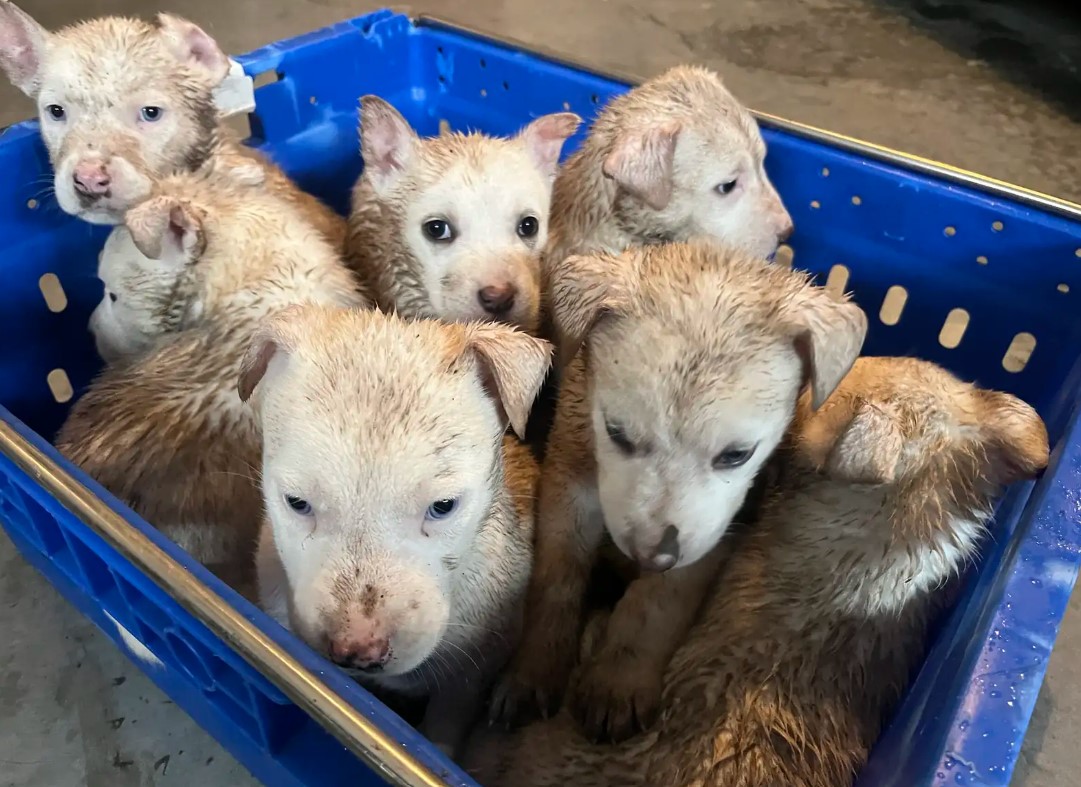
Unfortunately for the little hippo, his barrelling approach was a bit much for the skittish zebras. In response, they turned and trotted away from the water’s edge.
By the time he emerged from the water, the zebras had retreated to the nearby treeline. Evidently, the hippos’ behaviour was a bit much when all they wanted was a quiet drink.
Get our Best Sightings as they Come in
Abundant energy
Nonetheless, their disappearance did little to dampen the calf’s enthusiasm. He had energy to spare and was going to burn it off one way or the other. Even if it meant playing with elephant dung…
As Isa’s video draws to an end, the little hippo, undeterred, continued to charge up and down on the lakeshore.
And, despite his protestations of innocent fun, the zebras in the background remained unwilling to join in the fun.
Playful practice
As amusing as the young hippo’s behaviour is, it actually serves an important part of its early development. Playtime for young animals is the time when they will learn the various skills necessary for long-term survival.
Hippos are highly territorial creatures, particularly in their aquatic homes. As such, while the calf may not be doing so intentionally, it is employing various behaviours that in later life will help it assert its territorial dominance.
These include charging towards intruders, patrolling the domain, and gaping jaw displays. Of course, at this stage in its life, it is all in the spirit of play.
However, later in life, these skills may mean the difference between life and death. Whatever the outcome, for us as observers, they’re both fascinating and fun to observe.
Be the first to comment on this article!